Why Is the Propane Tank Gauge Not Reading Correctly?

A propane tank gauge that shows the wrong fuel level can make it difficult to know when to schedule a refill. You might notice the gauge stuck at 40%, showing empty after a recent delivery, or displaying a reading that does not match your usual propane consumption. These problems can create uncertainty, especially during winter when your heating system depends on a steady fuel supply. However, an unusual gauge reading does not always mean the tank is empty or the gauge is broken. Temperature changes, float problems, damaged components, and misunderstandings about how propane tanks are filled can all affect what you see. Understanding how propane tank gauges work can help you identify common problems, avoid unnecessary deliveries, and recognize when professional service is needed.

Overview

  • Propane gauges may show incorrect readings due to stuck floats, damage, or temperature changes.
  • Most propane tanks are filled to approximately 80% capacity for safety.
  • Compare gauge readings with delivery records and normal fuel consumption.
  • Check for visible damage, but avoid repairing gauge components yourself.
  • Contact a propane professional if readings remain inaccurate or unusual.
Why Is the Propane Tank Gauge Not Reading Correctly? | LP Propane

Why Is Your Propane Tank Gauge Showing the Wrong Reading?

Stuck Float Mechanism

Most stationary propane tanks use a float gauge that measures the approximate liquid propane level. The float moves as the liquid level changes. If the float becomes stuck or its internal mechanism fails, the dial may remain at the same percentage even when propane is being consumed.

Temperature Changes

Propane expands when it warms and contracts when it cools. As a result, the liquid level inside the tank can change slightly without any fuel being added or removed. A gauge may show a different percentage during extreme temperature changes, particularly when comparing readings taken on very different days.

Damaged Gauge Components

The external dial, pointer, or magnetic connection can become damaged or worn over time. This may prevent the displayed reading from accurately following the internal float. A cracked cover, loose dial, or pointer that no longer moves normally may indicate a problem requiring professional attention.

Incorrect Gauge Calibration

Propane tank gauges provide approximate liquid-level readings rather than exact measurements. Different tank shapes and gauge designs require compatible components. If a replacement gauge is incompatible with the tank or incorrectly fitted, its displayed percentage may not reflect the actual propane level.

Normal Filling Limits

A propane tank is normally filled to approximately 80% of its water capacity, leaving space for liquid expansion. For example, a 500-gallon tank commonly holds around 400 gallons of propane when filled to its normal maximum level. Therefore, a gauge showing 80% after delivery is usually normal.

Faulty Remote Monitoring

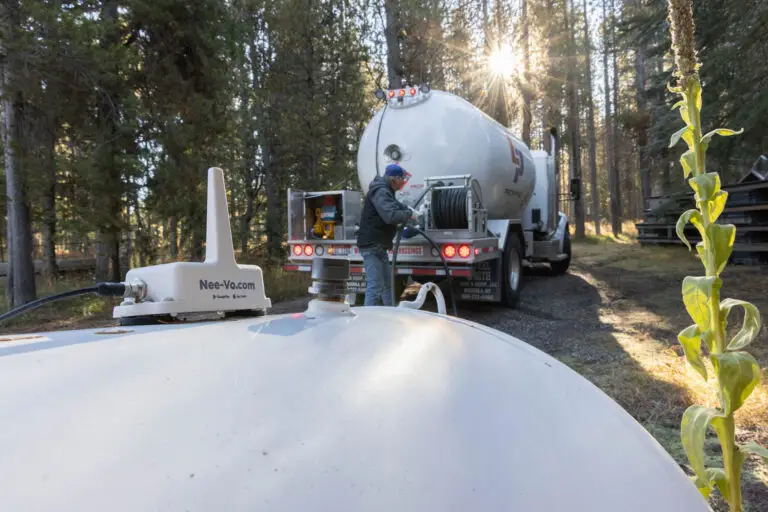
Some propane tanks use electronic monitors that send fuel-level information to a phone or supplier. If the monitor loses power, connectivity, or communication with its sensor, the displayed level may be outdated even when the mechanical gauge works correctly.

Know what affects your propane tank gauge accuracy

How Can You Tell if Your Propane Tank Gauge Is Faulty?

Gauge Stays at One Level

A gauge that remains at 50% for several weeks despite regular propane use may have a stuck float or display problem. However, low consumption and the limited precision of tank gauges can also make readings change slowly.

Reading Drops Suddenly

A sudden drop from 60% to 20% may indicate a gauge problem, especially when household propane use has not increased. Unexpected fuel loss can also signal a leak. If you smell propane or suspect escaping gas, leave the area and contact your supplier from a safe location.

Pressure Regulators

If the gauge still shows empty after a confirmed delivery, the reading may be inaccurate. Check the delivery receipt to confirm how many gallons were added. If the reading remains inconsistent, contact the propane supplier rather than attempting to repair the gauge.

Reading Exceeds 80%

A gauge reading slightly above 80% does not automatically mean the tank has been dangerously overfilled. Temperature, gauge accuracy, and filling conditions can affect the displayed level. If the reading seems unusually high after delivery, ask your supplier to evaluate it. Do not release propane to lower the reading yourself.

Dial Appears Damaged

A cracked lens, missing pointer, loose dial, or visible corrosion around the gauge can indicate damage. Avoid removing or adjusting components connected to the pressurized tank. A propane technician should determine whether the display can be safely replaced.

Monitor Shows Old Data

Remote propane monitors may stop updating because of weak connectivity, low battery power, or communication problems. Check the timestamp of the last reading. If the electronic monitor and mechanical dial disagree, report the difference to your supplier.

How Do You Troubleshoot an Incorrect Propane Tank Gauge?

Read the Gauge Properly

Most residential tank gauges display the percentage of the tank’s total water capacity occupied by liquid propane, not the number of gallons remaining. For example, a 500-gallon tank showing 40% contains approximately 200 gallons of liquid propane.

Check Delivery Records

Compare the current gauge reading with your last delivery receipt. A receipt showing 150 gallons delivered can help you understand whether the reading changed as expected. Remember that the amount added depends on how much propane was already inside the tank.

Monitor Fuel Consumption

Track gauge readings weekly during the heating season. Record the date, approximate percentage, and any major changes in propane appliance use. Consistent records can reveal whether fuel consumption follows a reasonable pattern or whether the gauge behaves unusually.

Consider Outdoor Temperature

Compare readings taken under similar temperature conditions whenever possible. A small percentage change during major temperature swings may reflect normal liquid expansion or contraction rather than a mechanical failure.

Inspect the Visible Dial

Look at the external gauge display for cracks, corrosion, missing markings, or a damaged pointer. Do not remove the gauge assembly, loosen fittings, strike the tank, or attempt to free a stuck float. These actions can create serious safety risks.

Contact Your Supplier

If the reading remains stuck, changes unexpectedly, or disagrees with delivery records, request a professional inspection. A propane technician can evaluate the gauge, verify the fuel level using approved methods, and determine whether any component needs replacement.

How Does a Propane Tank Gauge Actually Work?

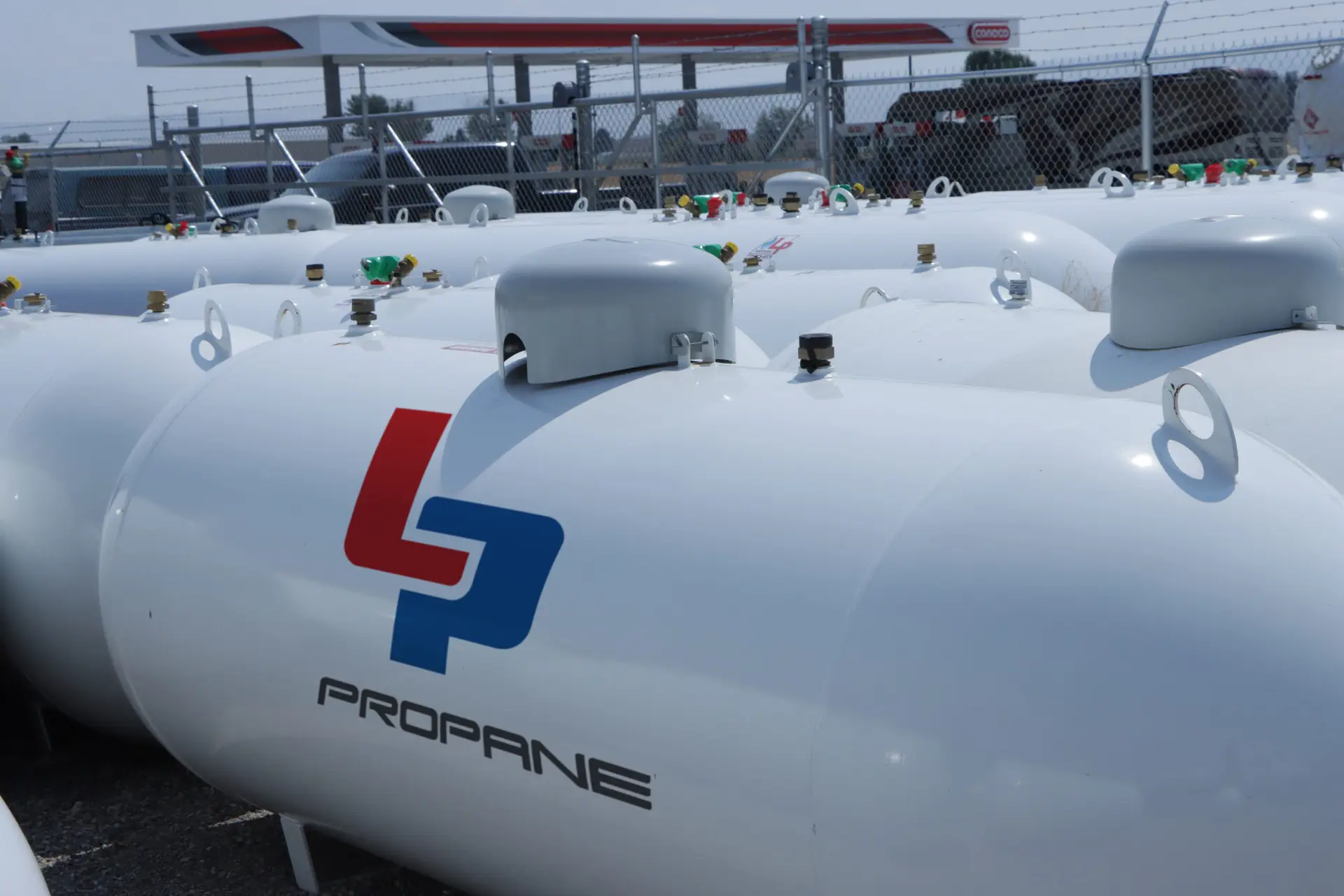
Most stationary residential propane tanks use a float-type liquid-level gauge. A float inside the tank rises and falls with the liquid propane level. Its movement operates a mechanism that transfers the position to an external dial, commonly through a magnetic connection. The gauge shows an approximate percentage rather than an exact gallon count. For example, a 250-gallon tank reading 60% contains roughly 150 gallons of liquid propane, assuming the gauge is operating correctly. A propane tank gauge is also different from a pressure gauge. Tank pressure mainly depends on propane temperature and vapor conditions, so it cannot reliably indicate how much liquid propane remains while liquid is still present. Understanding this difference prevents homeowners from mistaking a normal pressure reading for an accurate measurement of remaining fuel.

When Should You Replace a Propane Tank Gauge?

A propane tank gauge may need replacement when its mechanism fails, the external display is damaged, or its readings remain unreliable after professional evaluation. There is no universal replacement schedule based only on age. Some tanks have replaceable external dial assemblies, while other problems involve internal components that require specialized service. The correct repair depends on the tank and gauge design. Do not attempt to remove the complete gauge assembly yourself. The internal components may be connected to the pressurized propane container, and improper removal can release flammable gas. If the gauge repeatedly shows inaccurate readings, ask a qualified propane technician to identify the fault and recommend the appropriate repair.

How Can You Prevent Propane Gauge Problems?

Regular visual checks and accurate fuel records can help homeowners recognize gauge problems early. Check the gauge periodically, particularly during winter when propane consumption increases. Keep the tank accessible for deliveries and maintenance. Avoid striking the gauge with lawn equipment, covering it with landscaping materials, or placing heavy objects against exposed tank components. Consider using a compatible remote tank monitor if you want more frequent fuel-level updates. Some systems provide low-fuel notifications, helping homeowners schedule deliveries before the tank reaches a critically low level. For heating applications, many homeowners arrange refills around 20% to 30% remaining, depending on consumption, weather, and supplier delivery schedules. This provides a practical buffer against running out of fuel.

BLAZING BLOGS

State Fair Giveaway

$500 Worth of Propane

Be one of the first 200 New Customers to sign-up until September 15th to get $500 worth of propane, FREE! You’ll also get 1 year free tank rental when you switch!

JOIN THE IGNITE PROGRAM

NEW CUSTOMER? Fill out the New Customer Application to join IGNITE.

Save $0.05 Per Gallon with the IGNITE Program Learn more!

This field is for validation purposes and should be left unchanged.
Name(Required)
Service Address(Required)
AAP Agreement(Required)
You will be contacted by a Customer Service Representative to obtain your credit card information.
Terms of Service(Required)

LP Propane Ignite Program – Terms and Conditions

1. Eligibility and Program Requirements
To qualify for and maintain enrollment in the LP Propane Ignite Program and receive the $0.05 per gallon fuel discount, the Customer must simultaneously enroll in and maintain active status in the following three core services:

Auto Fill Delivery: The Customer authorizes LP Propane to automatically monitor, schedule, and deliver propane to the designated tank when levels dictate, bypassing the standard Will Call scheduling requirements.

Auto Pay: The Customer must maintain a valid, authorized payment method on file (Credit Card, Debit Card, or ACH/Direct Draft). Invoices will be automatically drafted within 7 days after the delivery.

Paperless Billing: The Customer agrees to receive all invoices, statements, and program communications via email. Opting out of online billing or requesting paper statements will result in a $4.95 monthly fee and disqualification from the program.

2. Fuel Discount Terms

The $0.05 per gallon discount applies exclusively to the standard market rate of propane at the exact time of delivery.

The discount is applied automatically on invoice.

This discount cannot be combined with specific commercial contract pricing or volume discounts unless expressly authorized in writing by LP Propane.

3. Tank Monitoring and Delivery Access

LP Propane may utilize physical tank monitors or advanced usage-tracking algorithms to schedule deliveries.

Access Requirements: The Customer must ensure the propane tank is always completely accessible to delivery personnel and vehicles. The pathway must be free of obstacles, locked gates, debris, or unrestrained animals within a 100-foot radius.

Seasonal Maintenance: During winter months, the Customer is legally responsible for clearing snow, ice, and paths leading to the tank. If a delivery vehicle cannot safely access the tank, the delivery will be delayed, and any emergency filling fees incurred due to subsequent low fuel levels will be billed to the Customer.

4. Credit Status and Payment Failures

If an Auto Pay transaction is declined or fails for any reason (e.g., expired card, insufficient funds), the Customer must update their account billing details immediately. If the transaction remains unprocessed for 30 days despite attempts by LP Propane to contact the Customer, the account will be automatically unenrolled from the program.

If an account balance becomes past due, LP Propane reserves the right to suspend Auto Fill privileges, pause the $0.05 per gallon discount, and transition the account to a "Will Call / Cash on Delivery" basis until the account is brought current and after review and approval of LP Propane’s credit department.

5. Program Termination or Changes

Customer Termination: Removing any of the mandatory components (Auto Fill, Auto Pay, or Paperless Billing) constitutes voluntary termination from the program. If you would like to opt out of the Ignite program you must submit 30 day written notice

Company Modifications: LP Propane reserves the right to alter, modify, or terminate the Ignite Program framework, including discount amounts or underlying eligibility terms.

MM slash DD slash YYYY