Innovations in Propane Technology: What's New in 2026?

Propane technology in 2026 is moving beyond traditional furnaces, water heaters, forklifts, and backup generators. New fuel systems, connected tank controls, commercial vehicle platforms, renewable fuel pathways, and larger on-site power systems are expanding where propane can be used. The important distinction is that not every technology discussed in 2026 was invented this year. What is changing is commercialization. Some systems are moving from research to production-ready designs, while others are expanding from small applications into fleets, data centers, microgrids, farms, and commercial facilities.As of August 2026, several developments stand out across U.S. propane markets.

Innovations in Propane Technology: What's New in 2026? | LP Propane

What Propane Technologies Are Advancing in 2026?

Direct Injection

Propane vehicle engines have traditionally relied on port or vapor injection systems. In May 2026, Liquid Propane announced that its propane direct-injection system had moved from prototype development to a production-ready design. The system sends liquid propane directly into the combustion chamber at pressures up to 200 bar. It is being developed around GM 6.6-liter engines, with commercial availability targeted for the fourth quarter of 2027. 

Commercial Chassis

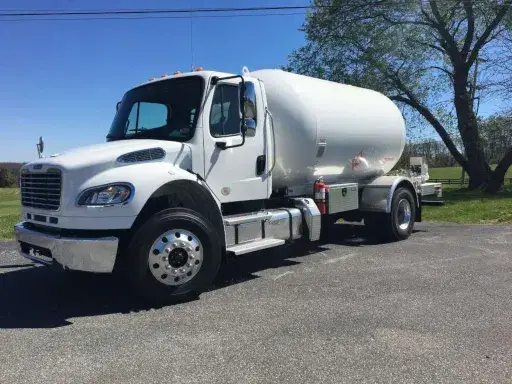
Propane is also moving into additional medium-duty delivery applications. Propane now lists a propane-powered Class 5-6 commercial chassis with a Ford 7.3-liter V8 engine, 45 usable gallons of LPG capacity, and gross vehicle weight ratings up to 23,000 pounds. 

Renewable Propane

Renewable propane remains one of the industry’s most important fuel developments. It is produced from renewable or bio-based feedstocks and can replace conventional propane without requiring a different propane appliance or fueling system. That drop-in compatibility allows existing tanks, vehicles, burners, and distribution infrastructure to remain useful as renewable supply grows.

New Feedstocks

Researchers are also studying ways to make renewable propane from sources beyond traditional vegetable oils and animal fats. PERC highlights research involving carbon dioxide, plastic waste, and oil-seed pathways.One research pathway uses renewable electricity, water, and captured CO2 in an electrolyzer process to create propane. These methods remain development pathways rather than normal retail fuel sources.

Tank Sensors

Propane storage is becoming more connected. Modern tank sensors can send level information to cloud platforms, smartphones, suppliers, and facility-management systems.PERC describes advanced sensors capable of measuring tank level within about plus or minus 1%, compared with about plus or minus 5% for mechanical gauge technology. 

Remote Controls

Remote tank monitoring is not new, but its capabilities are expanding. Direct-to-application systems can send tank information straight to a phone, while commercial SCADA systems can track level, temperature, and pressure across multiple locations. 

2026 is pushing propane into smarter energy systems

How Is Propane Power Generation Changing?

Prime Power

Prime-power systems are designed to operate for extended periods rather than waiting for an outage. PERC currently lists propane prime-power options from about 15 kW into multi-megawatt applications. 

Microgrid Systems

A microgrid combines local generation with equipment such as solar panels and battery storage. Propane generators can supply power when renewable output drops or stored battery energy becomes insufficient.

CHP Systems

Combined heat and power, or CHP, captures heat that would otherwise leave a generator or engine and puts it to work for water or space heating.PERC reports that propane CHP systems can reach total system efficiencies of up to 80% by producing electricity and useful thermal energy from the same fuel source. 

EV Charging

Propane is also being paired with electric vehicles rather than competing only against them. Propane generators can supply Level 2 or DC fast charging where electrical infrastructure is unavailable or undersized.PERC states that mobile propane charging systems can sometimes deploy in as little as 24 hours and avoid costly transformer or utility upgrades. 

Data Centers

Rapid growth in artificial intelligence and cloud computing is increasing interest in large on-site generation. Propane systems are being examined for backup, bridge, and prime power where utility capacity cannot arrive quickly enough.PERC has described configurations using multiple 2.5 MW propane generators to support a 20 MW data-center load. 

Peak Shaving

Commercial facilities can also run propane generation during expensive utility peak periods. This practice, called peak shaving, reduces how much electricity a facility pulls from the grid during high-demand hours.PERC highlighted peak shaving, microgrids, and CHP as growing approaches for facilities facing higher summer electricity demand in 2026. 

Where Is New Propane Equipment Growing?

School Fleets

Propane school buses continue to receive equipment and safety updates. In March 2026, Prince William County Public Schools introduced 62 Propane buses that were among the company’s first Vision buses equipped with standard driver airbags. The fuel system itself is mature, but vehicle platforms continue to change.

Delivery Fleets

Commercial delivery vehicles represent another growth area. Propane’s Class 5-6 propane chassis extends propane applications toward medium- and long-range delivery vehicles rather than limiting the platform to school buses. Direct-injection development could expand those options further after commercialization.

Farm Equipment

PERC’s 2026 Propane Farm Research Program is supporting adoption and field testing of newer propane-powered agricultural equipment. Current applications include irrigation, grain handling, heating, power generation, and equipment supporting newer agricultural systems.

Material Handling

Forklifts remain a major propane application, but ports and distribution centers are combining propane equipment with microgrids and charging systems.This creates mixed-energy sites where propane may directly power some machines while generating electricity for battery-powered equipment. 

Commercial Cooling

Propane-powered equipment is also being positioned for cooling applications when electric demand is expensive or grid capacity is limited.PERC reported in July 2026 that propane-powered chillers can reduce a facility’s HVAC electricity consumption by 80% to 90%, shifting a large cooling load away from the grid. 

Hybrid Systems

One of the larger technology trends is not propane operating alone. It is propane working alongside batteries, solar generation, electric equipment, and digital controls.Microgrids show this clearly: batteries handle some loads, renewable sources produce electricity when available, and propane generation provides dispatchable power when those sources cannot meet demand. 

What Do These Changes Mean for Homeowners?

For homeowners, the most visible developments are likely to appear in connected propane storage, higher-efficiency equipment, generator controls, and systems that coordinate propane with household electricity.Digital tank monitoring can provide better fuel-level visibility and help suppliers schedule deliveries before a runout occurs. Some newer monitoring products also track consumption patterns and projected runout dates rather than displaying only a mechanical percentage reading. Homeowners should not expect every emerging technology to become a household product immediately. Direct-injection vehicle systems, multi-megawatt generators, and experimental renewable-propane production methods are aimed at other markets first. Their importance is that they expand propane’s technology base and may influence future residential equipment and fuel availability.

What Should Businesses Watch Next?

Businesses should watch three areas closely: renewable fuel supply, connected equipment, and distributed power. Renewable propane can work in existing propane equipment, while remote monitoring can give operators better data about tanks and system performance. On-site power may show the fastest visible change. PERC’s 2026 materials increasingly describe propane not only as emergency-generator fuel but as an energy source for prime power, microgrids, CHP, EV charging, peak shaving, and large commercial loads. Businesses considering these systems should compare actual load profiles, fuel storage, local electricity rates, propane delivery access, emissions requirements, and equipment availability rather than choosing technology from a headline specification.

Where Is Propane Technology Headed After 2026?

The direction after 2026 is toward cleaner fuel production, better data, higher-pressure engine technology, and propane systems that interact with electricity rather than operating separately from it.Some developments are already commercial, such as connected tank monitors, CHP, microgrids, and newer propane vehicle platforms. Others remain on the development path. Liquid Propane’s production-ready direct-injection system, for example, is targeting commercial availability in late 2027 rather than 2026.That distinction matters. The propane story in 2026 is not one single new appliance or fuel. It is the shift toward connected storage, advanced engines, renewable supply, and flexible on-site power giving homes, fleets, farms, and businesses more ways to manage energy where the grid alone cannot meet every need.

BLAZING BLOGS

State Fair Giveaway

$500 Worth of Propane

Be one of the first 200 New Customers to sign-up until September 15th to get $500 worth of propane, FREE! You’ll also get 1 year free tank rental when you switch!

JOIN THE IGNITE PROGRAM

NEW CUSTOMER? Fill out the New Customer Application to join IGNITE.

Save $0.05 Per Gallon with the IGNITE Program Learn more!

This field is for validation purposes and should be left unchanged.
Name(Required)
Service Address(Required)
AAP Agreement(Required)
You will be contacted by a Customer Service Representative to obtain your credit card information.
Terms of Service(Required)

LP Propane Ignite Program – Terms and Conditions

1. Eligibility and Program Requirements
To qualify for and maintain enrollment in the LP Propane Ignite Program and receive the $0.05 per gallon fuel discount, the Customer must simultaneously enroll in and maintain active status in the following three core services:

Auto Fill Delivery: The Customer authorizes LP Propane to automatically monitor, schedule, and deliver propane to the designated tank when levels dictate, bypassing the standard Will Call scheduling requirements.

Auto Pay: The Customer must maintain a valid, authorized payment method on file (Credit Card, Debit Card, or ACH/Direct Draft). Invoices will be automatically drafted within 7 days after the delivery.

Paperless Billing: The Customer agrees to receive all invoices, statements, and program communications via email. Opting out of online billing or requesting paper statements will result in a $4.95 monthly fee and disqualification from the program.

2. Fuel Discount Terms

The $0.05 per gallon discount applies exclusively to the standard market rate of propane at the exact time of delivery.

The discount is applied automatically on invoice.

This discount cannot be combined with specific commercial contract pricing or volume discounts unless expressly authorized in writing by LP Propane.

3. Tank Monitoring and Delivery Access

LP Propane may utilize physical tank monitors or advanced usage-tracking algorithms to schedule deliveries.

Access Requirements: The Customer must ensure the propane tank is always completely accessible to delivery personnel and vehicles. The pathway must be free of obstacles, locked gates, debris, or unrestrained animals within a 100-foot radius.

Seasonal Maintenance: During winter months, the Customer is legally responsible for clearing snow, ice, and paths leading to the tank. If a delivery vehicle cannot safely access the tank, the delivery will be delayed, and any emergency filling fees incurred due to subsequent low fuel levels will be billed to the Customer.

4. Credit Status and Payment Failures

If an Auto Pay transaction is declined or fails for any reason (e.g., expired card, insufficient funds), the Customer must update their account billing details immediately. If the transaction remains unprocessed for 30 days despite attempts by LP Propane to contact the Customer, the account will be automatically unenrolled from the program.

If an account balance becomes past due, LP Propane reserves the right to suspend Auto Fill privileges, pause the $0.05 per gallon discount, and transition the account to a "Will Call / Cash on Delivery" basis until the account is brought current and after review and approval of LP Propane’s credit department.

5. Program Termination or Changes

Customer Termination: Removing any of the mandatory components (Auto Fill, Auto Pay, or Paperless Billing) constitutes voluntary termination from the program. If you would like to opt out of the Ignite program you must submit 30 day written notice

Company Modifications: LP Propane reserves the right to alter, modify, or terminate the Ignite Program framework, including discount amounts or underlying eligibility terms.

MM slash DD slash YYYY