Best Small Propane Grills for Quick & Easy Outdoor Cooking in 2026

Small propane grills give outdoor cooks fast heat without the size or setup of a full backyard grill. They fit camping trips, tailgates, RV travel, picnics, and small patios where local rules permit grilling.The best small propane grill in 2026 is not simply the one with the highest BTU rating. A better choice matches your cooking space, group size, carrying needs, fuel setup, and cleanup routine.This guide focuses on grill types and buying features rather than individual brands.

Best Small Propane Grills for Quick & Easy Outdoor Cooking in 2026 | LP Propane

What Makes a Small Propane Grill Worth Buying?

Compact Size

A small grill should fit where you store and transport it. Tabletop models save the most room, while compact wheeled grills take up more space but remove the need for a separate table. Check both open and folded dimensions before buying.

Cooking Space

The cooking area should match the number of people you normally feed. A smaller grate works well for one or two people, while a larger compact surface makes it easier to cook burgers, vegetables, chicken, or several portions together.More cooking space usually adds weight and storage bulk.

Grill Weight

Weight becomes important when you carry the grill across a campground or parking area. Choose the lightest design that still gives you the cooking space and construction you need. A few extra pounds may be worthwhile if they add a stable base or heavier cooking grate.

Burner Control

One burner works well for simple meals cooked at one general temperature. Two separately controlled burners let you create hotter and cooler zones.That flexibility helps when meat needs strong heat while vegetables, buns, or other foods cook more gently.

Fast Ignition

Push-button or electronic ignition can make short cooking sessions easier to start. It is especially useful when the grill comes out often for quick dinners, tailgates, or campsite breakfasts.

Easy Cleanup

Removable grease trays, simple fireboxes, and accessible cooking grates save time after a meal. Portable grills are often packed away soon after cooking, so grease control matters.Look for parts that can be removed and cleaned without taking the entire grill apart.

Big flavor, small grill, easy outdoor cooking

Which Small Propane Grill Type Fits You?

Tabletop Grills

Tabletop grills are among the easiest designs to transport and store. They sit on a stable, heat-safe surface and keep the overall package compact.This design makes sense when vehicle space is limited or the grill needs to move frequently.

Two-Burner Grills

A two-burner portable grill gives you separate cooking zones. One side can sear while the other stays at a lower setting.Choose this style if you regularly cook several foods at once and value temperature control more than minimum weight.

Wheeled Grills

Compact wheeled grills include their own stand, so setup is faster where tables are unavailable. Wheels also reduce the need to carry the full grill weight.The tradeoff is a larger folded size for vehicle, shed, or garage storage.

Camping Grills

Camping grills should prioritize low weight, stable feet, simple controls, and secure parts. A basic single-burner design can handle burgers, sausages, fish, vegetables, and steaks.Compact fuel storage can also simplify packing for short trips.

Patio Grills

A compact patio grill can be heavier because it may move only a short distance. Buyers can focus more on thicker grates, lid height, side space, and heat control.Confirm lease, HOA, building, and local fire rules before grilling on a balcony.

Travel Grills

Travel grills benefit from folding handles, protected burners, secure lids, and compact fuel connections.A design that packs neatly can be more practical than one with slightly more cooking area, especially when the grill shares vehicle space with camping or tailgating equipment.

What Features Matter Most in a 2026 Small Grill?

BTU Output

BTU per hour describes burner fuel input. A higher rating can support stronger heating, but it does not automatically produce better cooking.Grate material, burner shape, firebox design, outdoor wind, and heat retention also influence how a compact grill performs.

Grate Material

Cast iron holds heat well and supports strong searing, but it adds weight. Stainless-steel grates often weigh less and resist corrosion, although construction quality varies.Choose based on how often you carry the grill and what you normally cook.

Lid Design

A good lid traps heat and helps cook thicker foods more evenly. Extra lid height also gives you room for larger cuts of meat.For travel, a secure latch can keep the cooled grill closed while it is being carried or stored.

Fuel Connection

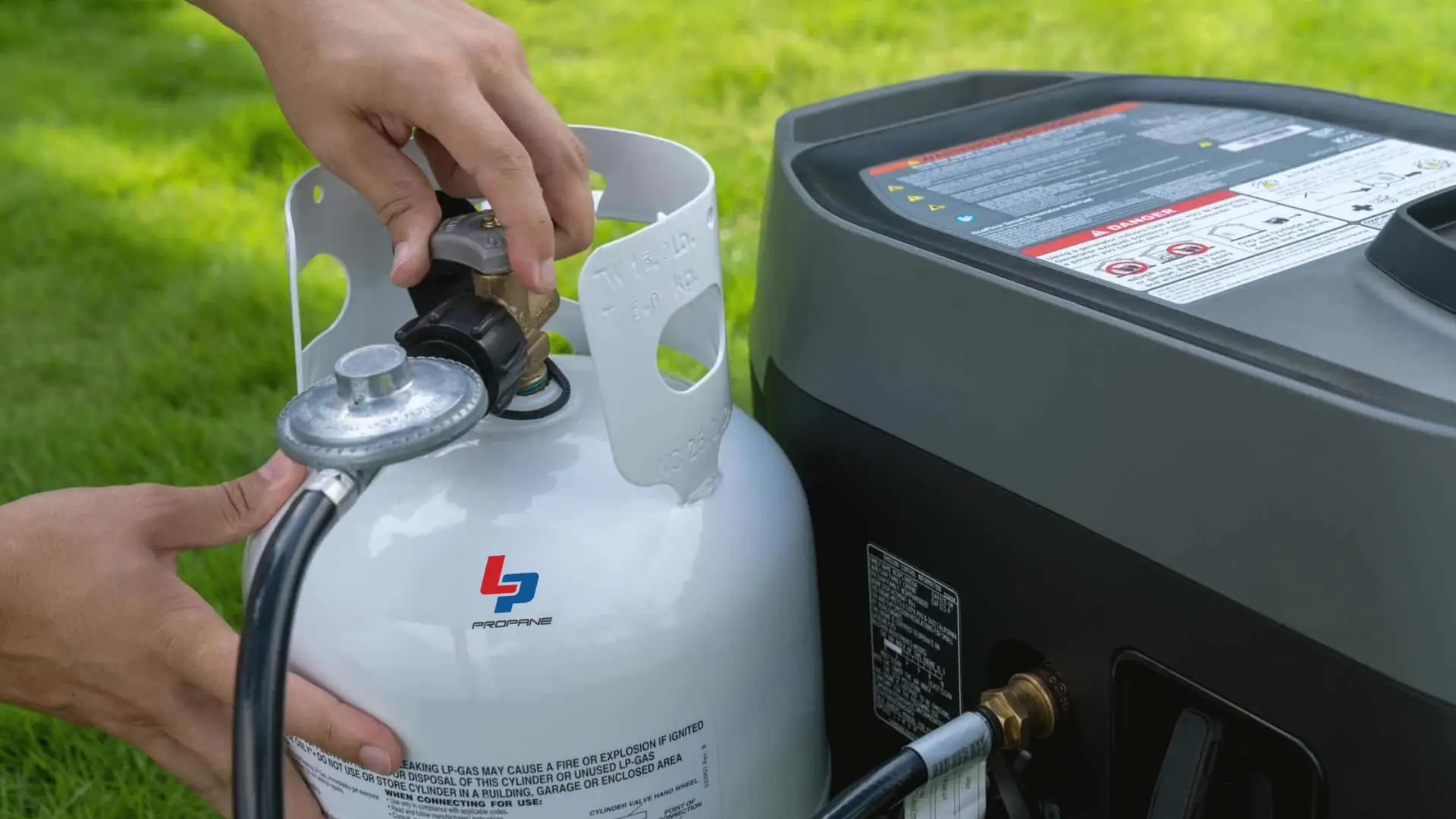
Portable propane cylinders are commonly used with outdoor grills because they make the fuel supply easy to move. PERC provides specific guidance for transporting, storing, connecting, and using portable propane cylinders.

Wind Resistance

Wind can reduce burner performance and make temperature control difficult. Protected burners, a close-fitting lid, and a well-shaped firebox can help hold heat.Place the grill on a stable outdoor surface where normal airflow does not constantly blow across the burner.

Grease Control

A removable tray or grease cup gives drippings a defined place to collect. Grease buildup can make cleanup harder and contribute to flare-ups during cooking.Clean grease regularly and follow the manufacturer’s maintenance directions before storage.

How Much Propane Does a Small Grill Use?

Real cooking may use less because burners do not always stay on high. A two-burner grill can consume fuel faster when both burners operate at strong settings, but it also provides more cooking flexibility. Preheating only as long as needed and lowering the burner after searing can reduce unnecessary fuel use.Portable cylinders work well for occasional trips. Frequent users may prefer a grill approved for connection to a larger refillable cylinder. Never improvise fuel adapters or modify a propane connection; PERC advises users not to repair or modify propane cylinders or appliances themselves.

How Do You Use a Small Propane Grill Safely?

Use portable propane grills outdoors only. CPSC warns that outdoor grills used indoors can create deadly carbon monoxide buildup, including when used inside homes, garages, or other enclosed areas. CPSC also reminded consumers in May 2026 never to leave an operating grill unattended.Inspect the grill, valve, regulator, hose, and cylinder connection before use. PERC recommends checking for leaks when connecting a portable propane cylinder. Its guidance describes using a leak-detection solution or thick soapy water around the valve and connection and watching for bubbles after opening the valve.Store portable propane cylinders upright outdoors and away from ignition sources. PERC also advises keeping spare cylinders away from grills and other propane appliances and warns against storing cylinders in enclosed spaces such as garages, sheds, basements, or tents.

How Do You Choose the Best Small Propane Grill?

Start with how you will use the grill most often. Choose a lightweight tabletop design for frequent carrying, a two-burner model for separate heat zones, or a compact wheeled grill when quick setup matters more than minimum storage size.Match the cooking area to your normal group rather than the biggest gathering you might host once a year. Smaller grills are easier to transport and store, while larger compact models make sense when you regularly cook several portions at once.The best small propane grill for 2026 is the one you can carry, fuel, clean, and use without turning a quick outdoor meal into a project. Focus on manageable weight, usable grate space, dependable heat control, safe propane connections, and simple grease management. Those practical features make a small grill useful for everything from weeknight patio cooking to camping and road trips.

BLAZING BLOGS

Best Small Propane Grills for Quick & Easy Outdoor Cooking in 2026 | LP Propane

Understanding Propane Prices in 2026

Understanding Propane Prices in 2026 Propane prices in 2026 refer to the amount consumers pay for propane fuel based on supply, demand, production levels, weather patterns, storage availability, transportation costs, and energy market conditions. Propane prices in 2026 are an

Read More »

State Fair Giveaway

$500 Worth of Propane

Be one of the first 200 New Customers to sign-up until September 15th to get $500 worth of propane, FREE! You’ll also get 1 year free tank rental when you switch!

JOIN THE IGNITE PROGRAM

NEW CUSTOMER? Fill out the New Customer Application to join IGNITE.

Save $0.05 Per Gallon with the IGNITE Program Learn more!

This field is for validation purposes and should be left unchanged.
Name(Required)
Service Address(Required)
AAP Agreement(Required)
You will be contacted by a Customer Service Representative to obtain your credit card information.
Terms of Service(Required)

LP Propane Ignite Program – Terms and Conditions

1. Eligibility and Program Requirements
To qualify for and maintain enrollment in the LP Propane Ignite Program and receive the $0.05 per gallon fuel discount, the Customer must simultaneously enroll in and maintain active status in the following three core services:

Auto Fill Delivery: The Customer authorizes LP Propane to automatically monitor, schedule, and deliver propane to the designated tank when levels dictate, bypassing the standard Will Call scheduling requirements.

Auto Pay: The Customer must maintain a valid, authorized payment method on file (Credit Card, Debit Card, or ACH/Direct Draft). Invoices will be automatically drafted within 7 days after the delivery.

Paperless Billing: The Customer agrees to receive all invoices, statements, and program communications via email. Opting out of online billing or requesting paper statements will result in a $4.95 monthly fee and disqualification from the program.

2. Fuel Discount Terms

The $0.05 per gallon discount applies exclusively to the standard market rate of propane at the exact time of delivery.

The discount is applied automatically on invoice.

This discount cannot be combined with specific commercial contract pricing or volume discounts unless expressly authorized in writing by LP Propane.

3. Tank Monitoring and Delivery Access

LP Propane may utilize physical tank monitors or advanced usage-tracking algorithms to schedule deliveries.

Access Requirements: The Customer must ensure the propane tank is always completely accessible to delivery personnel and vehicles. The pathway must be free of obstacles, locked gates, debris, or unrestrained animals within a 100-foot radius.

Seasonal Maintenance: During winter months, the Customer is legally responsible for clearing snow, ice, and paths leading to the tank. If a delivery vehicle cannot safely access the tank, the delivery will be delayed, and any emergency filling fees incurred due to subsequent low fuel levels will be billed to the Customer.

4. Credit Status and Payment Failures

If an Auto Pay transaction is declined or fails for any reason (e.g., expired card, insufficient funds), the Customer must update their account billing details immediately. If the transaction remains unprocessed for 30 days despite attempts by LP Propane to contact the Customer, the account will be automatically unenrolled from the program.

If an account balance becomes past due, LP Propane reserves the right to suspend Auto Fill privileges, pause the $0.05 per gallon discount, and transition the account to a "Will Call / Cash on Delivery" basis until the account is brought current and after review and approval of LP Propane’s credit department.

5. Program Termination or Changes

Customer Termination: Removing any of the mandatory components (Auto Fill, Auto Pay, or Paperless Billing) constitutes voluntary termination from the program. If you would like to opt out of the Ignite program you must submit 30 day written notice

Company Modifications: LP Propane reserves the right to alter, modify, or terminate the Ignite Program framework, including discount amounts or underlying eligibility terms.

MM slash DD slash YYYY