How Often Should You Arrange a Propane Safety Inspection?

Waiting until a propane appliance stops working can turn a maintenance issue into an unexpected loss of heat or a safety emergency. Yet inspection schedules can be confusing: a furnace service, gas leak check, and underground tank test cover different things. Arrange professional inspections of fuel-burning appliances annually, follow each manufacturer’s maintenance schedule, and request additional checks after service interruptions, equipment changes, or suspected damage. Ask your propane supplier how often the tank, regulators, and piping need review for your installation. An annual appliance visit does not automatically include the entire propane system. Understanding those differences helps you book the right service, keep useful records, and recognize situations that should never wait for the next routine appointment.

Overview

  • Arrange annual professional inspections for fuel-burning appliances.
  • Follow separate schedules for tanks, piping, and corrosion-protection testing.
  • Request additional checks after runouts, shutdowns, renovations, or equipment changes.
  • A propane delivery does not replace a full safety inspection.
  • Leave immediately if you suspect a gas leak or a CO alarm sounds, and call for help from safety.
How Often Should You Arrange a Propane Safety Inspection? | LP Propane

What Inspection Schedule Should You Follow?

Arrange Annual Appliance Checks

Have fuel-burning appliances and associated venting inspected professionally each year. This includes equipment such as furnaces, boilers, water heaters, and fireplaces. Annual inspection guidance addresses hazards that may develop between visits, but it does not replace maintenance required more frequently by a particular appliance manufacturer. 

Follow Manufacturer Instructions

Read the service schedule for each appliance rather than assuming one yearly appointment covers everything. A generator, for example, may need maintenance based on operating hours as well as calendar time. Give the technician model numbers and usage information so the appointment matches the equipment’s actual requirements.

Book Before Heating Season

Schedule furnace or boiler service before you expect regular winter operation. This provides time to address findings before the equipment becomes essential. A pre-season appointment is especially useful when a seasonal fireplace or heater has sat unused for several months.

Confirm Whole-System Coverage

Ask the propane supplier to define the inspection schedule for the tank, regulators, piping, and connections. A whole-system review examines the fuel-supply installation rather than just one appliance. Confirm the scope in writing because an HVAC tune-up may not include the outdoor tank or every connected appliance.

Review Underground Tank Testing

Underground steel tanks may need scheduled cathodic protection testing, which checks the system that helps prevent corrosion. This is separate from appliance service. One state’s published guidance describes an installation test, another at 12–18 months, and intervals no longer than 36 months after acceptable results; confirm the schedule applicable to your tank.

Track Separate Due Dates

Keep appliance service, system inspections, and special tank tests as separate entries in your maintenance record. Record the date, work completed, findings, and next recommended appointment. A single note saying “propane checked” makes it difficult to establish whether the furnace, buried tank, or distribution piping received attention.

Your calendar matters, but warning signs come first

When Do You Need an Additional Propane Check?

After Running Out

If the propane supply runs out, contact the supplier to arrange delivery and service restoration. A qualified professional must check the system for leaks when turning the gas back on. Do not treat the delivery as the only step needed or reopen the tank valve yourself. 

After a Gas Shutdown

A gas shutdown can require professional checks before service resumes, even when fuel remains in the tank. Tell the supplier why the gas stopped and whether anyone disconnected equipment. The technician can establish the checks needed for that interruption rather than relying on the date of your last routine visit.

After Appliance Changes

Have a qualified professional handle installing, disconnecting, or relocating propane appliances. A moved range or dryer can place stress on its connector, while an added heater changes system demand. Arrange the appropriate checks before operating the changed installation, not at the next annual service appointment.

After Renovation Work

Request a review when construction affects gas piping, appliance rooms, exhaust systems, or combustion-air openings. For example, enclosing a furnace in a new utility room can change its air supply. Have the affected equipment assessed before use, even if the renovation never required moving the appliance.

After Storm Damage

Contact the supplier if flooding, falling debris, ground movement, or a vehicle impact may have damaged the tank, regulator, piping, or appliances. Do not operate affected equipment until a qualified professional assesses it. A tank that appears upright can still have damaged connections or other problems that require investigation.

When Moving In

If you buy or rent a propane-equipped home, ask for service records and clarify tank ownership before relying on the system. If the history is missing, arrange a professional assessment. Confirm whether service remained active, since restarting an interrupted supply involves different steps from simply opening a billing account.

What Should a Professional Inspection Include?

Tank Condition

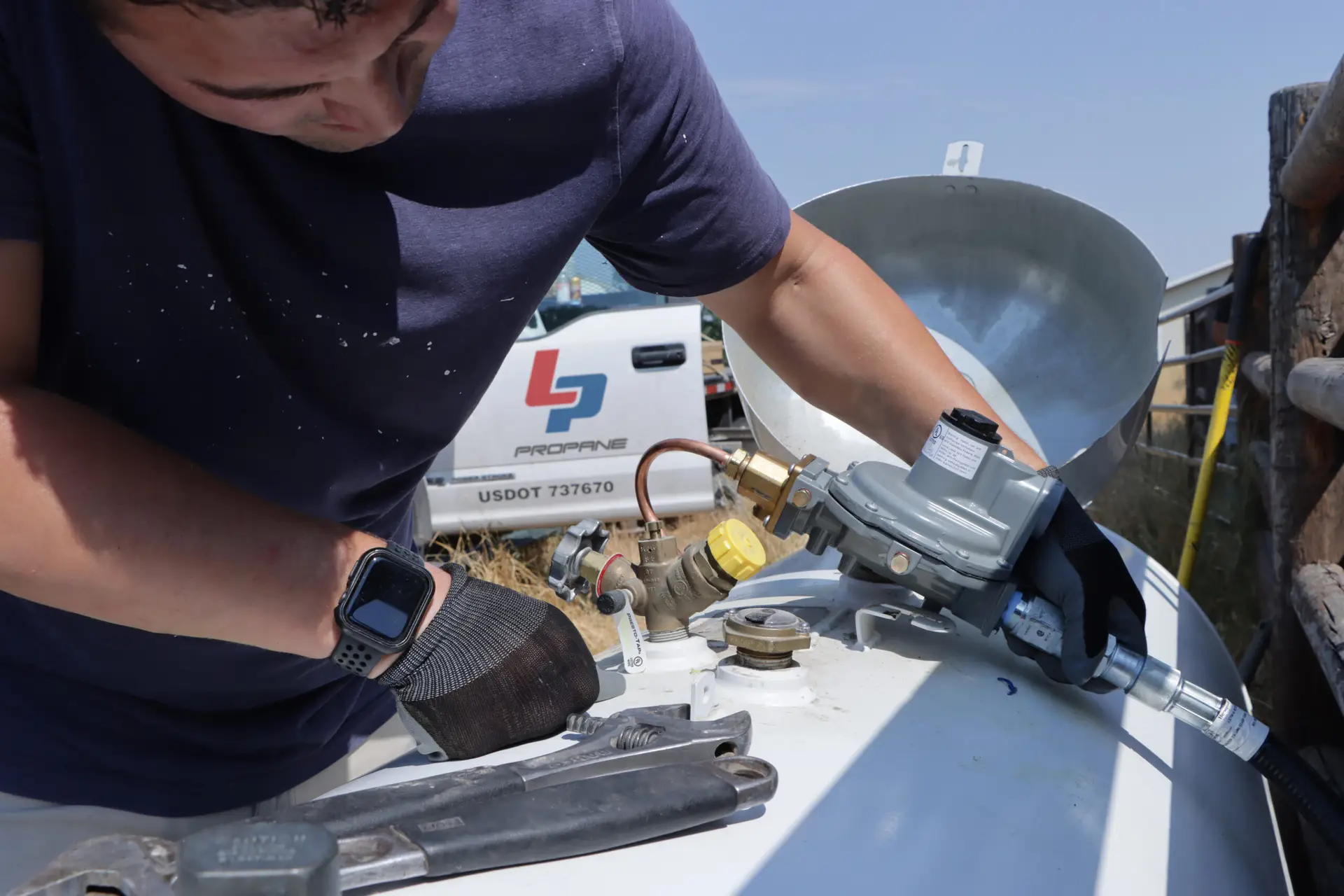
A tank review can include accessible surfaces, supports, visible corrosion, damage, and surrounding access. An underground tank requires a different assessment from an aboveground tank because most of its surface remains hidden. Ask how the inspection addresses the tank type instead of assuming a visual look covers everything.

Regulators and Piping

A regulator reduces propane pressure for downstream equipment. The professional may review its condition, vent arrangement, and associated piping as part of the agreed service. Mention any recent excavation, impact, or unexplained operating problem so the technician can assess whether further testing is necessary.

Appliance Connections

Appliance connectors are the flexible tubing sections used at certain equipment connections. The technician should assess relevant connections within the inspection scope, especially after equipment has moved. Report a range pulled forward for flooring work or a dryer shifted during remodeling, even when both still appear to operate normally.

Combustion and Venting

Combustion is the fuel-burning process that produces heat. Appliances need the correct air supply and a suitable way to handle combustion gases. Ask whether the visit includes the applicable operating and venting checks; inspecting an outdoor tank alone does not evaluate a furnace’s combustion performance.

Required Leak Checks

A leak check tests for unintended gas escape using an appropriate professional procedure. It is not the same as checking fuel level or confirming that an appliance lights. Ask when a leak check is required for your service event and whether it appears on the completed work record.

Findings and Follow-Up

Request a written summary showing defects, corrective work, any equipment left out of service, and recommended follow-up dates. If the technician identifies a problem requiring another trade, establish who will arrange that work. An inspection helps only when necessary repairs and subsequent checks reach completion.

Does Every Propane Delivery Count as an Inspection?

No. A delivery visit does not automatically include a full system inspection or appliance service. The driver may observe accessible equipment and decline delivery when conditions require attention, but that does not mean someone has evaluated every appliance, vent, or concealed connection. Ask your supplier what routine delivery checks cover and book any additional work separately. Likewise, a remote tank monitor reports inventory information; it does not replace leak checks, appliance maintenance, or the testing required for an underground tank’s corrosion-protection system.

Which Warning Signs Should Never Wait?

Treat a propane odor, escaping-gas sound, or suspected leak as an emergency: leave the area, avoid ignition sources, and call the supplier or emergency services from a safe location. If a carbon monoxide alarm sounds, leave and call 911 or the fire department. Carbon monoxide is an odorless combustion hazard, so smell cannot rule it out. Repeated pilot outages, soot, or unusual appliance behavior also need prompt professional attention rather than waiting for annual service. Never adjust gas equipment yourself to see whether the problem disappears.

Set a Schedule That Covers the Entire System

Arrange annual professional appliance inspections, follow manufacturer maintenance instructions, and confirm the separate requirements for your tank and fuel-supply equipment. Keep routine service dates and event-triggered checks in the same record so neither gets overlooked. Before your next appointment, list every connected appliance and ask the provider to explain the inspection scope. Then record findings and complete recommended repairs. A clear schedule gives you more useful protection than an annual reminder alone because it accounts for equipment changes, service interruptions, and warning signs throughout the year.

BLAZING BLOGS

State Fair Giveaway

$500 Worth of Propane

Be one of the first 200 New Customers to sign-up until September 15th to get $500 worth of propane, FREE! You’ll also get 1 year free tank rental when you switch!

JOIN THE IGNITE PROGRAM

NEW CUSTOMER? Fill out the New Customer Application to join IGNITE.

Save $0.05 Per Gallon with the IGNITE Program Learn more!

This field is for validation purposes and should be left unchanged.
Name(Required)
Service Address(Required)
AAP Agreement(Required)
You will be contacted by a Customer Service Representative to obtain your credit card information.
Terms of Service(Required)

LP Propane Ignite Program – Terms and Conditions

1. Eligibility and Program Requirements
To qualify for and maintain enrollment in the LP Propane Ignite Program and receive the $0.05 per gallon fuel discount, the Customer must simultaneously enroll in and maintain active status in the following three core services:

Auto Fill Delivery: The Customer authorizes LP Propane to automatically monitor, schedule, and deliver propane to the designated tank when levels dictate, bypassing the standard Will Call scheduling requirements.

Auto Pay: The Customer must maintain a valid, authorized payment method on file (Credit Card, Debit Card, or ACH/Direct Draft). Invoices will be automatically drafted within 7 days after the delivery.

Paperless Billing: The Customer agrees to receive all invoices, statements, and program communications via email. Opting out of online billing or requesting paper statements will result in a $4.95 monthly fee and disqualification from the program.

2. Fuel Discount Terms

The $0.05 per gallon discount applies exclusively to the standard market rate of propane at the exact time of delivery.

The discount is applied automatically on invoice.

This discount cannot be combined with specific commercial contract pricing or volume discounts unless expressly authorized in writing by LP Propane.

3. Tank Monitoring and Delivery Access

LP Propane may utilize physical tank monitors or advanced usage-tracking algorithms to schedule deliveries.

Access Requirements: The Customer must ensure the propane tank is always completely accessible to delivery personnel and vehicles. The pathway must be free of obstacles, locked gates, debris, or unrestrained animals within a 100-foot radius.

Seasonal Maintenance: During winter months, the Customer is legally responsible for clearing snow, ice, and paths leading to the tank. If a delivery vehicle cannot safely access the tank, the delivery will be delayed, and any emergency filling fees incurred due to subsequent low fuel levels will be billed to the Customer.

4. Credit Status and Payment Failures

If an Auto Pay transaction is declined or fails for any reason (e.g., expired card, insufficient funds), the Customer must update their account billing details immediately. If the transaction remains unprocessed for 30 days despite attempts by LP Propane to contact the Customer, the account will be automatically unenrolled from the program.

If an account balance becomes past due, LP Propane reserves the right to suspend Auto Fill privileges, pause the $0.05 per gallon discount, and transition the account to a "Will Call / Cash on Delivery" basis until the account is brought current and after review and approval of LP Propane’s credit department.

5. Program Termination or Changes

Customer Termination: Removing any of the mandatory components (Auto Fill, Auto Pay, or Paperless Billing) constitutes voluntary termination from the program. If you would like to opt out of the Ignite program you must submit 30 day written notice

Company Modifications: LP Propane reserves the right to alter, modify, or terminate the Ignite Program framework, including discount amounts or underlying eligibility terms.

MM slash DD slash YYYY