Can You Install Two Propane Tanks Instead of One Large Tank?

Choosing the right propane storage system can be challenging, especially when one large tank doesn’t fit your property or household needs. Many homeowners consider installing two smaller propane tanks instead of one large tank to increase storage flexibility and maintain a dependable fuel supply. Yes, you can install two propane tanks instead of one large tank, provided the installation meets local safety codes and both tanks are properly connected by a qualified propane professional. Two tanks can supply the same household appliances through an approved shared gas system or serve separate equipment through independent connections. For example, two 250-gallon tanks provide the same total rated storage volume as one 500-gallon tank. However, installation costs, space requirements, vaporization capacity, and maintenance needs may differ. Understanding how dual propane tank systems work can help homeowners compare storage options, control installation expenses, and select an arrangement that meets their heating and fuel requirements.

Overview

  • Two propane tanks can replace one large tank when properly installed.
  • Two 250-gallon tanks offer the same rated capacity as one 500-gallon tank.
  • Dual tanks provide flexible placement and support growing fuel needs.
  • Installation costs may increase due to additional piping, valves, and maintenance.
  • Professional installation and local safety compliance are essential for safe operation.
Can You Install Two Propane Tanks Instead of One Large Tank? | LP Propane

Why Install Two Propane Tanks Instead of One Large Tank?

Flexible Tank Placement

Two smaller tanks may fit into outdoor spaces where one large tank would be difficult to install. However, both tanks must meet applicable clearance, access, and placement requirements before installation.

Increased Storage Capacity

Adding a second tank increases total propane storage without necessarily replacing the existing tank. For example, adding another 250-gallon tank to an existing 250-gallon system doubles the total rated storage capacity to 500 gallons.

Improved Fuel Availability

A properly designed dual-tank system can offer additional fuel storage and reduce the frequency of deliveries. However, having two tanks does not automatically create a backup supply unless the system includes suitable controls and operating arrangements.

Future Heating Expansion

Homeowners planning to add a propane furnace, generator, or water heater may benefit from additional tank capacity. Installing a second tank can sometimes accommodate increased demand without removing an existing storage container.

Easier Property Access

Smaller tanks may be easier to transport and position on properties with narrow driveways, limited access, or challenging terrain. Installation feasibility still depends on the supplier’s equipment, ground conditions, and required safety clearances.

Separate Appliance Supply

Some properties use separate propane tanks for different equipment. For example, one tank may serve household heating while another supplies a detached workshop. Each system requires correctly designed piping, regulators, and safety components.

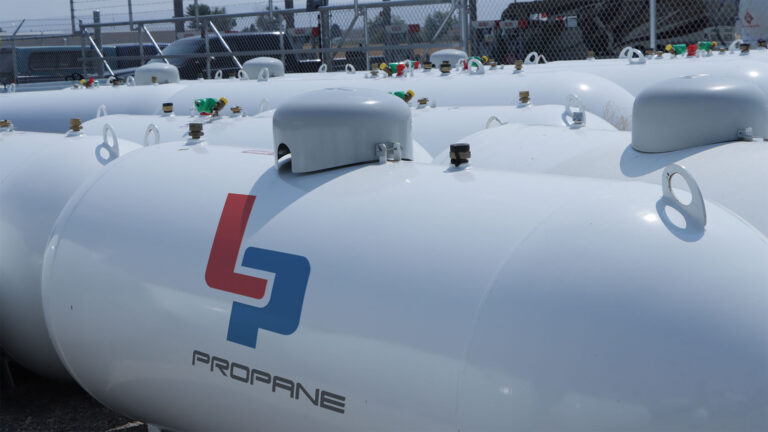
Dual propane tanks provide flexibility for growing fuel needs

How Do Two Propane Tanks Work Together?

Manifold Connections

A propane manifold is a piping arrangement that connects multiple tanks to a common fuel supply. When properly designed, it allows the tanks to support the same gas distribution system while maintaining the required pressure and safety controls.

Parallel Tank Systems

In a parallel arrangement, two tanks can supply propane vapor through a shared system. Fuel withdrawal may not be perfectly equal because tank temperature, fuel level, and pressure conditions can differ between containers.

Automatic Changeover

Some multi-cylinder propane installations use automatic changeover regulators that switch between a primary and reserve cylinder. These arrangements are common for certain small propane systems but should not be assumed suitable for every large residential tank installation.

Pressure Regulation

Propane storage tanks contain fuel under pressure, while appliances require gas at much lower operating pressures. A dual-tank installation needs properly selected regulators to maintain the correct supply pressure during changing fuel demand.

Gas Flow Capacity

Two tanks may provide greater combined vaporization capacity than one smaller tank, particularly during cold weather. However, actual performance depends on tank size, liquid level, temperature, and the capacity of the connected piping and regulators.

Independent Tank Operation

Two tanks do not always need to share one gas supply. Independent installations may serve separate buildings or appliances. This arrangement can make sense when equipment is far apart or requires different operating conditions.

What Factors Affect Dual Propane Tank Installation?

Available Property Space

Two tanks require suitable outdoor installation locations with adequate access and safe separation from buildings, property lines, and other protected areas. Multiple tanks may also require additional spacing between containers.

Household Propane Demand

Homes using propane for heating, hot water, cooking, and generators may need greater storage capacity. The combined tank arrangement should support both regular fuel consumption and the highest expected appliance demand.

Tank Size Selection

Two 120-gallon tanks provide 240 gallons of rated storage, while two 250-gallon tanks provide 500 gallons. Choosing suitable capacities depends on fuel requirements, available space, and whether the tanks will operate together.

Installation Expenses

Two smaller tanks can require additional valves, connections, piping, and installation labor. These expenses may make the arrangement more costly than one larger tank, even when the total storage capacity is similar.

Propane Delivery Access

Delivery trucks need safe access to the tanks for regular refilling. Installing tanks in separate locations may increase delivery complexity, especially when driveways, landscaping, or other obstacles restrict access.

Local Safety Requirements

Propane installations must follow applicable fire codes and local building regulations. Tank capacity, installation type, container grouping, and placement all affect the required clearances and permit conditions.

Is Two 250-Gallon Tanks Better Than One 500-Gallon Tank?

Two 250-gallon propane tanks and one 500-gallon tank provide the same combined rated storage volume, but they may differ in installation requirements, operating flexibility, and total expenses. A nominal 250-gallon propane tank commonly holds approximately 200 gallons when filled to 80% capacity. Two such tanks therefore provide around 400 gallons of propane at that fill level. A single 500-gallon tank also typically holds approximately 400 gallons when filled to 80%. Both options offer similar fuel storage, but two separate tanks may require additional connections, regulators, or maintenance work. A single large tank generally has fewer components and may be simpler to install. However, two smaller tanks can provide greater placement flexibility on some properties. They may also offer useful vaporization capacity when correctly designed to operate together. Installation spacing is another important consideration. Applicable propane codes may require a separation distance between two 250-gallon tanks, while a single 500-gallon tank has no tank-to-tank spacing requirement. The better option depends on property conditions, peak gas demand, installation costs, and supplier recommendations.

Are Two Propane Tanks Safe for Residential Use?

Two propane tanks can be safe for residential use when properly installed, maintained, and operated according to applicable safety requirements. The installation must account for tank placement, pressure regulation, piping capacity, and the maximum amount of propane required by connected appliances. Tank separation distances vary by container capacity and configuration. For example, common aboveground installation requirements include approximately 3 feet between certain larger residential tanks, while required distances from buildings and property lines depend on container size and other conditions. Multiple containers may also be subject to rules based on their combined storage capacity. Therefore, two smaller tanks do not automatically qualify for the same placement rules as one tank of either individual size. Only qualified propane professionals should connect tanks, modify gas piping, or install regulators. Improper connections can create leaks, pressure problems, and serious fire hazards. Regular inspections help identify corroded components, damaged valves, deteriorating connections, and other developing problems. If you smell propane or suspect a gas leak, leave the area immediately and contact your propane supplier or emergency services from a safe location.

How Can You Prevent Propane Gauge Problems?

Regular visual checks and accurate fuel records can help homeowners recognize gauge problems early. Check the gauge periodically, particularly during winter when propane consumption increases. Keep the tank accessible for deliveries and maintenance. Avoid striking the gauge with lawn equipment, covering it with landscaping materials, or placing heavy objects against exposed tank components. Consider using a compatible remote tank monitor if you want more frequent fuel-level updates. Some systems provide low-fuel notifications, helping homeowners schedule deliveries before the tank reaches a critically low level. For heating applications, many homeowners arrange refills around 20% to 30% remaining, depending on consumption, weather, and supplier delivery schedules. This provides a practical buffer against running out of fuel.

BLAZING BLOGS

State Fair Giveaway

$500 Worth of Propane

Be one of the first 200 New Customers to sign-up until September 15th to get $500 worth of propane, FREE! You’ll also get 1 year free tank rental when you switch!

JOIN THE IGNITE PROGRAM

NEW CUSTOMER? Fill out the New Customer Application to join IGNITE.

Save $0.05 Per Gallon with the IGNITE Program Learn more!

This field is for validation purposes and should be left unchanged.
Name(Required)
Service Address(Required)
AAP Agreement(Required)
You will be contacted by a Customer Service Representative to obtain your credit card information.
Terms of Service(Required)

LP Propane Ignite Program – Terms and Conditions

1. Eligibility and Program Requirements
To qualify for and maintain enrollment in the LP Propane Ignite Program and receive the $0.05 per gallon fuel discount, the Customer must simultaneously enroll in and maintain active status in the following three core services:

Auto Fill Delivery: The Customer authorizes LP Propane to automatically monitor, schedule, and deliver propane to the designated tank when levels dictate, bypassing the standard Will Call scheduling requirements.

Auto Pay: The Customer must maintain a valid, authorized payment method on file (Credit Card, Debit Card, or ACH/Direct Draft). Invoices will be automatically drafted within 7 days after the delivery.

Paperless Billing: The Customer agrees to receive all invoices, statements, and program communications via email. Opting out of online billing or requesting paper statements will result in a $4.95 monthly fee and disqualification from the program.

2. Fuel Discount Terms

The $0.05 per gallon discount applies exclusively to the standard market rate of propane at the exact time of delivery.

The discount is applied automatically on invoice.

This discount cannot be combined with specific commercial contract pricing or volume discounts unless expressly authorized in writing by LP Propane.

3. Tank Monitoring and Delivery Access

LP Propane may utilize physical tank monitors or advanced usage-tracking algorithms to schedule deliveries.

Access Requirements: The Customer must ensure the propane tank is always completely accessible to delivery personnel and vehicles. The pathway must be free of obstacles, locked gates, debris, or unrestrained animals within a 100-foot radius.

Seasonal Maintenance: During winter months, the Customer is legally responsible for clearing snow, ice, and paths leading to the tank. If a delivery vehicle cannot safely access the tank, the delivery will be delayed, and any emergency filling fees incurred due to subsequent low fuel levels will be billed to the Customer.

4. Credit Status and Payment Failures

If an Auto Pay transaction is declined or fails for any reason (e.g., expired card, insufficient funds), the Customer must update their account billing details immediately. If the transaction remains unprocessed for 30 days despite attempts by LP Propane to contact the Customer, the account will be automatically unenrolled from the program.

If an account balance becomes past due, LP Propane reserves the right to suspend Auto Fill privileges, pause the $0.05 per gallon discount, and transition the account to a "Will Call / Cash on Delivery" basis until the account is brought current and after review and approval of LP Propane’s credit department.

5. Program Termination or Changes

Customer Termination: Removing any of the mandatory components (Auto Fill, Auto Pay, or Paperless Billing) constitutes voluntary termination from the program. If you would like to opt out of the Ignite program you must submit 30 day written notice

Company Modifications: LP Propane reserves the right to alter, modify, or terminate the Ignite Program framework, including discount amounts or underlying eligibility terms.

MM slash DD slash YYYY