What to Do When a Propane Tank Is Frozen?

Finding frost or ice covering your propane tank during winter can be alarming, especially when your furnace suddenly stops heating. You might notice ice around the tank’s lower section, reduced gas pressure, or appliances that struggle to operate. While these signs may look like the propane has frozen solid, the actual problem is usually different. Propane remains liquid at extremely low temperatures, but cold weather can affect how quickly it changes into gas. When your heating system demands more propane than the tank can supply as vapor, the tank surface may become unusually cold and develop frost. Understanding what causes a propane tank to freeze, what actions are safe, and when professional help is needed can help you restore reliable heating without damaging your equipment.

Overview

  • Propane tanks develop frost due to cold temperatures and rapid vaporization.
  • Low fuel levels and high propane demand can reduce gas pressure.
  • Never use flames, heaters, or boiling water to thaw a propane tank.
  • Keep fuel levels adequate and schedule regular tank inspections.
  • Contact your propane supplier if heavy frost affects heating or fuel flow.
What to Do When a Propane Tank Is Frozen? | LP Propane

Why Does a Propane Tank Freeze in Cold Weather?

Extremely Cold Temperatures

Propane boils at approximately -44°F at atmospheric pressure. Above this temperature, liquid propane can produce vapor, but colder conditions reduce its vapor pressure. As outdoor temperatures fall, the tank may struggle to supply enough vapor for high-demand appliances, especially when the fuel level is low.

Low Propane Levels

A nearly empty tank has less liquid propane and less effective surface area available for vaporization. During cold weather, this can reduce the tank’s ability to supply fuel quickly enough for a furnace, water heater, or other connected appliances.

High Fuel Demand

Multiple propane appliances operating simultaneously can place heavy demand on the tank. If the appliances consume vapor faster than the tank can produce it, the tank cools rapidly. Frost may form where liquid propane contacts the inside surface.

Rapid Vaporization

Liquid propane must absorb heat from its surroundings to become vapor. This heat transfer naturally lowers the temperature of the tank. When vaporization happens rapidly, the tank surface may become colder than the surrounding air, causing moisture to freeze.

Incorrect Tank Size

A small tank may not provide enough vaporization capacity for a large heating system during freezing weather. For example, a tank serving a furnace, water heater, and generator may need greater vapor-producing capacity than one serving only a cooking range.

Regulator Problems

Ice or moisture around a propane regulator can interfere with pressure control. In some cases, freezing conditions can restrict the regulator’s operation. A blocked or malfunctioning regulator may cause weak appliance flames, ignition failures, or interrupted heating.

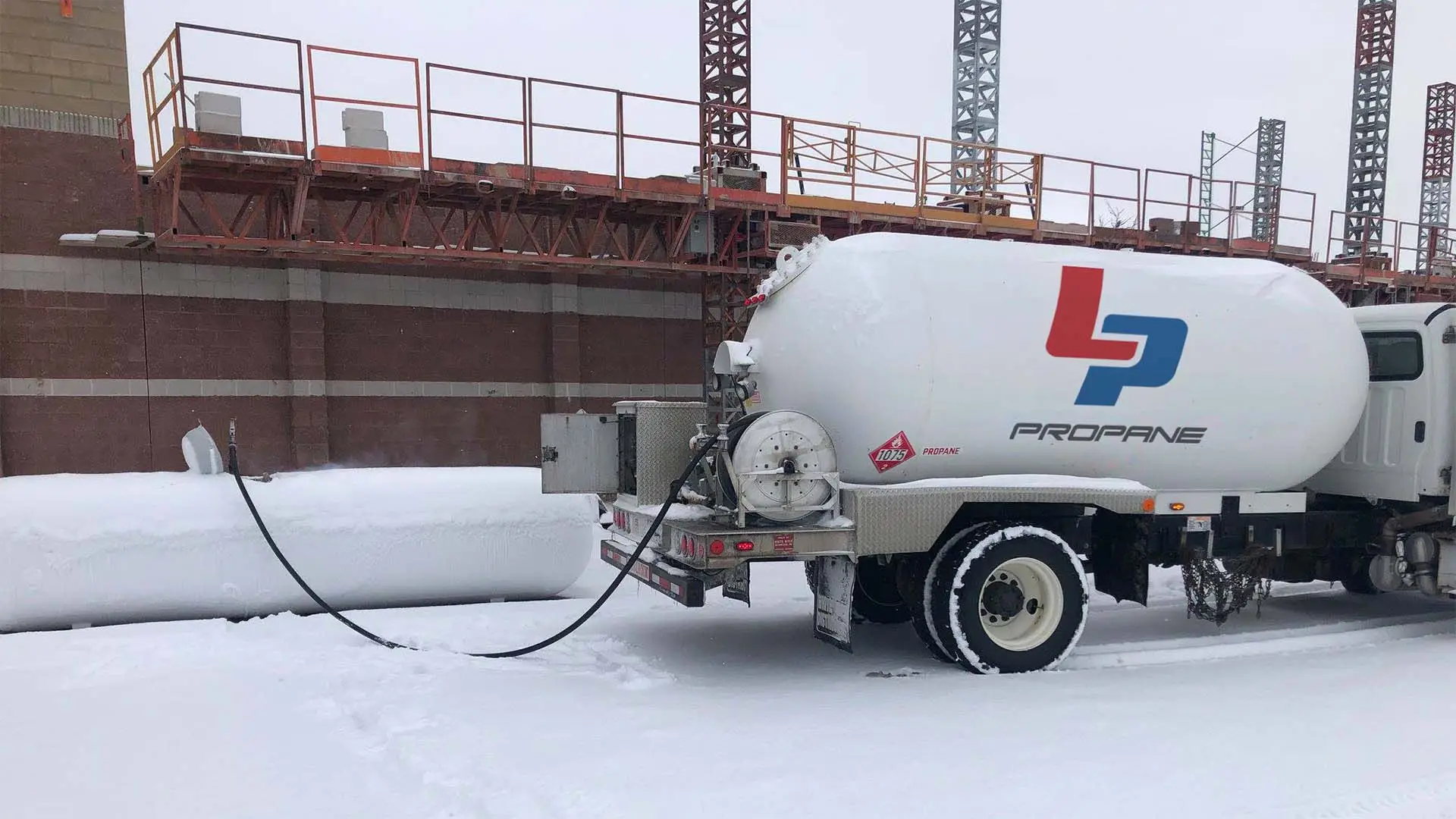
Freezing weather can disrupt your propane fuel supply

What Should You Do When Your Propane Tank Is Frozen?

Check the Fuel Level

Look at the tank gauge to estimate how much propane remains. Most stationary residential gauges display the percentage of total tank capacity. If the reading is near 20% or lower, arrange a delivery. Low fuel levels can make cold-weather vaporization problems more likely.

Reduce Propane Demand

If appliances are still operating safely, reducing simultaneous propane use may help the tank recover its ability to supply vapor. Avoid running nonessential propane appliances during peak heating demand. Do not disable safety controls or interfere with the furnace’s normal  operation.

Clear Snow Safely

Remove loose snow from accessible areas around the tank, regulator, and service connections using gentle methods. Keep vents and access points clear, but avoid striking frozen components or using sharp tools that could damage piping, valves, or protective coatings.

Call Your Supplier

Approved propane piping connects the outdoor tank with indoor appliances. Required pipe diameter depends on factors such as line length and total BTU load. Existing oil lines are not simply reused as propane gas lines because the two fuel systems operate differently.

Avoid Direct Heating

Never use a torch, open flame, portable heater, heat gun, or boiling water to warm a propane tank. Excessive heat can increase internal pressure and damage components. Propane tanks and regulators should only be serviced using approved professional procedures.

Check for Gas Odor

Propane has an added odorant that helps people recognize leaks. A strong gas smell may indicate escaping propane rather than a normal freezing problem. If you smell propane, leave the area immediately. Avoid electrical switches, flames, and ignition sources, and contact your propane supplier or emergency services from a safe location.

How Can You Prevent a Propane Tank From Freezing?

Maintain Fuel Levels

Schedule deliveries before the tank becomes nearly empty. Many homeowners arrange refills when the gauge reaches approximately 20% to 30%. Keeping adequate fuel available can improve cold-weather vaporization capacity and reduce the risk of running out during heavy heating demand.

Choose Proper Tank Size

Tank capacity affects how much propane vapor can be supplied during cold weather. A 500-gallon tank is commonly used for residential heating, but the correct size depends on climate, appliance but demand, fuel consumption, and expected outdoor temperatures.

Schedule Regular Inspections

Have the propane system inspected according to supplier recommendations and applicable requirements. A technician can evaluate regulators, valves, piping, tank condition, and system performance before freezing weather creates additional problems.

Keep Regulators Protected

Regulators should remain properly positioned and protected from conditions that could block their vents or interfere with operation. Do not wrap regulators in unapproved materials or cover their vents. Contact a professional if ice repeatedly develops around regulator components.

Monitor Appliance Demand

A furnace, water heater, fireplace, and generator can create substantial combined propane demand. If several appliances frequently operate together, ask your supplier whether the tank and regulator system can support the total load during the coldest expected temperatures.

Plan Winter Deliveries

Winter storms, icy roads, and high seasonal demand can delay propane deliveries. Check fuel levels more frequently during prolonged cold weather. Automatic delivery or remote tank monitoring may help prevent unexpected shortages.

Can Propane Actually Freeze Inside the Tank?

Propane has a freezing point of approximately -306°F, far below normal outdoor temperatures in the United States. Therefore, propane inside a residential tank does not ordinarily freeze solid during winter. The more common problem involves vapor pressure. Propane is stored mainly as a liquid, but appliances use propane vapor. As outdoor temperatures decrease, the liquid produces less vapor pressure, and the tank may struggle to meet high fuel demand. This distinction matters because warming the tank with a flame or heater is not an appropriate solution. The problem usually requires evaluating fuel level, tank capacity, appliance demand, or regulator performance.

Is Frost on a Propane Tank Dangerous?

Frost on a propane tank is not automatically dangerous. It can develop naturally when liquid propane absorbs heat while turning into vapor. A frost line may even appear near the liquid level during periods of high consumption. However, heavy frost combined with weak appliance performance, repeated ignition failures, or loss of heating may indicate inadequate vaporization or a fuel-delivery problem. Ice around regulators and valves also deserves professional attention, especially if the system stops working properly. Never chip ice from pressurized components or attempt to repair frozen fittings yourself. If you notice a propane odor, hissing, or suspected leakage, treat the situation as a possible gas emergency rather than a normal frost problem.

How Long Does It Take for a Frozen Propane Tank to Recover?

There is no fixed recovery time because the cause may involve low fuel levels, extreme cold, high appliance demand, or regulator problems. If the tank is simply experiencing heavy vaporization demand, reducing nonessential propane use may allow its temperature and pressure to recover as it absorbs heat from the surrounding environment. However, the process depends on outdoor temperature, tank size, fuel level, and ongoing consumption. If the tank cannot supply enough vapor for essential heating, waiting may not solve the problem. A propane professional may need to recommend a larger tank, additional vaporization capacity, or repairs to the fuel-delivery system.

BLAZING BLOGS

What to Do When a Propane Tank Is Frozen? | LP Propane

Is Propane Cheaper Than Electric Heat in 2026?

Is Propane Cheaper Than Electric Heat in 2026? Choosing between propane and electric heating can make a major difference to your winter energy bills. With heating expenses rising across many parts of the United States, homeowners want a system that

Read More »

State Fair Giveaway

$500 Worth of Propane

Be one of the first 200 New Customers to sign-up until September 15th to get $500 worth of propane, FREE! You’ll also get 1 year free tank rental when you switch!

JOIN THE IGNITE PROGRAM

NEW CUSTOMER? Fill out the New Customer Application to join IGNITE.

Save $0.05 Per Gallon with the IGNITE Program Learn more!

This field is for validation purposes and should be left unchanged.
Name(Required)
Service Address(Required)
AAP Agreement(Required)
You will be contacted by a Customer Service Representative to obtain your credit card information.
Terms of Service(Required)

LP Propane Ignite Program – Terms and Conditions

1. Eligibility and Program Requirements
To qualify for and maintain enrollment in the LP Propane Ignite Program and receive the $0.05 per gallon fuel discount, the Customer must simultaneously enroll in and maintain active status in the following three core services:

Auto Fill Delivery: The Customer authorizes LP Propane to automatically monitor, schedule, and deliver propane to the designated tank when levels dictate, bypassing the standard Will Call scheduling requirements.

Auto Pay: The Customer must maintain a valid, authorized payment method on file (Credit Card, Debit Card, or ACH/Direct Draft). Invoices will be automatically drafted within 7 days after the delivery.

Paperless Billing: The Customer agrees to receive all invoices, statements, and program communications via email. Opting out of online billing or requesting paper statements will result in a $4.95 monthly fee and disqualification from the program.

2. Fuel Discount Terms

The $0.05 per gallon discount applies exclusively to the standard market rate of propane at the exact time of delivery.

The discount is applied automatically on invoice.

This discount cannot be combined with specific commercial contract pricing or volume discounts unless expressly authorized in writing by LP Propane.

3. Tank Monitoring and Delivery Access

LP Propane may utilize physical tank monitors or advanced usage-tracking algorithms to schedule deliveries.

Access Requirements: The Customer must ensure the propane tank is always completely accessible to delivery personnel and vehicles. The pathway must be free of obstacles, locked gates, debris, or unrestrained animals within a 100-foot radius.

Seasonal Maintenance: During winter months, the Customer is legally responsible for clearing snow, ice, and paths leading to the tank. If a delivery vehicle cannot safely access the tank, the delivery will be delayed, and any emergency filling fees incurred due to subsequent low fuel levels will be billed to the Customer.

4. Credit Status and Payment Failures

If an Auto Pay transaction is declined or fails for any reason (e.g., expired card, insufficient funds), the Customer must update their account billing details immediately. If the transaction remains unprocessed for 30 days despite attempts by LP Propane to contact the Customer, the account will be automatically unenrolled from the program.

If an account balance becomes past due, LP Propane reserves the right to suspend Auto Fill privileges, pause the $0.05 per gallon discount, and transition the account to a "Will Call / Cash on Delivery" basis until the account is brought current and after review and approval of LP Propane’s credit department.

5. Program Termination or Changes

Customer Termination: Removing any of the mandatory components (Auto Fill, Auto Pay, or Paperless Billing) constitutes voluntary termination from the program. If you would like to opt out of the Ignite program you must submit 30 day written notice

Company Modifications: LP Propane reserves the right to alter, modify, or terminate the Ignite Program framework, including discount amounts or underlying eligibility terms.

MM slash DD slash YYYY