How To Detect and Handle a Propane Leak

A propane leak can become dangerous within minutes because propane gas can collect in enclosed spaces and ignite when exposed to a spark. Many homes across the United States use propane for heating, cooking, fireplaces, and water heaters, making propane safety an important part of home maintenance. Propane itself has no natural smell, so manufacturers add a warning odor called ethyl mercaptan to help people identify leaks quickly. Knowing the signs of a propane leak, understanding what causes leaks, and learning the correct emergency steps can help protect your family and property. This guide explains how to detect propane leaks, what to do immediately, and how to reduce future risks.

How To Detect and Handle a Propane Leak | LP Propane

How Can You Detect a Propane Leak?

What Does It Smell Like?

Propane has no natural odor, so companies add ethyl mercaptan, a sulfur-based warning scent, to make leaks easier to notice. A propane leak often smells like rotten eggs, sulfur, or a skunk-like odor If you notice this smell near propane equipment, treat it as a possible leak and take safety action immediately.

What Signs Appear?

Visible signs of a propane leak may include frost, ice, or bubbles near connection points. Escaping propane can create a cooling effect that causes moisture to freeze around damaged areas. You may also notice unusual plant damage near underground propane lines.

Can You Hear Leaks?

Some propane leaks create a hissing or whistling sound when gas escapes through a damaged valve, pipe, or loose connection. This sound happens because propane leaves a pressurized system. However, small leaks may not make noise, so you should not depend only on hearing to detect a problem.

How Detectors Work

Propane detectors are safety devices that monitor propane levels in the air and provide an alert when gas reaches unsafe amounts. They add another layer of protection inside homes. These detectors should be tested regularly and installed according to the manufacturer’s instructions.

Where To Install

Propane vapor is heavier than air, so it can collect in low areas such as basements, crawl spaces, and enclosed rooms. Install detectors near propane appliances and follow placement guidance for accurate readings.

Why Act Quickly?

A propane leak can become more dangerous as gas continues to build inside an enclosed area. When propane mixes with air, a small ignition source can start a fire. Never ignore a propane smell, even if your appliances appear to work normally.

Simple checks can reveal hidden propane leaks

What Should You Do During a Propane Leak?

Leave The Area

If you smell propane inside your home, hear gas escaping, or receive a detector alert, leave immediately. Take family members and pets outside. Do not stay inside to find the exact leak location.

Shut Off Supply

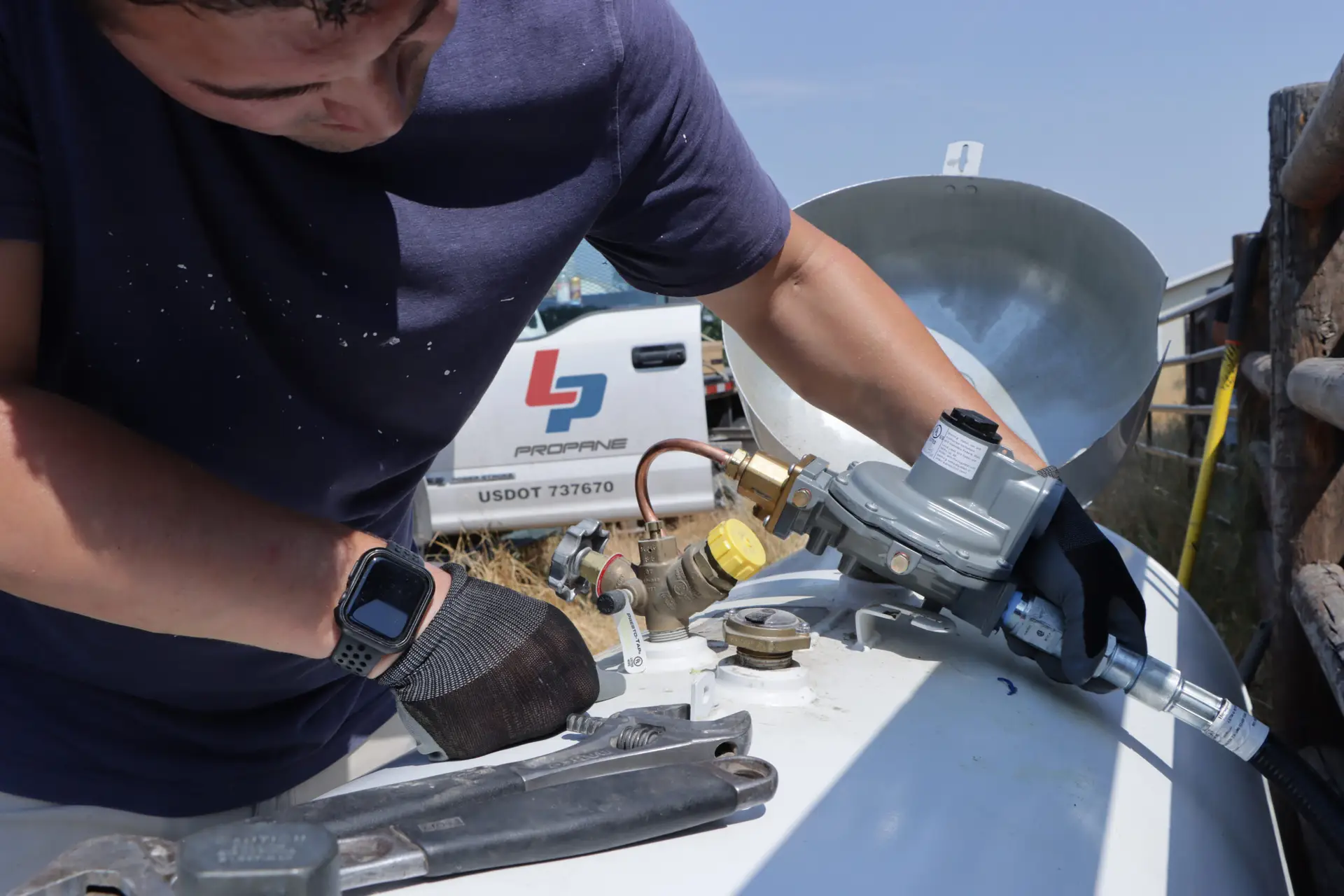
If it is safe and easy to reach, you can close the propane tank valve to stop the gas flow. The valve is usually located on the top of the tank. Do not risk your safety by walking through a strong gas smell.

Avoid Sparks

Avoid turning lights on or off, using electrical devices, or operating appliances near a suspected leak. Even a small spark can ignite propane vapor. Move outside before making any phone calls.

Open Doors Safely

If you can quickly open a door or window while leaving, it may help release trapped gas. However, never delay leaving to improve ventilation. Getting people away from danger is the most important step.

Avoid Restarting

Do not turn propane appliances back on after a leak. A hidden issue may still exist inside the system. A trained technician should inspect and approve the equipment before use.

Call For Help

Contact your propane supplier, emergency services, or a licensed technician after leaving the area. Professionals can locate the leak and repair the damaged part safely. Never attempt major propane repairs yourself.

What Causes Propane Leaks?

Damaged Tanks

Propane tanks can develop problems due to corrosion, physical damage, or faulty valves. A damaged tank may allow gas to escape slowly over time. Regular inspections help identify tank problems before they become serious.

Loose Connections

Loose fittings, worn hoses, and damaged connectors can create leak points around propane appliances. These problems may happen after equipment movement or repairs. Proper installation and routine checks reduce these risks.

Faulty Appliances

Propane appliances such as furnaces, stoves, fireplaces, and water heaters can develop leaks from worn components or damaged parts. Professional servicing helps keep these systems operating safely.

Weather Damage

Strong storms, flooding, extreme temperatures, and falling objects can damage outdoor propane equipment. Pipes, regulators, and tanks may require inspection after severe weather. Checking equipment after major events can prevent hidden problems.

Poor Maintenance

Skipping regular maintenance increases the chance of unnoticed issues. Small problems with valves, regulators, or connections can become larger safety concerns. Routine care helps keep propane systems reliable.

Wrong Repairs

Attempting DIY propane repairs can create additional risks because propane systems contain pressurized fuel. Incorrect fixes may cause continued leaks. Always use trained professionals for propane repairs.

How Can You Prevent Propane Leaks?

Preventing propane leaks requires safe habits, regular inspections, and proper equipment handling. A few simple actions can reduce the chance of dangerous situations. Keep propane appliances clean, avoid storing flammable materials near equipment, and learn how your propane system works. Every person in your household should know the smell of propane and what steps to follow during an emergency. Schedule regular inspections of propane tanks, valves, regulators, and appliance connections to identify problems before they become serious. Keep outdoor propane tanks clear from debris, snow, and objects that may damage the equipment. Always follow the manufacturer’s safety instructions when using propane appliances and never modify the system without professional guidance. Proper maintenance and careful use help reduce the risk of leaks and keep your propane system working safely.

When Should You Contact A Professional?

You should contact a propane professional if you smell gas, notice damaged equipment, hear unusual sounds, or experience repeated appliance problems. A qualified technician can test the system, find the source of the leak, replace damaged components, and confirm that your propane equipment is safe to operate. Professional help is also important after severe weather, equipment damage, or any situation where you are unsure about the safety of your propane system. Technicians use specialized tools to check gas pressure, inspect connections, and identify hidden issues that may not be visible. Calling a professional early can prevent a small problem from becoming a dangerous emergency.

How Should You Respond To A Propane Leak?

Knowing how to detect and handle a propane leak can protect your home and family during an emergency. Warning signs like a rotten egg smell, unusual sounds, detector alerts, or frost around connections should never be ignored. If you suspect a leak, leave the area, avoid ignition sources, and contact a trained professional. Regular inspections and safe propane practices help prevent leaks and keep your home safer throughout the year. During a propane emergency, avoid returning to the building until a qualified person confirms that the area is safe. Teach everyone in your household where the propane shutoff valve is located and create a simple emergency plan. Quick decisions, proper awareness, and professional inspections are the best ways to reduce risks associated with propane leaks.

BLAZING BLOGS

How To Detect and Handle a Propane Leak | LP Propane

Why Propane Appliances Need Proper Ventilation

Why Propane Appliances Need Proper Ventilation Propane appliances offer dependable energy for heating, cooking, hot water, and other household needs. Many homeowners choose propane because it works efficiently and provides reliable performance, especially in areas where natural gas is not

Read More »
How To Detect and Handle a Propane Leak | LP Propane

Are Propane Water Heaters Worth It? 

Are Propane Water Heaters Worth It? Choosing the right water heater can impact your comfort, energy bills, and daily routine for years. Many homeowners consider propane water heaters because they provide strong heating performance, faster recovery times, and reliable hot

Read More »

State Fair Giveaway

$500 Worth of Propane

Be one of the first 200 New Customers to sign-up until September 15th to get $500 worth of propane, FREE! You’ll also get 1 year free tank rental when you switch!

JOIN THE IGNITE PROGRAM

NEW CUSTOMER? Fill out the New Customer Application to join IGNITE.

Save $0.05 Per Gallon with the IGNITE Program Learn more!

This field is for validation purposes and should be left unchanged.
Name(Required)
Service Address(Required)
AAP Agreement(Required)
You will be contacted by a Customer Service Representative to obtain your credit card information.
Terms of Service(Required)

LP Propane Ignite Program – Terms and Conditions

1. Eligibility and Program Requirements
To qualify for and maintain enrollment in the LP Propane Ignite Program and receive the $0.05 per gallon fuel discount, the Customer must simultaneously enroll in and maintain active status in the following three core services:

Auto Fill Delivery: The Customer authorizes LP Propane to automatically monitor, schedule, and deliver propane to the designated tank when levels dictate, bypassing the standard Will Call scheduling requirements.

Auto Pay: The Customer must maintain a valid, authorized payment method on file (Credit Card, Debit Card, or ACH/Direct Draft). Invoices will be automatically drafted within 7 days after the delivery.

Paperless Billing: The Customer agrees to receive all invoices, statements, and program communications via email. Opting out of online billing or requesting paper statements will result in a $4.95 monthly fee and disqualification from the program.

2. Fuel Discount Terms

The $0.05 per gallon discount applies exclusively to the standard market rate of propane at the exact time of delivery.

The discount is applied automatically on invoice.

This discount cannot be combined with specific commercial contract pricing or volume discounts unless expressly authorized in writing by LP Propane.

3. Tank Monitoring and Delivery Access

LP Propane may utilize physical tank monitors or advanced usage-tracking algorithms to schedule deliveries.

Access Requirements: The Customer must ensure the propane tank is always completely accessible to delivery personnel and vehicles. The pathway must be free of obstacles, locked gates, debris, or unrestrained animals within a 100-foot radius.

Seasonal Maintenance: During winter months, the Customer is legally responsible for clearing snow, ice, and paths leading to the tank. If a delivery vehicle cannot safely access the tank, the delivery will be delayed, and any emergency filling fees incurred due to subsequent low fuel levels will be billed to the Customer.

4. Credit Status and Payment Failures

If an Auto Pay transaction is declined or fails for any reason (e.g., expired card, insufficient funds), the Customer must update their account billing details immediately. If the transaction remains unprocessed for 30 days despite attempts by LP Propane to contact the Customer, the account will be automatically unenrolled from the program.

If an account balance becomes past due, LP Propane reserves the right to suspend Auto Fill privileges, pause the $0.05 per gallon discount, and transition the account to a "Will Call / Cash on Delivery" basis until the account is brought current and after review and approval of LP Propane’s credit department.

5. Program Termination or Changes

Customer Termination: Removing any of the mandatory components (Auto Fill, Auto Pay, or Paperless Billing) constitutes voluntary termination from the program. If you would like to opt out of the Ignite program you must submit 30 day written notice

Company Modifications: LP Propane reserves the right to alter, modify, or terminate the Ignite Program framework, including discount amounts or underlying eligibility terms.

MM slash DD slash YYYY