How Multiple Propane Appliances Share One Tank

One propane tank can supply several household appliances at the same time, including a furnace, water heater, range, dryer, fireplace, and standby generator. The tank does not assign fuel to each appliance separately. Instead, propane vapor moves through a shared distribution system, where regulators control pressure and gas lines carry fuel to individual appliances. The main challenge is making sure the system can deliver enough propane during periods of high demand. Tank size, vaporization rate, regulator capacity, pipe diameter, gas-line length, and total BTU load all affect how well the system performs. A properly planned setup allows several appliances to operate from one propane tank without noticeable pressure loss or reduced burner performance.

How Multiple Propane Appliances Share One Tank | LP Propane

How Does One Propane Tank Supply Multiple Appliances?

Propane Changes to Vapor

Propane is stored inside the tank mainly as a liquid under pressure. When an appliance needs fuel, part of that liquid absorbs heat and changes into vapor. The vapor then leaves the tank and enters the home’s gas-delivery system.

Regulators Control Pressure

Tank pressure is far higher than the pressure most household appliances need. A regulator lowers that pressure before propane travels through the home’s gas piping. The regulator must also pass enough fuel to meet the combined appliance demand.

Main Lines Carry Gas

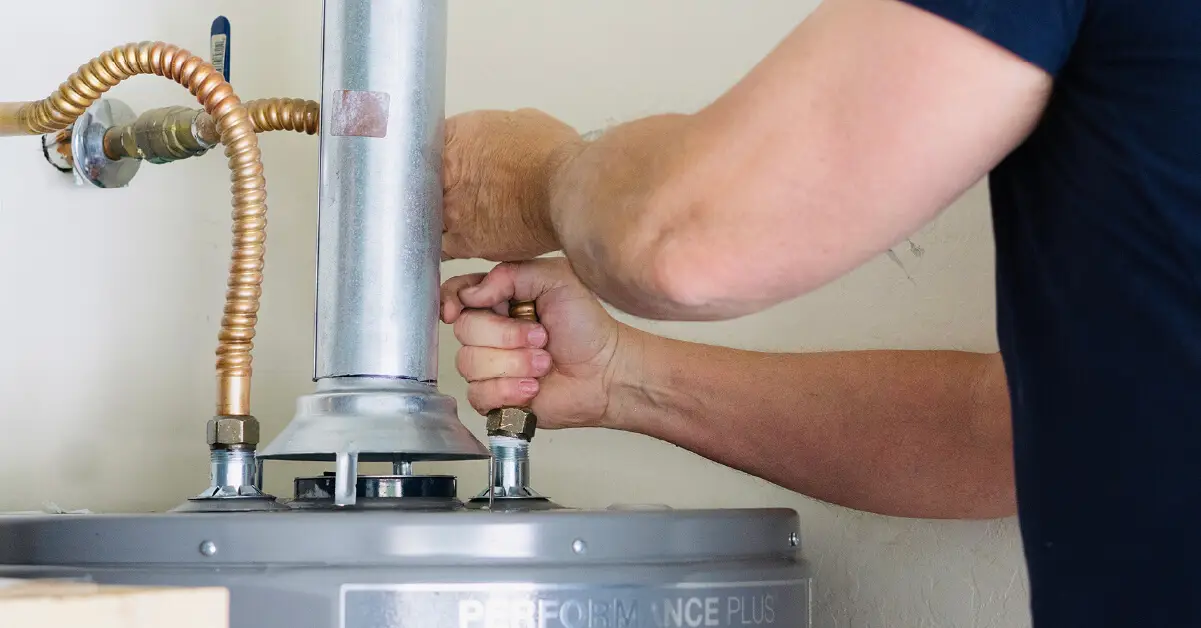
A main gas line carries propane vapor away from the regulator and toward the building. Smaller branch lines split from this main pipe to feed individual appliances. This branching layout allows many appliances to share one propane source.

Appliances Draw Separately

Each appliance draws propane only when its burner or engine operates. A furnace may run while the range is off, or several appliances may operate together. The system automatically supplies gas based on how much each operating appliance requires.

BTUs Measure Demand

Propane appliance input is usually measured in British thermal units per hour, or BTU/h. Higher BTU ratings mean the appliance needs a greater volume of propane during operation. A furnace may need around 80,000 to 120,000 BTU/h, while a dryer may need about 20,000 to 35,000 BTU/h.

Peak Demand Matters

The biggest test occurs when several propane appliances operate at the same time. Their individual BTU ratings combine into one larger demand on the tank, regulator, and piping. System design must account for these high-use periods rather than average daily consumption alone.

Multiple appliances need steady propane flow and pressure

How Is Propane Demand Calculated?

Add Appliance Ratings

Start by finding the BTU/h input rating printed on each propane appliance. Add these ratings together to estimate the total connected gas load. Four appliances rated at 100,000, 50,000, 60,000, and 30,000 BTU/h create a combined load of 240,000 BTU/h.

Check Simultaneous Use

Not every appliance will operate continuously, but several can run at once. Winter heating, hot-water use, cooking, and laundry can easily overlap. The more high-BTU appliances that operate together, the greater the required gas-flow capacity.

Tank Size Matters

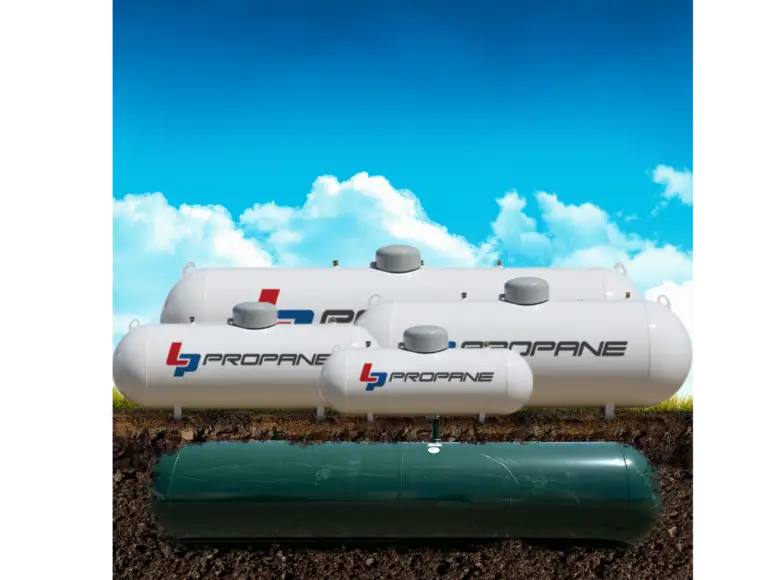
Tank size affects both stored fuel volume and the amount of propane vapor available during heavy use. Larger tanks generally support higher continuous demand more easily. Many full-home propane systems use tanks in the 500-gallon range, while larger properties may require more storage.

Leave Expansion Space

Propane tanks are not normally filled completely with liquid fuel. Extra space allows liquid propane to expand as its temperature rises. A tank rated at 500 gallons may typically hold around 400 gallons of propane at an 80% fill level.

Propane Stores Energy

One gallon of propane contains roughly 91,500 BTUs of energy. This figure can help estimate how quickly different appliances may consume stored fuel. A 90,000 BTU/h appliance operating continuously near full input would use close to one gallon per hour.

Load Beats Appliance Count

The number of connected appliances does not tell the whole story. Six low-input appliances may require less fuel than three large appliances running together. BTU demand, operating time, and simultaneous use provide a better basis for propane system sizing.

What Can Limit Propane Flow?

Cold Weather Effects

Propane needs heat to change from liquid into vapor. Cold temperatures reduce the heat available around the tank, which can lower its vapor-production rate. At the same time, heating appliances often operate longer, creating higher fuel demand.

Low Fuel Levels

A nearly empty tank may have less ability to vaporize propane quickly during periods of heavy demand. This effect becomes more noticeable in cold weather. A low tank level combined with high appliance use can place extra stress on the fuel-delivery system.

Regulator Flow Limits

Every propane regulator has a maximum gas-flow capacity. If total appliance demand rises above that level, downstream pressure may fall. This means a tank can contain plenty of propane while appliances still receive less gas than they require.

Pipe Diameter Matters

Larger gas pipes can carry more propane vapor than smaller pipes over the same distance. A line that is too narrow can restrict flow when several appliances operate. High-BTU equipment may therefore require larger main or branch piping.

Distance Reduces Capacity

Gas pressure drops as propane travels through long sections of piping. Friction inside the pipe creates more resistance as distance increases. A pipe that handles a certain BTU load over 20 feet may not handle the same load over a much longer run.

Generators Raise Demand

Standby generators can add a large propane load during a power outage. They may run while heating, hot-water, cooking, and fireplace equipment remain active. A generator addition should therefore include a review of total system capacity.

How Should You Plan a New Propane Appliance?

Before adding another propane appliance, calculate how much BTU demand it will add to the existing system. The tank, regulator, main line, branch piping, and appliance connection all need enough capacity for the higher load. Distance also matters because longer gas lines experience greater pressure loss. If a new tankless water heater, generator, fireplace, pool heater, or furnace significantly increases demand, parts of the existing gas system may need to be resized before installation.

What Shows a Propane System Is Undersized?

Problems often appear when several appliances operate at the same time. A burner may become weaker, an appliance may struggle to ignite, or equipment may shut down when another high-demand appliance starts. Similar symptoms can also appear during very cold weather or when the tank level becomes low. These signs do not automatically prove that the tank is too small because pipe sizing, regulator performance, equipment condition, and gas pressure can produce similar problems.

How Can You Plan for Future Propane Use?

Think about future appliances when the propane system is first installed or upgraded. A home that may later add a generator, pool heater, outdoor kitchen, second water heater, or workshop heater could need much more gas capacity than it uses today. Planning for likely future BTU demand can reduce the need for major pipe or regulator changes later. A qualified propane professional should review the full system whenever a large new appliance is added so the tank, regulator, piping, and appliance load continue to work together properly.

BLAZING BLOGS

How Multiple Propane Appliances Share One Tank | LP Propane

How Does a Propane Tank Work? 

How Does a Propane Tank Work? A propane tank works by storing propane as a liquid under pressure and releasing it as vapor when an appliance needs fuel. Inside the tank, liquid propane sits at the bottom while propane vapor

Read More »

State Fair Giveaway

$500 Worth of Propane

Be one of the first 200 New Customers to sign-up until September 15th to get $500 worth of propane, FREE! You’ll also get 1 year free tank rental when you switch!

JOIN THE IGNITE PROGRAM

NEW CUSTOMER? Fill out the New Customer Application to join IGNITE.

Save $0.05 Per Gallon with the IGNITE Program Learn more!

This field is for validation purposes and should be left unchanged.
Name(Required)
Service Address(Required)
AAP Agreement(Required)
You will be contacted by a Customer Service Representative to obtain your credit card information.
Terms of Service(Required)

LP Propane Ignite Program – Terms and Conditions

1. Eligibility and Program Requirements
To qualify for and maintain enrollment in the LP Propane Ignite Program and receive the $0.05 per gallon fuel discount, the Customer must simultaneously enroll in and maintain active status in the following three core services:

Auto Fill Delivery: The Customer authorizes LP Propane to automatically monitor, schedule, and deliver propane to the designated tank when levels dictate, bypassing the standard Will Call scheduling requirements.

Auto Pay: The Customer must maintain a valid, authorized payment method on file (Credit Card, Debit Card, or ACH/Direct Draft). Invoices will be automatically drafted within 7 days after the delivery.

Paperless Billing: The Customer agrees to receive all invoices, statements, and program communications via email. Opting out of online billing or requesting paper statements will result in a $4.95 monthly fee and disqualification from the program.

2. Fuel Discount Terms

The $0.05 per gallon discount applies exclusively to the standard market rate of propane at the exact time of delivery.

The discount is applied automatically on invoice.

This discount cannot be combined with specific commercial contract pricing or volume discounts unless expressly authorized in writing by LP Propane.

3. Tank Monitoring and Delivery Access

LP Propane may utilize physical tank monitors or advanced usage-tracking algorithms to schedule deliveries.

Access Requirements: The Customer must ensure the propane tank is always completely accessible to delivery personnel and vehicles. The pathway must be free of obstacles, locked gates, debris, or unrestrained animals within a 100-foot radius.

Seasonal Maintenance: During winter months, the Customer is legally responsible for clearing snow, ice, and paths leading to the tank. If a delivery vehicle cannot safely access the tank, the delivery will be delayed, and any emergency filling fees incurred due to subsequent low fuel levels will be billed to the Customer.

4. Credit Status and Payment Failures

If an Auto Pay transaction is declined or fails for any reason (e.g., expired card, insufficient funds), the Customer must update their account billing details immediately. If the transaction remains unprocessed for 30 days despite attempts by LP Propane to contact the Customer, the account will be automatically unenrolled from the program.

If an account balance becomes past due, LP Propane reserves the right to suspend Auto Fill privileges, pause the $0.05 per gallon discount, and transition the account to a "Will Call / Cash on Delivery" basis until the account is brought current and after review and approval of LP Propane’s credit department.

5. Program Termination or Changes

Customer Termination: Removing any of the mandatory components (Auto Fill, Auto Pay, or Paperless Billing) constitutes voluntary termination from the program. If you would like to opt out of the Ignite program you must submit 30 day written notice

Company Modifications: LP Propane reserves the right to alter, modify, or terminate the Ignite Program framework, including discount amounts or underlying eligibility terms.

MM slash DD slash YYYY