How Does a Propane Tank Work?

A propane tank works by storing propane as a liquid under pressure and releasing it as vapor when an appliance needs fuel. Inside the tank, liquid propane sits at the bottom while propane vapor fills the space above it. When a furnace, grill, water heater, or generator starts using gas, vapor leaves the tank and more liquid propane changes into vapor to replace it. A regulator then reduces the pressure before the gas reaches the appliance. Tank size, outdoor temperature, fuel level, and appliance demand all influence this process. Understanding how a propane tank works can help homeowners recognize normal operation, monitor fuel levels, understand cold-weather behavior, and spot situations that may require attention from a propane professional.

How Does a Propane Tank Work?  | LP Propane

How Does a Propane Tank Store and Supply Fuel?

Propane Inside Tanks

A propane tank contains both liquid propane and propane vapor. Liquid propane remains in the lower part of the container, while vapor occupies the open space above the liquid level. This balance allows the tank to supply gas without a mechanical pump in most residential systems. When vapor leaves, some of the liquid changes state and replaces the used gas.

Liquid Propane Storage

Propane is stored as a liquid because liquid propane takes up much less room than propane in gas form. This allows a large amount of energy to fit inside a relatively compact storage container. When released under normal atmospheric conditions, liquid propane expands dramatically into vapor. Roughly one gallon of liquid propane can create about 270 gallons of propane vapor, depending on conditions.

Propane Vaporization Process

Vaporization is the process that changes liquid propane into propane gas. The liquid absorbs heat through the metal walls of the tank and uses that heat energy to change into vapor. Propane boils at about -44°F at normal atmospheric pressure. Because common outdoor temperatures are usually above that point, propane can readily create vapor when tank pressure and fuel demand allow it.

Tank Pressure Changes

Pressure inside a propane tank comes mainly from propane vapor above the liquid. Temperature has a major effect on this pressure because warmer propane produces more vapor pressure than colder propane. At about 70°F, propane pressure can be around 127 psig. As temperature rises, pressure also rises, which is why propane containers include space for expansion and pressure-related safety components.

Fuel Flow Process

When an appliance turns on, it creates demand for propane gas. Vapor moves from the tank through the service valve and into the regulator before entering the piping connected to the appliance. As propane leaves the tank, internal vapor pressure drops slightly. That pressure change encourages more liquid propane to vaporize, allowing the tank to continue supplying fuel while propane remains available.

Regulator Pressure Control

A propane regulator lowers tank pressure before the fuel reaches household appliances. Tank pressure can vary greatly, but most appliances require gas at a much lower and more controlled pressure. Some systems use two-stage regulation. The first regulator lowers tank pressure substantially, while the second regulator reduces it further to the operating pressure required by the home’s propane equipment.

Propane tanks balance pressure, temperature, and flow

What Parts Control a Propane Tank?

Main Service Valve

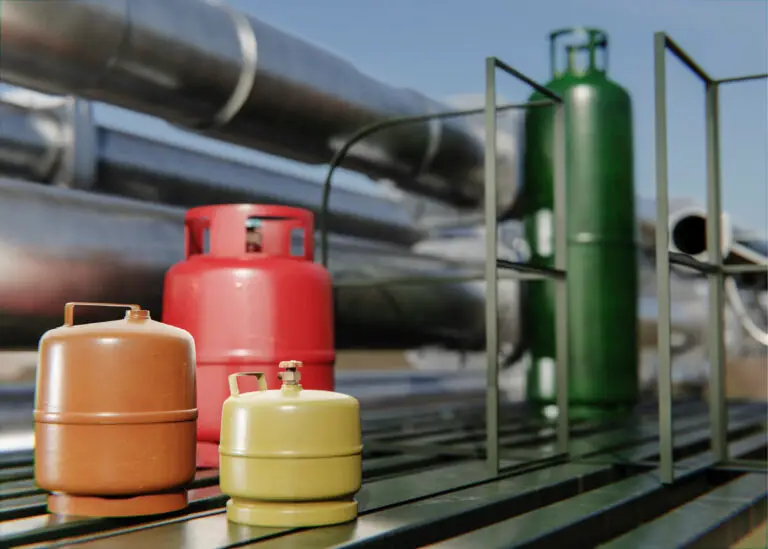
The service valve controls propane leaving the tank. When it is open, propane vapor can travel toward the regulator and connected fuel system. Closing the service valve stops normal propane flow from the container. On portable grill cylinders, this is usually the valve controlled by the handwheel at the top of the cylinder.

Propane Fill Valve

The fill valve allows propane to enter the tank during a delivery or refill. It is different from the service valve because adding propane and withdrawing propane require separate connections.

Overfill Prevention Device

An Overfill Prevention Device, often shortened to OPD, limits how much liquid propane can enter certain portable cylinders. Many common grill cylinders with an OPD have a triangular-shaped valve handwheel. The device helps preserve expansion space inside the cylinder. 

Eighty Percent Fill

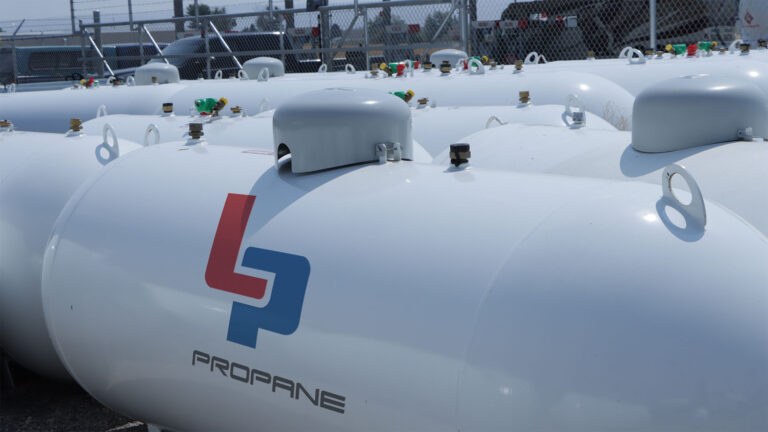
Propane tanks are normally not filled completely with liquid. A common maximum fill level is about 80% of the container’s water capacity, leaving the remaining space available for fuel expansion. For example, a 500-gallon propane tank may contain about 400 gallons when filled to the typical 80% level. A gauge near 80% after delivery can therefore represent a properly filled tank.

Pressure Relief Valve

The pressure relief valve acts as a protective component when pressure inside the tank becomes unusually high. If pressure reaches the valve’s designed opening point, the valve can release vapor. This component is different from the regulator. The regulator controls normal operating pressure going to appliances, while the relief valve responds to abnormal pressure conditions inside the storage container.

Propane Level Gauge

Many residential propane tanks have a float gauge that estimates the percentage of liquid remaining. A float inside the tank moves with the propane level and transfers that movement to the external dial. The gauge normally shows a percentage instead of gallons. On a 500-gallon tank, a 40% reading would represent roughly 200 gallons of propane under typical conditions.

What Affects Propane Tank Performance?

Cold Weather Effects

Cold temperatures reduce propane vapor pressure. As the propane becomes colder, it produces vapor less quickly, which can affect performance when several appliances require large amounts of fuel.

Tank Size Matters

Larger propane tanks usually have more surface area available to absorb heat from the surrounding environment. This can help them produce propane vapor at a higher rate than smaller containers.

Low Fuel Levels

The amount of liquid remaining inside the tank can influence vapor production. As the propane level falls, the amount of tank wall touching liquid propane also decreases. This matters most during cold temperatures or periods of heavy appliance use.

Tank Frost Formation

Frost can appear on a propane tank when rapid vaporization removes heat from the propane and the surrounding metal. Moisture in the air can then condense and freeze on the cold tank surface.

Cylinder Position Matters

Many portable propane cylinders are designed to supply vapor from the space above the liquid. Keeping the cylinder upright helps keep liquid propane away from fittings intended to receive vapor. Using a cylinder in the wrong position can change the type of propane reaching the valve and connected equipment. 

Weak Flame Causes

A weak propane flame does not always mean the tank is empty. Low temperature, reduced vaporization, high appliance demand, regulator trouble, restricted fuel flow, or an appliance problem can produce similar symptoms.

How Are Propane Tanks Different From Cylinders?

Large residential propane tanks and portable cylinders rely on the same basic liquid-to-vapor process, but they differ in construction, capacity, use, and regulatory treatment. Many portable cylinders are built under U.S. Department of Transportation requirements, while many stationary residential tanks follow ASME pressure-vessel standards. Portable cylinders may also require periodic requalification before continued transportation and refill. A grill cylinder, RV cylinder, and large home tank should therefore be treated according to the rules and instructions written for that specific container type.

What Happens During a Propane Leak?

Propane is naturally difficult to smell, so an odorant is added to make leaks easier to notice. The resulting odor is often compared with rotten eggs or a strong sulfur-like smell. If you notice that odor, avoid flames, switches, engines, or anything that could create a spark near the suspected leak. Leave the area and contact your propane supplier, emergency services, or fire department from a safe location. A propane system with a suspected leak should be inspected before normal operation resumes.

What Should Propane Users Remember?

The simplest way to understand how a propane tank works is to follow the fuel from storage to combustion. Propane remains mostly liquid while stored under pressure, changes into vapor as fuel is needed, passes through the service valve, and enters a regulator that lowers its pressure before the gas reaches an appliance. Outdoor temperature, tank size, propane level, and appliance demand all affect that process. Monitor the tank regularly, follow equipment instructions, and contact a qualified propane professional when you notice leaks, damaged components, unusual icing, or repeated fuel-supply problems.

BLAZING BLOGS

How Does a Propane Tank Work?  | LP Propane

How Multiple Propane Appliances Share One Tank

How Multiple Propane Appliances Share One Tank One propane tank can supply several household appliances at the same time, including a furnace, water heater, range, dryer, fireplace, and standby generator. The tank does not assign fuel to each appliance separately.

Read More »

State Fair Giveaway

$500 Worth of Propane

Be one of the first 200 New Customers to sign-up until September 15th to get $500 worth of propane, FREE! You’ll also get 1 year free tank rental when you switch!

JOIN THE IGNITE PROGRAM

NEW CUSTOMER? Fill out the New Customer Application to join IGNITE.

Save $0.05 Per Gallon with the IGNITE Program Learn more!

This field is for validation purposes and should be left unchanged.
Name(Required)
Service Address(Required)
AAP Agreement(Required)
You will be contacted by a Customer Service Representative to obtain your credit card information.
Terms of Service(Required)

LP Propane Ignite Program – Terms and Conditions

1. Eligibility and Program Requirements
To qualify for and maintain enrollment in the LP Propane Ignite Program and receive the $0.05 per gallon fuel discount, the Customer must simultaneously enroll in and maintain active status in the following three core services:

Auto Fill Delivery: The Customer authorizes LP Propane to automatically monitor, schedule, and deliver propane to the designated tank when levels dictate, bypassing the standard Will Call scheduling requirements.

Auto Pay: The Customer must maintain a valid, authorized payment method on file (Credit Card, Debit Card, or ACH/Direct Draft). Invoices will be automatically drafted within 7 days after the delivery.

Paperless Billing: The Customer agrees to receive all invoices, statements, and program communications via email. Opting out of online billing or requesting paper statements will result in a $4.95 monthly fee and disqualification from the program.

2. Fuel Discount Terms

The $0.05 per gallon discount applies exclusively to the standard market rate of propane at the exact time of delivery.

The discount is applied automatically on invoice.

This discount cannot be combined with specific commercial contract pricing or volume discounts unless expressly authorized in writing by LP Propane.

3. Tank Monitoring and Delivery Access

LP Propane may utilize physical tank monitors or advanced usage-tracking algorithms to schedule deliveries.

Access Requirements: The Customer must ensure the propane tank is always completely accessible to delivery personnel and vehicles. The pathway must be free of obstacles, locked gates, debris, or unrestrained animals within a 100-foot radius.

Seasonal Maintenance: During winter months, the Customer is legally responsible for clearing snow, ice, and paths leading to the tank. If a delivery vehicle cannot safely access the tank, the delivery will be delayed, and any emergency filling fees incurred due to subsequent low fuel levels will be billed to the Customer.

4. Credit Status and Payment Failures

If an Auto Pay transaction is declined or fails for any reason (e.g., expired card, insufficient funds), the Customer must update their account billing details immediately. If the transaction remains unprocessed for 30 days despite attempts by LP Propane to contact the Customer, the account will be automatically unenrolled from the program.

If an account balance becomes past due, LP Propane reserves the right to suspend Auto Fill privileges, pause the $0.05 per gallon discount, and transition the account to a "Will Call / Cash on Delivery" basis until the account is brought current and after review and approval of LP Propane’s credit department.

5. Program Termination or Changes

Customer Termination: Removing any of the mandatory components (Auto Fill, Auto Pay, or Paperless Billing) constitutes voluntary termination from the program. If you would like to opt out of the Ignite program you must submit 30 day written notice

Company Modifications: LP Propane reserves the right to alter, modify, or terminate the Ignite Program framework, including discount amounts or underlying eligibility terms.

MM slash DD slash YYYY