
Are propane and natural gas the same?

At first glance, propane and natural gas might appear to be identical fuel options. However, there are various differences that can have an effect on usage, efficiency, and availability. When choosing between propane and natural gas for home heating, cooking, or powering appliances, understanding the characteristics, benefits, and drawbacks of each fuel can help a consumer make a better decision.

Are propane and natural gas the same? | LP Propane

What is Propane?

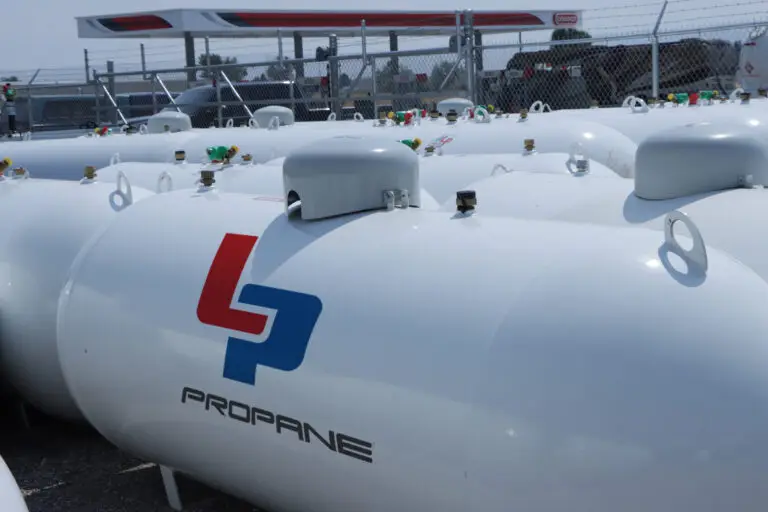
Propane is a form of liquefied petroleum gas. It is obtained during the extraction of natural gas and crude oil refining. Since it is not stable in atmospheric pressure, propane is stored as a liquid in a pressurized container, and it’s used for many purposes, from heating homes, cooking, refueling vehicles, and even powering some industrial facilities. Propane is usually provided in portable and large refillable tanks and is often used in places where natural gas pipelines are inaccessible.

What is Natural Gas?

Natural gas is a fossil fuel that is primarily composed of methane. It is extracted from underground reservoirs and delivered to homes and businesses through a network of pipelines. It is widely used for residential heating, cooking, and electricity generation. Since it is delivered through pipelines, the users do not have to refill tanks, and it is convenient in urban areas.

From cooking to heating,
propane and natural gas deliver the energy you need.
Choose the right one for your home and business needs!

Main Differences Between Propane and Natural Gas

1. State of Matter and Storage

The biggest differences between propane and natural gas are in its means of storage and transport. The former remains in the gaseous state during all its usage, whereas the latter is compressed into a liquid that makes storage and transportation much easier. Propane cannot be stored like the rest, and since it is kept in tanks, it has to periodically be refilled. Users of natural gas do not have such problems, provided they are connected to the pipeline network.

2. Energy Content and Efficiency

Propane has more energy content compared to natural gas. One cubic foot of propane contains about 2,516 BTUs. The same volume of natural gas yields less than 1,030 BTUs per cubic foot. This indicates that propane will produce heat per unit more effectively than natural gas, making it more efficient in heating. To homeowners who seek increased efficiency, propane may be a better option, but definitely in colder climates.

3. Cost Factors

The comparison of propane with natural gas shows important differences in cost, mainly because it depends on location, supply, and demand. More or less, natural gas is cheaper by a unit quantity since it is almost everywhere, distributed through pipelines. However, because propane contains more energy than natural gas, consumers may need fewer of them to produce the same amount of heat. It means that, even if propane costs more per unit, sometimes it may be cheaper.

4. Accessibility and Delivery

Accessibility is one of the major considerations in deciding between propane and natural gas. The major consumers of natural gas are usually in urban and suburban areas, where pipeline infrastructure already exists. Homes located in rural or remote locations are less likely to be accessible to natural gas and may need to retain a propane system. LP Propane provides reliable delivery services so that homeowners will never get caught without the fuel they need, even if natural gas pipelines cannot be used for them.

5. Environmental Impact

Propane and natural gas are two cleaner fuels to use as substitutes for coal and oil, although both carry certain environmental effects. Burning propane results in less carbon dioxide than in natural gas. Its primary constituent, however, is methane, which is one of the potent greenhouse gases and a responsible agent that has increased earth’s temperature where pipeline leakages have been there. This seems not to occur in propane because methane is not formed and combustion process is better as it results in relatively lesser pollutants than the ones produced during natural gas.

Comparison of Propane and Natural Gas for Various Uses

Home Heating

Both propane and natural gas are useful for home heating. Natural gas is used extensively in cities as it is inexpensive and comes through pipelines. The supply will never run out as the pipes can be used for continuous delivery without the need to refill, and there will be a fixed bill at the end of every month. It is often the only practical choice for residents staying in rural areas. LP Propane has reliable delivery of propane and tank refills, guaranteeing that your customers will never run out of fuel for heating and other needs in the household. Because propane contains more energy per gallon, it may also be more efficient at higher temperatures where heating demands are much higher.

Cooking

Both are also excellent for cooking since they offer control of temperature and speed of heating. However, some very basic differences come up in the usage of propane in stoves. The propane is burnt hotter than the natural gas and, thus, cooks much quicker and gives a better efficiency in heat. This is one of the reasons that grilling happens to be highly associated with propane; its mobility allows for multiple choices as to where one intends to cook; whether in one’s home or in a camp. As a matter of fact, connecting the grill to the gas line highly limits the number of locations of the grill.

Industrial and Commercial Applications

Both propane and natural gas are economically and industrially important but differently applied. Natural Gas is readily used in power plants, factories, and large-scale heating systems because the fuel is inexpensive and delivered in sequential fields. The company relies on natural gas for consistent energy supply and efficiency. Compared to this, propane is often used in construction, agriculture, and manufacturing. Its portability and high energy density make propane a prime fit for forklifts, farm equipment, and backup generators. LP Propane offers commercial and industrial propane to businesses which have a source of fuel they can rely on.

Making the Correct Choice

Propane vs. natural gas is the deciding factor of some issues such as location, cost, energy need, and availability. Those having natural gas pipelines in their neighborhood can be quite convenient and even economical for a homeowner. But those in rural areas or require portability will be left with propane. LP Propane supplies high-quality propane solutions to homes and businesses alike, providing guaranteed fuel delivery along with the finest customer service. Whether you’re looking for heating, cooking, or industrial uses, LP Propane is here to help and support you for all your energy needs.

BLAZING BLOGS

State Fair Giveaway

$500 Worth of Propane

Be one of the first 200 New Customers to sign-up until September 15th to get $500 worth of propane, FREE! You’ll also get 1 year free tank rental when you switch!

JOIN THE IGNITE PROGRAM

NEW CUSTOMER? Fill out the New Customer Application to join IGNITE.

Save $0.05 Per Gallon with the IGNITE Program Learn more!

This field is for validation purposes and should be left unchanged.
Name(Required)
Service Address(Required)
AAP Agreement(Required)
You will be contacted by a Customer Service Representative to obtain your credit card information.
Terms of Service(Required)

LP Propane Ignite Program – Terms and Conditions

1. Eligibility and Program Requirements
To qualify for and maintain enrollment in the LP Propane Ignite Program and receive the $0.05 per gallon fuel discount, the Customer must simultaneously enroll in and maintain active status in the following three core services:

Auto Fill Delivery: The Customer authorizes LP Propane to automatically monitor, schedule, and deliver propane to the designated tank when levels dictate, bypassing the standard Will Call scheduling requirements.

Auto Pay: The Customer must maintain a valid, authorized payment method on file (Credit Card, Debit Card, or ACH/Direct Draft). Invoices will be automatically drafted within 7 days after the delivery.

Paperless Billing: The Customer agrees to receive all invoices, statements, and program communications via email. Opting out of online billing or requesting paper statements will result in a $4.95 monthly fee and disqualification from the program.

2. Fuel Discount Terms

The $0.05 per gallon discount applies exclusively to the standard market rate of propane at the exact time of delivery.

The discount is applied automatically on invoice.

This discount cannot be combined with specific commercial contract pricing or volume discounts unless expressly authorized in writing by LP Propane.

3. Tank Monitoring and Delivery Access

LP Propane may utilize physical tank monitors or advanced usage-tracking algorithms to schedule deliveries.

Access Requirements: The Customer must ensure the propane tank is always completely accessible to delivery personnel and vehicles. The pathway must be free of obstacles, locked gates, debris, or unrestrained animals within a 100-foot radius.

Seasonal Maintenance: During winter months, the Customer is legally responsible for clearing snow, ice, and paths leading to the tank. If a delivery vehicle cannot safely access the tank, the delivery will be delayed, and any emergency filling fees incurred due to subsequent low fuel levels will be billed to the Customer.

4. Credit Status and Payment Failures

If an Auto Pay transaction is declined or fails for any reason (e.g., expired card, insufficient funds), the Customer must update their account billing details immediately. If the transaction remains unprocessed for 30 days despite attempts by LP Propane to contact the Customer, the account will be automatically unenrolled from the program.

If an account balance becomes past due, LP Propane reserves the right to suspend Auto Fill privileges, pause the $0.05 per gallon discount, and transition the account to a "Will Call / Cash on Delivery" basis until the account is brought current and after review and approval of LP Propane’s credit department.

5. Program Termination or Changes

Customer Termination: Removing any of the mandatory components (Auto Fill, Auto Pay, or Paperless Billing) constitutes voluntary termination from the program. If you would like to opt out of the Ignite program you must submit 30 day written notice

Company Modifications: LP Propane reserves the right to alter, modify, or terminate the Ignite Program framework, including discount amounts or underlying eligibility terms.

MM slash DD slash YYYY