How to Plan Propane Service Before Building a Rural Home

Your rural home’s propane system needs a place in the building plans before construction crews finish the driveway, pour patios, or install landscaping. Waiting until the house is nearly complete can leave you with an awkward tank location, expensive excavation, or delayed appliance startup. To plan propane service before building a rural home, choose your appliances, arrange a supplier site visit, confirm tank capacity and placement, and coordinate installation with your builder. The right setup depends on more than the home’s square footage. Climate, appliance demand, road access, future additions, and delivery schedules all affect the design. Settling these decisions early helps you build a practical fuel system that supports daily living and remains accessible throughout the year.

Overview

  • Plan propane service before finalizing the site layout.
  • Size the system around appliances, climate, and delivery needs.
  • Reserve suitable space for the tank and delivery access.
  • Coordinate gas lines, excavation, permits, and inspections.
  • Arrange testing and the first fill before appliance startup
How to Plan Propane Service Before Building a Rural Home | LP Propane

What Should You Decide Before Construction Starts?

Appliance Choices

Identify which equipment will use propane, including the furnace, water heater, range, dryer, fireplace, and standby generator. These choices determine the fuel system’s workload. A home using propane only for cooking needs a different setup from one using it for heating, hot water, and backup power.

Heating Requirements

Have a heating contractor calculate the home’s heat loss using its insulation, windows, air leakage, layout, and local winter conditions. Heat loss measures how quickly the building loses heat. Two 2,000-square-foot homes can require different furnace capacities because their construction and exposure differ.

Combined Fuel Demand

Combined fuel demand is the total input the propane system must support. Manufacturers express appliance input in British thermal units per hour, or BTU/h. For illustration, a 100,000-BTU/h furnace, 199,000-BTU/h tankless water heater, and 65,000-BTU/h range create 364,000 BTU/h of connected input before other equipment.

Future Additions

Tell the installer about a planned garage heater, outdoor kitchen, workshop, or generator before designing the initial system. Future appliances can change tank, regulator, and piping requirements. Planning for a likely addition now may avoid replacing a buried line after the driveway and landscaping are complete.

Property Layout

Provide a site plan showing the house, property boundaries, driveway, well, septic system, drainage areas, and planned outbuildings. Add future patios and garages where possible. The propane professional can then assess potential tank locations without treating land already reserved for another purpose as available space.

Supplier Coverage

Confirm that suppliers serve the actual property address and can reach it during difficult weather. A nearby office does not automatically mean every remote road falls within its delivery area. Ask about routine delivery lead times, emergency availability, installation services, and experience with properties similar to yours.

A smarter propane plan starts before construction does

How Do You Choose the Tank and Location?

Tank Capacity

Tank capacity describes storage volume, but the nominal size does not equal the amount normally delivered into it. A 500-gallon residential tank typically holds about 400 gallons at an 80% fill level. A 1,000-gallon tank typically holds about 800 gallons. Neither size automatically suits every rural home.

Winter Vapor Supply

Vaporization is the process that changes stored liquid propane into gas for typical household appliances. The tank must produce vapor fast enough during cold weather and at lower fuel levels. Ask the installer to evaluate peak appliance demand under local winter conditions, rather than choosing storage from annual gallons alone.

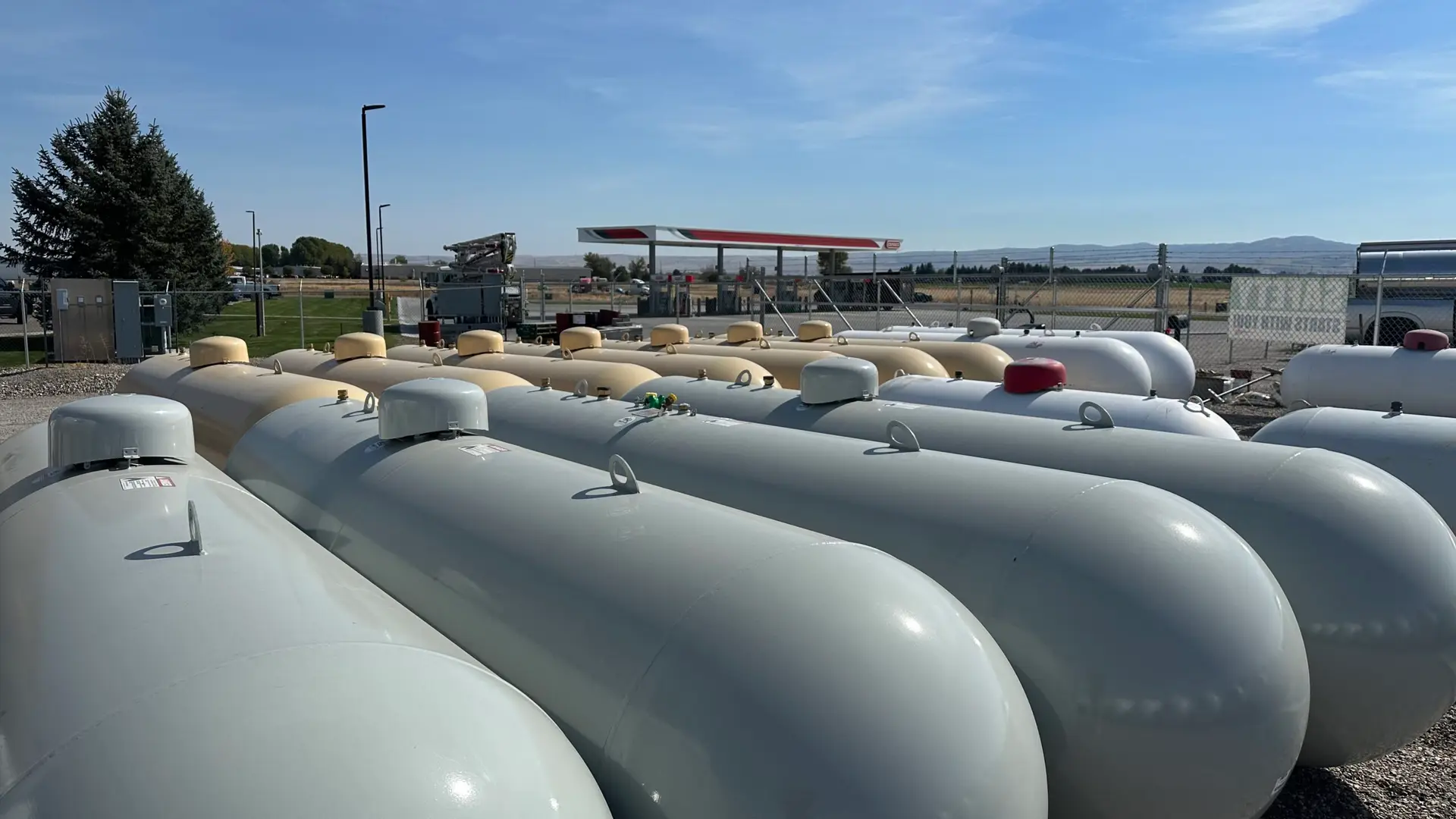
Aboveground Storage

An aboveground tank keeps the container visible and generally makes inspection and servicing easier. It needs approved support, suitable placement, and protection from vehicle damage where necessary. Consider the view from the house, but keep delivery and maintenance access central to the decision.

Underground Storage

An underground tank reduces the visible equipment to an access dome, but it adds excavation and corrosion-protection considerations. Cathodic protection is a system that helps protect buried steel against corrosion. Discuss testing, records, drainage, and ownership responsibilities before choosing this option. The access dome must remain reachable after landscaping.

Placement Requirements

Required separation distances depend on tank size, installation type, openings, ignition sources, property boundaries, and adopted local rules. Do not assume one distance applies to every installation. Have the propane professional confirm the location with the relevant authority before your builder reserves the space permanently.

Delivery Access

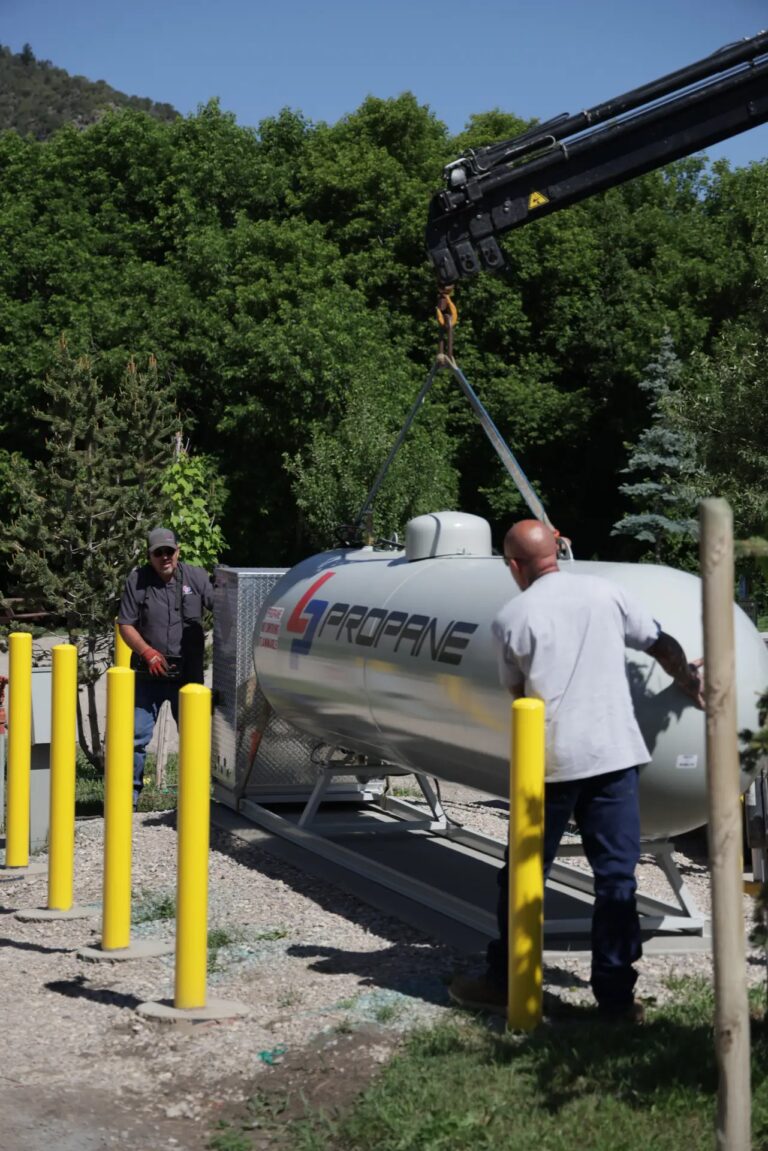
Arrange a site visit so the supplier can evaluate driveway slopes, gates, overhead clearance, turning space, and the route to the tank. Keep delivery vehicles away from septic systems and unsuitable ground. The approved location must work for filling and service after construction equipment leaves the property.

How Should Installation Fit Into the Building Schedule?

Early Site Review

Schedule the propane site review before finalizing the driveway, utility routes, and landscaping plan. At this stage, moving a proposed line on a drawing is easier than changing finished work. Ask the supplier to identify access concerns and confirm whether the preliminary appliance list supports the proposed tank arrangement.

Permit Planning

Ask which permits and inspections apply and who will obtain them. Depending on the location and project, separate approvals may cover the tank, fuel piping, and appliances. Confirm inspection stages before scheduling excavation or closing walls, because work that needs inspection must remain accessible until approval.

Utility Locating

Arrange the required utility location before excavation, following your state’s notice period and procedures. Public utility markings may not identify private well wiring, septic connections, or existing propane lines. Confirm whether a private locator is needed rather than assuming an undeveloped-looking property contains no buried services.

Gas Line Routing

The installer selects piping using appliance input, route length, pressure, material, and the load carried by each section. Reserve building entry points and routes before finishing walls or hard surfaces. A line suitable for one appliance may not support the furnace, water heater, and future generator together.

Excavation Coordination

Agree on who digs, supplies approved bedding or backfill, protects the work, and restores the surface. The installer should specify excavation requirements before digging starts. Do not combine propane piping with another utility trench unless the professionals responsible approve the arrangement and required separations.

Startup and Handover

Coordinate the first fill, required tests, appliance startup, and final approvals before relying on propane for move-in. Filling the tank does not establish that the entire system is ready. Have qualified professionals complete the checks and explain the tank gauge, shutoffs, delivery arrangements, and response to a suspected leak.

Should You Buy or Lease the Propane Tank?

Buying the tank gives you ownership and may provide more supplier choice, subject to a new supplier accepting the installation and its condition. Leasing often reduces the initial equipment expense, but the agreement may restrict who can fill the tank. Compare installation charges, rent, maintenance responsibilities, minimum purchases, removal fees, and remaining-fuel terms. Ask which components the agreement covers, because tank ownership does not necessarily include the underground line, regulators, and household piping. Review the written terms before choosing.

How Do You Budget for Installation and Deliveries?

Request an itemized quote covering the tank, placement, piping, regulators, excavation, permits, testing, first fill, and surface restoration. A long route through rocky ground can cost more than a short route through accessible soil, so use a site-specific quote. Separate storage capacity from refill planning: if a 500-gallon tank starts at 80% and your agreed reorder point is 30%, approximately 250 gallons separate those levels. Ask whether automatic delivery uses usage estimates, a tank monitor, or both, and explain that a newly occupied home has no established consumption history.

Set Up Propane Service Before Move-In

Complete the propane plan while construction decisions remain flexible. Bring the site layout, appliance ratings, future additions, and occupancy schedule to a joint discussion with your builder and propane professional. Confirm responsibilities for installation, inspections, startup, and ongoing service in writing. Keep an accurate record of buried piping and equipment details with your home documents. Once you move in, review consumption with the supplier after the first heating season so delivery planning reflects how your household actually uses propane.

BLAZING BLOGS

How to Plan Propane Service Before Building a Rural Home | LP Propane

How Much Propane Does a Garage Heater Use?

How Much Propane Does a Garage Heater Use? A warm garage makes winter projects more comfortable, but estimating the fuel bill takes more than checking the heater’s size. A propane garage heater rated between 40,000 and 100,000 BTU per hour

Read More »

State Fair Giveaway

$500 Worth of Propane

Be one of the first 200 New Customers to sign-up until September 15th to get $500 worth of propane, FREE! You’ll also get 1 year free tank rental when you switch!

JOIN THE IGNITE PROGRAM

NEW CUSTOMER? Fill out the New Customer Application to join IGNITE.

Save $0.05 Per Gallon with the IGNITE Program Learn more!

This field is for validation purposes and should be left unchanged.
Name(Required)
Service Address(Required)
AAP Agreement(Required)
You will be contacted by a Customer Service Representative to obtain your credit card information.
Terms of Service(Required)

LP Propane Ignite Program – Terms and Conditions

1. Eligibility and Program Requirements
To qualify for and maintain enrollment in the LP Propane Ignite Program and receive the $0.05 per gallon fuel discount, the Customer must simultaneously enroll in and maintain active status in the following three core services:

Auto Fill Delivery: The Customer authorizes LP Propane to automatically monitor, schedule, and deliver propane to the designated tank when levels dictate, bypassing the standard Will Call scheduling requirements.

Auto Pay: The Customer must maintain a valid, authorized payment method on file (Credit Card, Debit Card, or ACH/Direct Draft). Invoices will be automatically drafted within 7 days after the delivery.

Paperless Billing: The Customer agrees to receive all invoices, statements, and program communications via email. Opting out of online billing or requesting paper statements will result in a $4.95 monthly fee and disqualification from the program.

2. Fuel Discount Terms

The $0.05 per gallon discount applies exclusively to the standard market rate of propane at the exact time of delivery.

The discount is applied automatically on invoice.

This discount cannot be combined with specific commercial contract pricing or volume discounts unless expressly authorized in writing by LP Propane.

3. Tank Monitoring and Delivery Access

LP Propane may utilize physical tank monitors or advanced usage-tracking algorithms to schedule deliveries.

Access Requirements: The Customer must ensure the propane tank is always completely accessible to delivery personnel and vehicles. The pathway must be free of obstacles, locked gates, debris, or unrestrained animals within a 100-foot radius.

Seasonal Maintenance: During winter months, the Customer is legally responsible for clearing snow, ice, and paths leading to the tank. If a delivery vehicle cannot safely access the tank, the delivery will be delayed, and any emergency filling fees incurred due to subsequent low fuel levels will be billed to the Customer.

4. Credit Status and Payment Failures

If an Auto Pay transaction is declined or fails for any reason (e.g., expired card, insufficient funds), the Customer must update their account billing details immediately. If the transaction remains unprocessed for 30 days despite attempts by LP Propane to contact the Customer, the account will be automatically unenrolled from the program.

If an account balance becomes past due, LP Propane reserves the right to suspend Auto Fill privileges, pause the $0.05 per gallon discount, and transition the account to a "Will Call / Cash on Delivery" basis until the account is brought current and after review and approval of LP Propane’s credit department.

5. Program Termination or Changes

Customer Termination: Removing any of the mandatory components (Auto Fill, Auto Pay, or Paperless Billing) constitutes voluntary termination from the program. If you would like to opt out of the Ignite program you must submit 30 day written notice

Company Modifications: LP Propane reserves the right to alter, modify, or terminate the Ignite Program framework, including discount amounts or underlying eligibility terms.

MM slash DD slash YYYY