
Can You Install a Fence Around a Propane Tank?
Can You Install a Fence Around a Propane Tank? A propane tank can interrupt the look of a landscaped yard, especially when it sits near a patio or driveway. A fence may seem like an easy way to hide it,
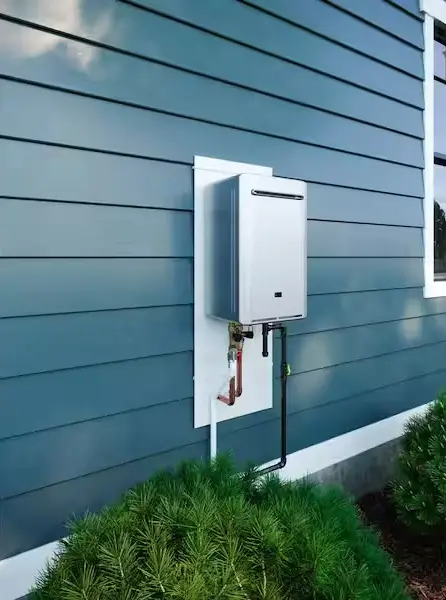
A propane water heater may use roughly 0.3 to 1 gallon of propane per day, depending on household size, hot water demand, heater efficiency, climate, and equipment type. For many homes, water heating can add up to around 150 to 250 gallons per year, although actual consumption can fall outside this range. The biggest mistake is estimating propane use from tank size alone. A 40-gallon or 50-gallon water heater does not burn a fixed amount of propane each day. What matters is how much water needs heating, how many degrees its temperature must rise, and how efficiently the heater converts propane into usable heat. Understanding these factors makes it much easier to estimate your propane needs and spot unusually high fuel consumption.
A useful starting estimate is around 0.3 to 1 gallon per day for household water heating. Low-demand homes may stay near the lower end, while larger households can move toward or beyond the upper end. Daily use also changes throughout the year. Colder incoming water takes more energy to heat, so the same family can burn more propane in winter than in summer.
If your heater averages 0.5 gallon per day, it would use about 15 gallons per month. At 0.75 gallons per day, consumption would be about 22.5 gallons per month. A family using 1 gallon each day would need about 30 gallons in a 30-day month. These figures are estimates, not guaranteed consumption rates.
A home averaging 0.5 gallon per day would use approximately 183 gallons per year. At 0.75 gallons daily, the annual total would reach roughly 274 gallons. Actual yearly use depends heavily on family routines. Long showers, frequent guests, colder groundwater, and older equipment can push consumption upward.
A 40-gallon water heater holds 40 gallons of heated water, but that number does not tell you how much propane it burns. The burner operates when the stored water cools or when hot water is replaced by incoming cold water. A household that rarely empties the tank will usually consume less fuel than one that repeatedly uses most of its hot water.
A 50-gallon heater provides greater hot-water storage, which can suit larger households. However, a larger tank does not automatically mean much higher propane consumption. The heater’s efficiency, insulation, thermostat setting, burner runtime, and household water use have a stronger influence on fuel consumption.
If water heating is the only propane use, 100 gallons could last about 200 days at 0.5 gallon per day. At 0.75 gallons per day, it would last about 133 days. Real propane tanks often supply other equipment, such as furnaces, ranges, fireplaces, and clothes dryers. In those homes, 100 gallons will naturally disappear faster.
More people normally means greater hot-water demand. A two-person household may need only a few showers each day, while a five-person family could require several showers plus frequent dishwashing and laundry. More gallons of heated water require more energy, which directly increases propane consumption.
Long showers can significantly increase hot-water demand. For example, a showerhead flowing at 2 gallons per minute uses about 20 gallons during a 10-minute shower. Cutting that shower to 5 minutes reduces total water use to about 10 gallons. When less hot water is needed, the heater has less work to do.
The colder the incoming water, the more heat the system must add. This difference is called temperature rise. For example, heating water from 50°F to 120°F requires a 70°F rise. If incoming water is already 70°F, reaching 120°F requires only a 50°F rise.
Water heater efficiency describes how effectively the unit converts fuel energy into useful hot water. Two heaters may provide the same amount of hot water but consume different amounts of propane. A more efficient model wastes less energy during heating and operation.
Higher temperature settings require additional energy. Heating water to 140°F takes more energy than heating the same amount of water to 120°F. A very high setting can also increase heat loss from a storage tank. Follow the heater manufacturer’s instructions when choosing an appropriate setting.
Storage heaters lose some heat even when nobody opens a faucet. Heat slowly moves from the hot tank into the surrounding area. The burner then has to run periodically to restore the set temperature. Better tank insulation can reduce this standby energy loss.
Opening a hot-water faucet activates the heater. Cold water moves through a heat exchanger, where the propane burner rapidly raises its temperature. Once the hot-water demand stops, the burner shuts off. Fuel is therefore consumed mainly when hot water is actually being produced.
Tankless propane heaters can have burner ratings well above 100,000 BTU per hour, with some residential units approaching 200,000 BTU per hour. That number represents maximum input capacity. It does not mean the heater continuously burns that much fuel throughout the day.
Runtime has a major effect on consumption. A powerful burner operating for 15 minutes consumes far less propane than the same burner operating continuously for an hour. Many modern tankless heaters also adjust burner output according to flow and required temperature rise.
Tankless systems are often rated by gallons per minute (GPM). The required GPM depends on how many fixtures may need hot water simultaneously. Running two showers at once requires more heating power than operating a single bathroom faucet. Higher flow combined with a large temperature rise increases propane demand.
Tankless performance depends heavily on incoming water temperature. Suppose water enters at 50°F and needs to leave at 120°F. The heater must create a 70°F rise. If the incoming water is 70°F, the required rise drops to 50°F. Less temperature rise means less energy is needed for the same flow rate.
Tankless equipment can reduce energy waste because it does not constantly maintain a full tank of hot water. However, tankless does not mean zero waste or automatically guarantee low propane bills. Household demand, equipment efficiency, installation, climate, and user habits still matter.
You can make a more personalized estimate using the heater’s BTU input rating. One gallon of propane contains approximately 91,500 BTU of energy, so dividing total burner energy use by 91,500 gives an approximate number of gallons consumed. For example, consider a heater rated at 40,000 BTU per hour. If the burner operates at full input for one hour:
40,000 ÷ 91,500 = about 0.44 gallon of propane
If it operates for only 30 minutes:
20,000 ÷ 91,500 = about 0.22 gallon
Now consider a tankless heater rated at 150,000 BTU per hour running at full capacity for 20 minutes:
150,000 × 0.33 = approximately 50,000 BTU
Then:
50,000 ÷ 91,500 = approximately 0.55 gallon
This method gives you a better estimate than simply looking at tank capacity. Remember that many heaters do not operate at maximum burner input every time they run.
Reducing propane consumption starts with reducing unnecessary hot-water demand. Shorter showers, low-flow fixtures, repaired hot-water leaks, full dishwasher loads, and sensible temperature settings can all lower the amount of energy required. Equipment condition matters as well. Sediment buildup, poor maintenance, aging components, and excessive standby loss can make a heater work harder than necessary. Regular inspection and maintenance according to the manufacturer’s recommendations can help the system operate as intended. If your current heater is old, compare the efficiency ratings of replacement models rather than focusing only on purchase price. A heater that wastes less energy may reduce propane consumption over years of operation.
So, how much propane does a propane water heater use? A practical starting range is around 0.3 to 1 gallon per day, but there is no universal number. Household size, shower habits, incoming water temperature, heater efficiency, burner runtime, thermostat settings, and equipment type all influence consumption. Instead of relying only on an average, check your heater’s BTU rating and track your actual propane use over several months. Compare similar seasons and account for every propane appliance in the home. Once you know your real usage pattern, you can budget for propane more accurately, identify unusual increases, and make practical changes that reduce unnecessary fuel use.

Can You Install a Fence Around a Propane Tank? A propane tank can interrupt the look of a landscaped yard, especially when it sits near a patio or driveway. A fence may seem like an easy way to hide it,
What Should You Know Before Landscaping Around an Underground Propane Tank? An underground propane tank keeps most equipment out of sight, but the ground above it still needs careful planning. A new flower bed, retaining wall, or irrigation trench can

Be one of the first 200 New Customers to sign-up until September 15th to get $500 worth of propane, FREE! You’ll also get 1 year free tank rental when you switch!
NEW CUSTOMER? Fill out the New Customer Application to join IGNITE.
Save $0.05 Per Gallon with the IGNITE Program Learn more!