How LP Propane Prepares for Winter Demand

The most challenging period of the year to propane providers is winter. With the way the temperatures are falling, the time that the heating systems are turning on increases, the water heaters in the houses are turning on more often, and the consumption of propane generally increases dramatically. Propane is commonly used by most households and businesses as fuel in heating. The freezing conditions can easily be disrupted to affect comfort, safety and day-to-day activities. The discussion of the way that LP Propane is ready to meet the demand during winter makes it clear that this is a long-term plan, and a lot of planning is involved before it is time to see the first cold front. Winter preparedness includes future forecasting, infrastructure planning, logistical planning, personnel planning and customer communication. Winter delivery is reliable, but it does not occur by chance, but rather the outcome of planned and information-based preparation several months ahead.

How Liquid Propane Prepares for Winter Demand | LP Propane

Forecasting Winter Propane Demand

Historical Usage Analysis

Past history of customer consumption also gives a base upon which the winter planning is based. Through the analysis of the gallon consumption of the past years under the same range of temperatures, the LP Propane will be able to detect seasonal fluctuations. This information can be used to forecast the average demand and anticipate the demand bursts in case of a long cold season.

Weather Trend Monitoring

The weather forecasting of the seasons and long-range weather outlook are important in the preparation of winter. When the prediction of winter is colder than average, then more allocation of supply is possible. Planning models take into account sudden Arctic air patterns or early cold fronts.

Customer Usage Profiling

Customers do not consume propane at an equal rate. Demand profile of residential heating customers, agricultural processes, commercial premises and industrial users are unique to winter. The knowledge of these variations will enhance performance in scheduling.

Peak Demand Scenario Modeling

When it gets brutally cold, propane consumption may be doubled in days. LP Propane simulation considers worst-case demand conditions so that bulk storage can survive extreme weather conditions.

New Account Planning and Growth

New customers are introduced all year round, which means that estimated winter demand needs to be re-calculated. The more the areas of service and the more the customers, the more the supply to be increased.

Regional Supply Coordination

Winter demand planning is also based on the larger regional propane market conditions. It is possible to monitor the demand of the surrounding states to predict the changes in wholesale supply and bottlenecks in the transportation.

Reliable supply begins with strategic storage!

Securing Supply and Storage Capacity

Bulk Storage Filling

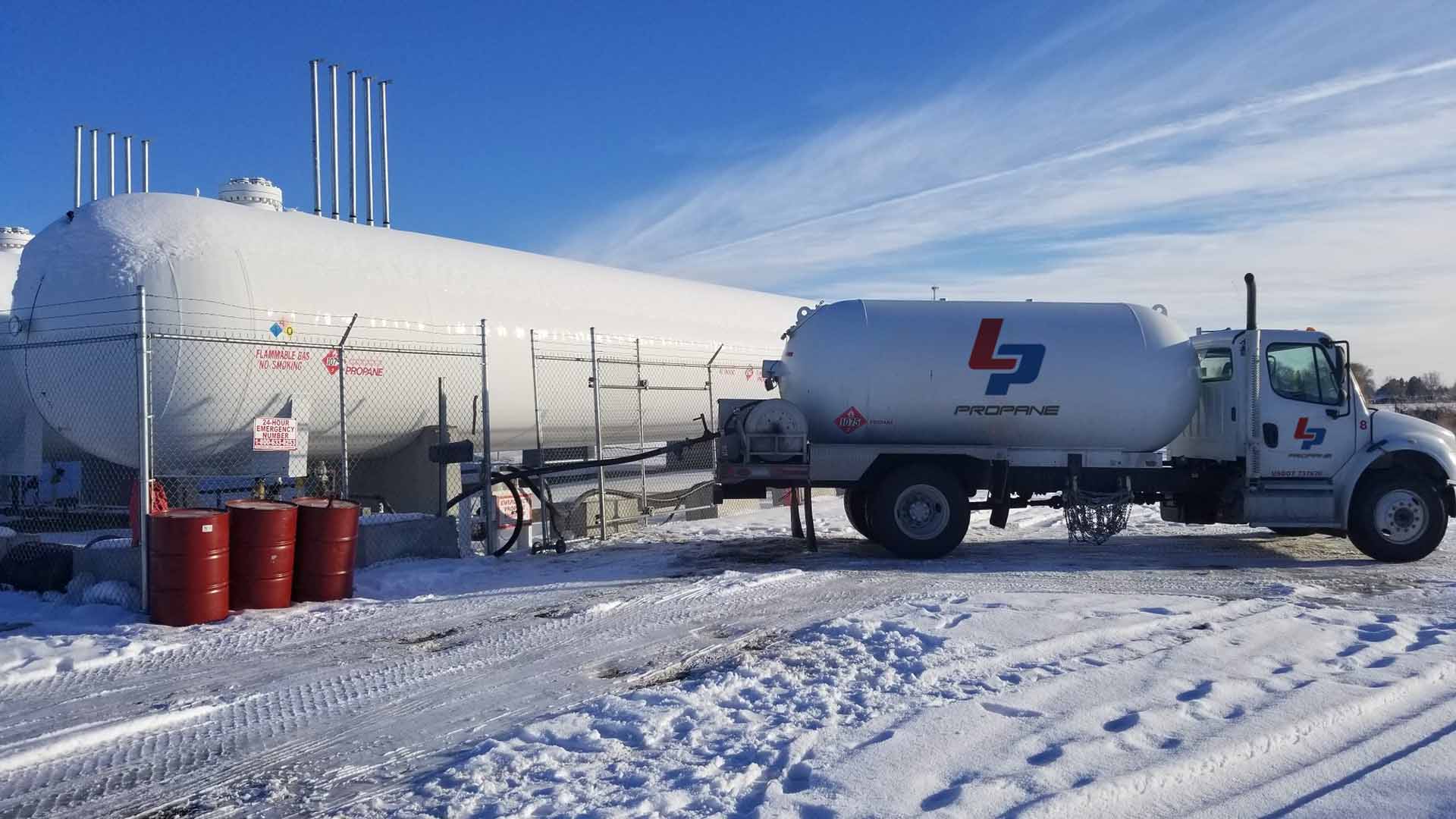
When it becomes winter, bulk storage facilities are full to capacity. The accumulated early storage will decrease dependence on emergency buys of the markets when it gets cold.

Supplier Contract Agreements

Pre-season supply contract stabilizes supply, and it has assisted in countering unexpected shortages in the wholesale market. Advance arrangements increase the predictability of prices and consistency of delivery.

Transportation Logistics Coordination

Transport schedules are also made in such a way that there is constant regeneration of storage facilities. Great supply flow is supported by reliable trucking relationships and flexibility of delivery schedules.

Monitoring Wholesale Market Conditions

The markets of wholesale propane change with the supply and demand. Vital tracking will enable the LP Propane to foresee a price change pattern and modify the buying plan.

Emergency Reserve Inventory

The presence of emergency reserve supply guarantees the availability of the propane even when there has been a long cold event or there has been a delay in transportation.

Infrastructure Inspection and Maintenance

Before winter, storage tanks, transfer pumps, valves and metering systems are checked. Preventive maintenance helps minimize the chances of operation disruptions when there is high demand.

Optimizing Delivery Logistics for Winter

Route Planning and Optimization

The delivery routes will be adjusted to take into consideration the increased frequency of winter and the possible weather-related issues on the road. Optimal routing minimizes the time wastage and covers as much as possible.

Automatic Delivery Enrollment

Proactive scheduling is done using usage forecasting which is beneficial to customers who are subscribed to automatic refill programs. This makes it less likely to run out even when the weather is cold.

Remote Tank Monitoring Technology

Digital tank monitoring systems are able to give real time updates on fuel levels. The systems enable dispatch teams to make deliveries a priority to prevent tanks that are below safe operating level.

Expanded Staffing and Scheduling

The winter season usually demands more scheduling of drivers and lengthening of service hours. Timely deliveries at peak demand are ascertained through proper staffing.

Winter Vehicle Preparedness

The trucks used in delivery have the capability to work in icy and snowy weather. Frequent inspection of the vehicles makes them very reliable during difficult weather.

Priority Service Protocols

Essential clients like hospitals or farms can be given priority delivery in case of extreme cold snap as this allows continuous business.

Customer Communication Before and During Winter

Effective communication is an important part of winter preparedness. LP Propane persuades the customers to check the levels in their tanks frequently and subscribe to automatic delivery services before the winter sets in. Reminders are given prior to the season about the necessity to keep the fuel stocks sufficient and plan the inspections. In active winter seasons, proactive advice will reassure the customers and give transparency on the delivery schedules. Clearance of snow around the access points of tanks by the customers is also encouraged to avoid delays during delivery. Educational advice enables the homeowners to know the effects of cold weather on the propane pressure and use. Early communication will minimize last minute calls of service and make the customers feel informed and not reactive to the weather experiences during winter.

Preventative Maintenance to Reduce Winter Emergencies

Winter preparation involves checking gas lines, inspecting regulators and making sure that the systems of burners are working well. Solving the minor problems prior to the peak season minimizes emergency services during the freezing season. Frequent maintenance also enhances the efficiency of the combustion process that will enable customers to optimize the propane use during the winter. Checking of tank valves and ensuring that it is well ventilated also helps decrease chances of interruptions mid season. Scheduling of services in advance prevents identification of pressure anomalies prior to the onset of high demand by heating. The problem of small mechanical stops can be solved at an earlier stage; therefore, LP Propane reduces risks of breakdowns when systems are operating at maximum winter load.

Responding to Sudden Cold Weather Events

Extremes in cold weather may quickly raise the level of propane use. LP Propane pays a lot of attention to weather forecasting and the amount of gas in tanks during cold snaps. The reason is flexible routing options and reserving in case of emergency to ensure regular delivery service. Quick communication between dispatch teams and drivers will ensure that fuel is received by customers before tanks get to dangerous levels. Supplementary personnel and longer working hours can be put on when there are harsh weather conditions. Live tank tracking statistics enables dispatching staff to give priority to those customers that have low fuel quantities. Maintaining a backup inventory and responsive logistical operations will also guarantee that even cold waves that have not been predicted happen to be controlled effectively and safely.

The knowledge of the preparation of the winter demand of LP Propane illustrates that a lot of planning is needed to ensure that the heating services are reliable. Prediction, bulk storage planning, supply arrangement, path planning and anticipating communication all lead to winter reliability. Winter propane delivery is not a reactive one, it is a well-planned and thought-out one. Having organized several months beforehand and constantly keeping track of demand state, LP Propane can rest assured about its ability to provide the customers with quality service during the coldest months of the year. 

BLAZING BLOGS

How Liquid Propane Prepares for Winter Demand | LP Propane

Top 5 Propane Industry Questions for 2026

Top 5 Propane Industry Questions for 2026 The propane industry is moving into 2026 with new challenges and opportunities. Changing customer expectations, digital buying habits, technology improvements, and energy conversations are shaping how propane businesses connect with their markets. Customers

Read More »
How Liquid Propane Prepares for Winter Demand | LP Propane

Understanding Propane Prices in 2026

Understanding Propane Prices in 2026 Propane prices in 2026 refer to the amount consumers pay for propane fuel based on supply, demand, production levels, weather patterns, storage availability, transportation costs, and energy market conditions. Propane prices in 2026 are an

Read More »

State Fair Giveaway

$500 Worth of Propane

Be one of the first 200 New Customers to sign-up until September 15th to get $500 worth of propane, FREE! You’ll also get 1 year free tank rental when you switch!

JOIN THE IGNITE PROGRAM

NEW CUSTOMER? Fill out the New Customer Application to join IGNITE.

Save $0.05 Per Gallon with the IGNITE Program Learn more!

This field is for validation purposes and should be left unchanged.
Name(Required)
Service Address(Required)
AAP Agreement(Required)
You will be contacted by a Customer Service Representative to obtain your credit card information.
Terms of Service(Required)

LP Propane Ignite Program – Terms and Conditions

1. Eligibility and Program Requirements
To qualify for and maintain enrollment in the LP Propane Ignite Program and receive the $0.05 per gallon fuel discount, the Customer must simultaneously enroll in and maintain active status in the following three core services:

Auto Fill Delivery: The Customer authorizes LP Propane to automatically monitor, schedule, and deliver propane to the designated tank when levels dictate, bypassing the standard Will Call scheduling requirements.

Auto Pay: The Customer must maintain a valid, authorized payment method on file (Credit Card, Debit Card, or ACH/Direct Draft). Invoices will be automatically drafted within 7 days after the delivery.

Paperless Billing: The Customer agrees to receive all invoices, statements, and program communications via email. Opting out of online billing or requesting paper statements will result in a $4.95 monthly fee and disqualification from the program.

2. Fuel Discount Terms

The $0.05 per gallon discount applies exclusively to the standard market rate of propane at the exact time of delivery.

The discount is applied automatically on invoice.

This discount cannot be combined with specific commercial contract pricing or volume discounts unless expressly authorized in writing by LP Propane.

3. Tank Monitoring and Delivery Access

LP Propane may utilize physical tank monitors or advanced usage-tracking algorithms to schedule deliveries.

Access Requirements: The Customer must ensure the propane tank is always completely accessible to delivery personnel and vehicles. The pathway must be free of obstacles, locked gates, debris, or unrestrained animals within a 100-foot radius.

Seasonal Maintenance: During winter months, the Customer is legally responsible for clearing snow, ice, and paths leading to the tank. If a delivery vehicle cannot safely access the tank, the delivery will be delayed, and any emergency filling fees incurred due to subsequent low fuel levels will be billed to the Customer.

4. Credit Status and Payment Failures

If an Auto Pay transaction is declined or fails for any reason (e.g., expired card, insufficient funds), the Customer must update their account billing details immediately. If the transaction remains unprocessed for 30 days despite attempts by LP Propane to contact the Customer, the account will be automatically unenrolled from the program.

If an account balance becomes past due, LP Propane reserves the right to suspend Auto Fill privileges, pause the $0.05 per gallon discount, and transition the account to a "Will Call / Cash on Delivery" basis until the account is brought current and after review and approval of LP Propane’s credit department.

5. Program Termination or Changes

Customer Termination: Removing any of the mandatory components (Auto Fill, Auto Pay, or Paperless Billing) constitutes voluntary termination from the program. If you would like to opt out of the Ignite program you must submit 30 day written notice

Company Modifications: LP Propane reserves the right to alter, modify, or terminate the Ignite Program framework, including discount amounts or underlying eligibility terms.

MM slash DD slash YYYY