How is Propane Made?

Propane is one of the most utilized fuels, with fame for being efficient, and clean-burning properties, coupled with versatility. It is most commonly used as fuel in residential heating, cooking, industrial application, transportation, etc. So, how does propane get manufactured? The real manufacturing of propane occurs deep under the earth’s surface and takes several refining and processing stages to reach our houses and businesses. This knowledge of the production process will also enable the consumers to understand why propane remains a reliable and green fuel. This paper will detail how propane originated, how it is manufactured, and how LP Propane ensures that its customers have a stable and safe supply.

How is Propane Made? | LP Propane

Propane Origin and Manufacturing

Propane is one of the members of the liquefied petroleum gas family, but it is not extracted directly. Instead, it is available as a by-product of natural gas processing and crude oil refining. In the process of natural gas processing, raw gas contains many hydrocarbons, which include methane, ethane, propane, and butane. Propane is separated from other gases through cooling and pressurization to avoid condensation in pipelines, thus maintaining quality. Once extracted, it is preserved in a liquid form to be processed easily for transportation and distribution. At the crude oil refining process, propane is also produced, as the crude is heated up in a distillation tower that separates the crude oils into various fractions by boiling points. Light hydrocarbons that have been gathered include propane, butane, and others, which are further refined for commercial and residential uses. While this constitutes a lesser portion of the refinery byproduct, propane remains an important fuel for heating and cooking as well as industrially and as supplementary fuel for transportation.

Stored as a liquid, used as a gas!
Propane’s versatility makes it a game-changer.

From Production to Liquefaction

Once propane is separated from natural gas and crude oil, it has to undergo further processing in order to convert the propane into a usable and easily transportable product. The procedure for doing this is liquefaction; converting propane from the gaseous state to a liquid state, making storage and transportation more efficient.

Compression and Cooling

It compresses and cools propane down until it boils at -44°F (-42°C) during the process whereby it turns to liquid form. The volume of this substance reduces very much and huge volumes can thus be held in small containers. If this was to take place without it becoming condensed into a liquid state, it would not be so possible to move around such vast volumes of propane.

Storage in Tanks

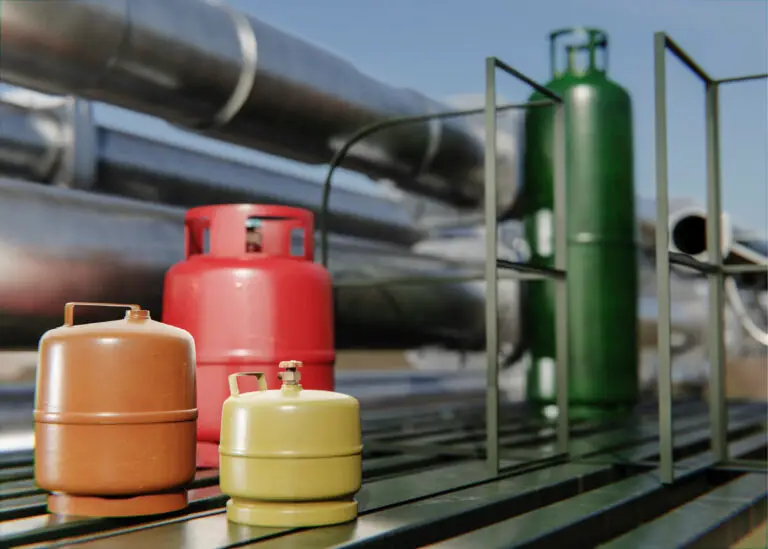
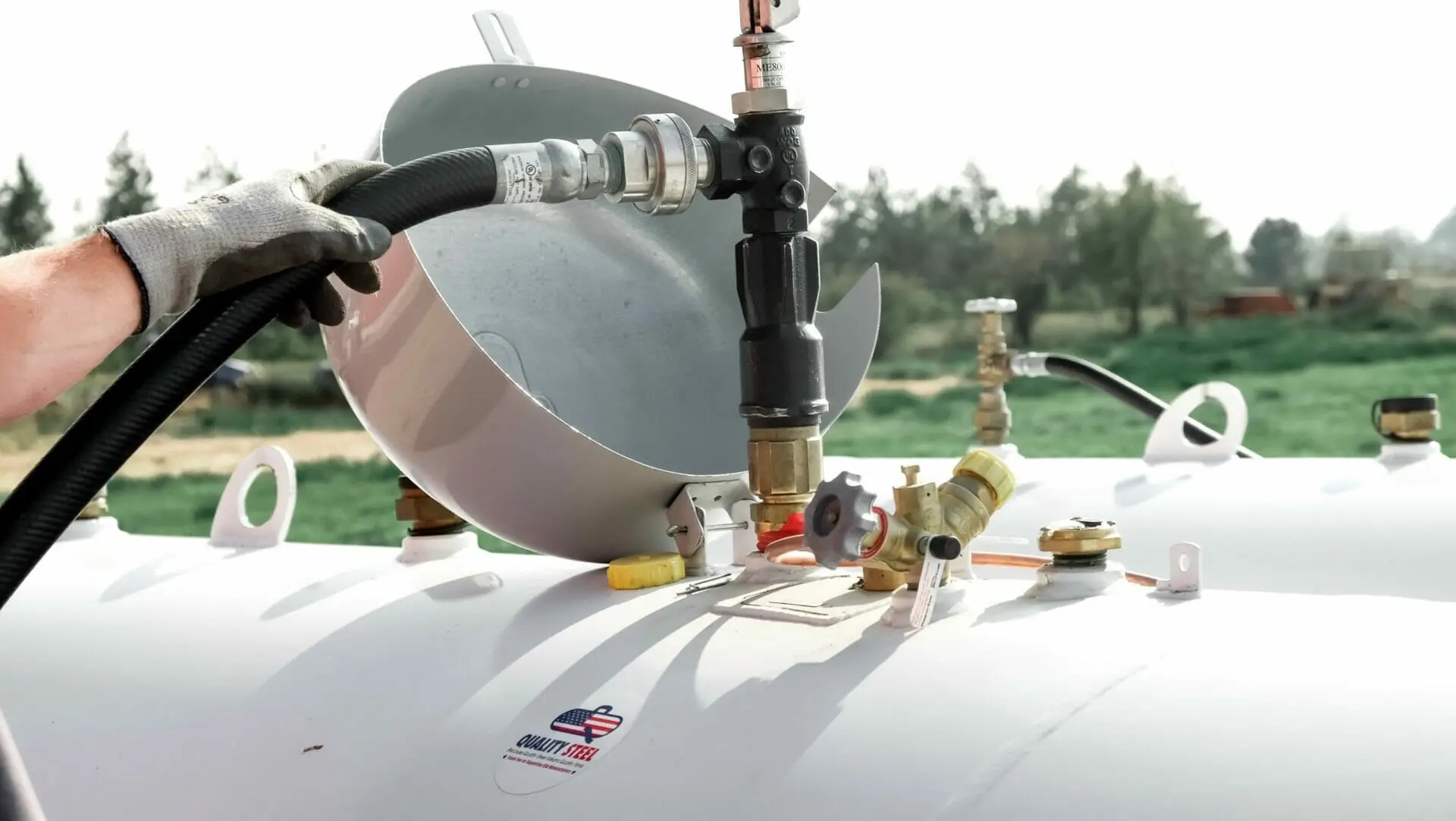
High-pressure tanks and cylinders store propane in the liquid state. It is designed for a liquid, from small portable cylinders that individuals use for grilling to large bulk storage tanks. Safety mechanisms so design such tanks to be neither leaky nor losing pressure at any change in temperature.

Transportation

After storage, the propane is transported to various distribution centers by pipeline, tanker truck, railcar, and ship for worldwide transport. The propane is carried over long distances through pipelines to regional distribution centers from where it is distributed to local suppliers by tanker trucks and railcars. From supply centers, it is filled up in smaller cans or tanks and cylinders, after which it moves to houses, business enterprises, and industrial plants directly. 

Environmental and Safety Considerations

Clean-Burning Fuel

LP Propane has been known to be a clean fuel because more emissions are minimal as compared with petrol, diesel, and fossil fuels. The overall production of carbon monoxide, nitrogen oxides, and particulate matter will be relatively lesser, and propane is more considered as a form of clean energy. While spilled gasoline or diesel would contaminate the ground and groundwater, propane only dissolves to the air causing no harm done. This led to many industries and householders utilizing this cleaner source of energy with propane bearing a minimum carbon footprint minus efficiency.

Energy Efficiency and Sustainability

Propane contains more energy per unit compared to natural gas. Therefore, it produces more heat as well as power using less fuel. This has proved to be a cost-effective solution for heating homes and cooking, water heating, and industrial applications. In addition, innovation in propane technology has seen the discovery of renewable propane that is derived from biomass and animal fats. Consequently, propane is continually becoming an energy source that is viable and environmentally friendly.

Safety Measures

Propane, by being flammable in nature, when handled properly, becomes safe fuel for households, businesses, and industries. As propane does not have its own characteristic odor, therefore the odor of rotten eggs can be acquired by incorporating ethyl mercaptan that would make detection at the leakage time more effective. Proper storage of propane tanks along with proper inspections and guidance of the manufacture through the using any appliance working by propane would minimize the likelihood of possible risk.

Leak Prevention and Emergency Preparedness

This is through normal checks to determine leakage or installation of carbon monoxide detectors in residential premises or workplaces. In case of suspected leak, the area should be evacuated promptly and emergency services called. LP Propane ensures customer safety with professional installation, routine maintenance and leak detection services toward a safe and reliable propane supply.

The Propane Journey

This entire process is taken by propane right from its exploration, refining to liquefaction up to its dispensation. Indeed, this means that it remains a clean as well as effective fuel in several homes, enterprises, and firms across the world. The company provides reliable, efficient energy supplies for heating purposes, cooking requirements, transport solutions, and more importantly, production of power. LP Propane is committed to a safe, steady supply of propane and the highest standards of safety for people and the environment. Professional installations, leak detection services, and expert guidance ensure customers can enjoy all the convenience of propane without worry.

Whether it is heating homes, operating industries, or powering agriculture, the propane endures as an essential source of energy, ensuring efficiency, savings, and sustainability. Even with the growth in renewable propane and energy-efficient technologies, it still remains part of the planet’s energy landscape as it continues toward an ever-cleaner, ever-sustainable future.

BLAZING BLOGS

How is Propane Made? | LP Propane

Top 5 Propane Industry Questions for 2026

Top 5 Propane Industry Questions for 2026 The propane industry is moving into 2026 with new challenges and opportunities. Changing customer expectations, digital buying habits, technology improvements, and energy conversations are shaping how propane businesses connect with their markets. Customers

Read More »
How is Propane Made? | LP Propane

Understanding Propane Prices in 2026

Understanding Propane Prices in 2026 Propane prices in 2026 refer to the amount consumers pay for propane fuel based on supply, demand, production levels, weather patterns, storage availability, transportation costs, and energy market conditions. Propane prices in 2026 are an

Read More »

State Fair Giveaway

$500 Worth of Propane

Be one of the first 200 New Customers to sign-up until September 15th to get $500 worth of propane, FREE! You’ll also get 1 year free tank rental when you switch!

JOIN THE IGNITE PROGRAM

NEW CUSTOMER? Fill out the New Customer Application to join IGNITE.

Save $0.05 Per Gallon with the IGNITE Program Learn more!

This field is for validation purposes and should be left unchanged.
Name(Required)
Service Address(Required)
AAP Agreement(Required)
You will be contacted by a Customer Service Representative to obtain your credit card information.
Terms of Service(Required)

LP Propane Ignite Program – Terms and Conditions

1. Eligibility and Program Requirements
To qualify for and maintain enrollment in the LP Propane Ignite Program and receive the $0.05 per gallon fuel discount, the Customer must simultaneously enroll in and maintain active status in the following three core services:

Auto Fill Delivery: The Customer authorizes LP Propane to automatically monitor, schedule, and deliver propane to the designated tank when levels dictate, bypassing the standard Will Call scheduling requirements.

Auto Pay: The Customer must maintain a valid, authorized payment method on file (Credit Card, Debit Card, or ACH/Direct Draft). Invoices will be automatically drafted within 7 days after the delivery.

Paperless Billing: The Customer agrees to receive all invoices, statements, and program communications via email. Opting out of online billing or requesting paper statements will result in a $4.95 monthly fee and disqualification from the program.

2. Fuel Discount Terms

The $0.05 per gallon discount applies exclusively to the standard market rate of propane at the exact time of delivery.

The discount is applied automatically on invoice.

This discount cannot be combined with specific commercial contract pricing or volume discounts unless expressly authorized in writing by LP Propane.

3. Tank Monitoring and Delivery Access

LP Propane may utilize physical tank monitors or advanced usage-tracking algorithms to schedule deliveries.

Access Requirements: The Customer must ensure the propane tank is always completely accessible to delivery personnel and vehicles. The pathway must be free of obstacles, locked gates, debris, or unrestrained animals within a 100-foot radius.

Seasonal Maintenance: During winter months, the Customer is legally responsible for clearing snow, ice, and paths leading to the tank. If a delivery vehicle cannot safely access the tank, the delivery will be delayed, and any emergency filling fees incurred due to subsequent low fuel levels will be billed to the Customer.

4. Credit Status and Payment Failures

If an Auto Pay transaction is declined or fails for any reason (e.g., expired card, insufficient funds), the Customer must update their account billing details immediately. If the transaction remains unprocessed for 30 days despite attempts by LP Propane to contact the Customer, the account will be automatically unenrolled from the program.

If an account balance becomes past due, LP Propane reserves the right to suspend Auto Fill privileges, pause the $0.05 per gallon discount, and transition the account to a "Will Call / Cash on Delivery" basis until the account is brought current and after review and approval of LP Propane’s credit department.

5. Program Termination or Changes

Customer Termination: Removing any of the mandatory components (Auto Fill, Auto Pay, or Paperless Billing) constitutes voluntary termination from the program. If you would like to opt out of the Ignite program you must submit 30 day written notice

Company Modifications: LP Propane reserves the right to alter, modify, or terminate the Ignite Program framework, including discount amounts or underlying eligibility terms.

MM slash DD slash YYYY