Can you have two propane tanks on one property?

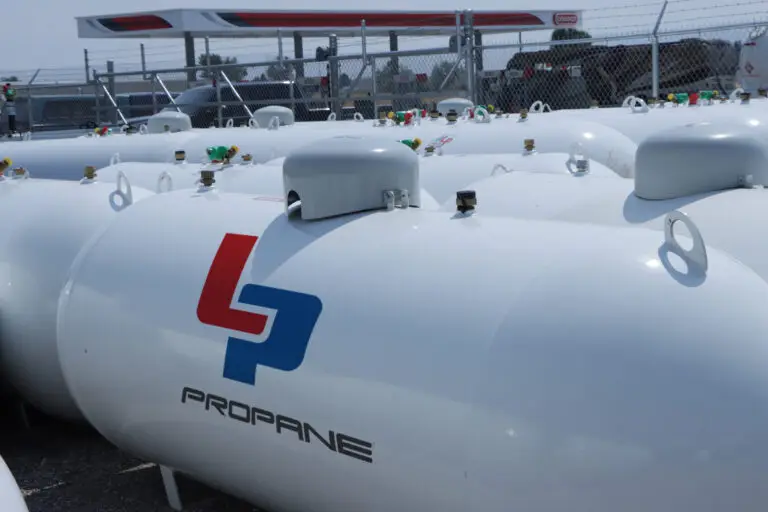
Propane is a versatile source of energy for heating, cooking, water heating, back-up power generation, agriculture and more. With the increasing demand for energy, some homeowners, businesses, farms and commercial facilities may ask themselves if they can satisfy their fuel consumption with one propane tank. Fuel use, property configuration, appliance needs and delivery considerations all play a role in many cases. A frequent question from propane users is whether or not it is legal to have more than one propane tank on the same site. Fortunately, it is often feasible to have two propane tanks on a single property and it may even offer a number of operational benefits. Extra tank capacity can help meet the growing need for fuel, increase the reliability of fuel supplies, and minimize propane deliveries.

Can you have two propane tanks on one property? | LP Propane

Why Some Properties Use Multiple Propane Tanks

Higher Fuel Consumption Requirements

Properties with multiple propane appliances often consume larger amounts of fuel. As demand goes up, storage capacity must also increase. Additional capacity improves convenience. More fuel is available to support operations.

Large Residential Properties

Propane is used in some houses for heating, hot water, cooking, fireplaces, pools, and generators. Multiple systems increase fuel usage. Further storage assures reliability. It is better to have a larger capacity, in order to make the performance better.

Agricultural Applications

Propane is widely used on farms for grain drying, livestock uses, greenhouse heating, and equipment. There is a high demand for agriculture. Productivity is ensured by multiple tanks. Efficient fuel access means more efficiency.

Commercial and Industrial Operations

Businesses often require substantial propane supplies to support operations. Extra storage means more fuel. Higher capacity supports continuity. A reliable energy improves performance.

Remote Property Locations

Properties located far from delivery routes may benefit from larger fuel reserves. Extra storage enhances readiness. Greater capacity reduces refill frequency. Flexibility is a benefit to remote locations.

Backup Fuel Planning

Some property owners install additional tanks to maintain larger propane reserves during emergencies or periods of increased demand. Extra storage improves resilience. Having fuel reserves helps to maintain readiness. Capacity backup provides reliability.

Higher fuel demand often requires smarter storage solutions

Benefits of Having Two Propane Tanks

Increased Fuel Storage Capacity

The most apparent benefit is an extra supply of propane storage. The larger the capacity, the longer the time between deliveries. Increased reserves make it more convenient. More storage provides greater flexibility.

Reduced Delivery Frequency

Properties with larger propane reserves often require fewer fuel deliveries throughout the year. Reduced delivery schedules improve efficiency. Less service visits are more convenient. Delivery management becomes easier. 

Improved Fuel Availability

Additional storage helps ensure adequate propane supply during periods of high demand. Consistent fuel availability supports operations. Comfort is enhanced by reliable access. Larger reserves enhance preparedness.

Greater Operational Flexibility

Multiple tanks can provide flexibility for properties with varying seasonal fuel requirements. Flexible systems are responsive to evolving needs. Flexible storage aids in management. Operational efficiency increases.

Support for Expansion Projects

Future additions to the property can have additional propane installed beforehand. Expansion readiness improves planning. Growth is easier to achieve in the future. Additional capacity supports development. 

Enhanced Energy Resilience

Excessive propane storage can allow a property to operate during fuel outages or during periods of extreme weather. Resilience improves reliability. Continuity is aided by emergency preparedness.Fuel security enhances confidence.

Common Ways Multiple Tanks Are Used

Connected Tank Systems

Some properties have more than one tank which are linked together to make one fuel supply system.Combined storage increases available capacity. Systems are easier to manage if they are unified. The sharing of fuel makes it more efficient.

Separate Appliance Systems

Some properties have separate tanks for appliances or areas. Different systems are used for different applications.Fuel management becomes more organized.Dedicated supplies improve flexibility. 

Residential Heating and Generator Setups

One tank can be used for home appliances and the other used for backup generators. Diversifying fuel sources helps to be prepareDedicated reserves support emergencies. System separation enhances reliability.

Agricultural Fuel Management

Propane storage is frequently sited at farms according to operating requirements. Several tanks are used for various applications. Fuel is distributed in an organized way, which enhances efficiency. Productivity is enhanced by specialized storage.

Commercial Facility Operations

A number of tanks can be set up to service different departments or functions of the business. Additional capacity improves reliability. Fuel Management becomes more flexible. There is an improvement on operational continuity.

Seasonal Usage Planning

Multiple tanks that support varying fuel demands may be suitable for properties that have variable demand. PlaSeasonal flexibility improves planning. Storage capacity supports efficiency. Demand management becomes easier. 

Important Installation and Placement Considerations

The installation of two propane tanks is not just about providing more storage. Proper planning is necessary to ensure safe and efficient operation. One of the most key considerations is tank placement since propane tanks are required to meet applicable spacing and clearance requirements. Good separation from buildings, ignition sources and property boundaries aids safe installation. The size of each tank can also have an impact on placement. The larger tanks may need extra space and have varying installation requirements. When looking at a multiple tank system, property owners should take into account what space is available and what further expansion plans may be in their future. Another factor to consider is accessibility.Tanks should remain accessible for inspections, maintenance, and propane deliveries. Access helps suppliers to efficiently provide service and maintain system reliability. It is important that qualified propane professionals are involved in the entire planning process. With their expertise in the field, experienced technicians can assess the fuel demand, suggest suitable system architectures, and make sure the installation meets the necessary regulations and industry standards.

Maintenance and Management of Multiple Tank Systems

Ongoing propane tank fuel monitoring and maintenance are required with two propane tanks. Owners need to regularly inspect fuel levels, and know where propane is being distributed in the system. Monitoring is essential for ensuring an appropriate supply of fuel and for effective operation. All propane equipment, such as tanks, regulators, valves and propane supply lines, should be inspected on a regular basis. Maintenance helps discover any potential issues before they impact performance. Regular inspections help to maintain reliability and to maintain safe operations. Documentation may also assist in making it easier to manage. Documenting fuel deliveries, maintenance, and changes to the system assists property owners to monitor system performance and anticipate future service requirements. Long-term management of the system is provided by organized records. For larger storage systems, communicating with propane suppliers can be extremely useful. Suppliers can assist with delivery planning, track consumption patterns, and offer suggestions for enhancing fuel planning and operational efficiency.

Multiple Propane Tanks Can Offer Greater Flexibility

For homeowners, farms, businesses and commercial facilities that have increased propane needs or special operational needs, two propane tanks on the same property is a common solution. Having more storage space can mean a better supply of fuel, less frequent deliveries, better preparedness for future expansion and more energy resilience. But with multi-tank installations, there is a need to plan for success. When considering expansion of propane storage, the following should be taken into account: fuel demand, fuel storage location, access and maintenance, system design, and responsibilities. Through collaboration with licensed propane providers and appropriate propane maintenance, a property owner can effectively and safely maintain several propane tanks. A properly designed dual-tank system allows many properties to meet their energy requirements, without the loss of year-round propane service. 

BLAZING BLOGS

Can you have two propane tanks on one property? | LP Propane

How Propane Is Powering the Construction Industry

How Propane Is Powering the Construction Industry Construction companies are under increasing pressure to complete projects efficiently while managing rising fuel costs, stricter environmental standards, and changing energy demands. Traditional fuels have supported construction for years, but contractors are now

Read More »
Can you have two propane tanks on one property? | LP Propane

What Causes a Propane Regulator to Freeze? 

What Causes a Propane Regulator to Freeze? A frozen propane regulator can quickly disrupt your home’s heating, cooking, or outdoor appliances. You may notice weak flames, a furnace that stops working, or a propane appliance that cannot maintain normal performance.

Read More »

State Fair Giveaway

$500 Worth of Propane

Be one of the first 200 New Customers to sign-up until September 15th to get $500 worth of propane, FREE! You’ll also get 1 year free tank rental when you switch!

JOIN THE IGNITE PROGRAM

NEW CUSTOMER? Fill out the New Customer Application to join IGNITE.

Save $0.05 Per Gallon with the IGNITE Program Learn more!

This field is for validation purposes and should be left unchanged.
Name(Required)
Service Address(Required)
AAP Agreement(Required)
You will be contacted by a Customer Service Representative to obtain your credit card information.
Terms of Service(Required)

LP Propane Ignite Program – Terms and Conditions

1. Eligibility and Program Requirements
To qualify for and maintain enrollment in the LP Propane Ignite Program and receive the $0.05 per gallon fuel discount, the Customer must simultaneously enroll in and maintain active status in the following three core services:

Auto Fill Delivery: The Customer authorizes LP Propane to automatically monitor, schedule, and deliver propane to the designated tank when levels dictate, bypassing the standard Will Call scheduling requirements.

Auto Pay: The Customer must maintain a valid, authorized payment method on file (Credit Card, Debit Card, or ACH/Direct Draft). Invoices will be automatically drafted within 7 days after the delivery.

Paperless Billing: The Customer agrees to receive all invoices, statements, and program communications via email. Opting out of online billing or requesting paper statements will result in a $4.95 monthly fee and disqualification from the program.

2. Fuel Discount Terms

The $0.05 per gallon discount applies exclusively to the standard market rate of propane at the exact time of delivery.

The discount is applied automatically on invoice.

This discount cannot be combined with specific commercial contract pricing or volume discounts unless expressly authorized in writing by LP Propane.

3. Tank Monitoring and Delivery Access

LP Propane may utilize physical tank monitors or advanced usage-tracking algorithms to schedule deliveries.

Access Requirements: The Customer must ensure the propane tank is always completely accessible to delivery personnel and vehicles. The pathway must be free of obstacles, locked gates, debris, or unrestrained animals within a 100-foot radius.

Seasonal Maintenance: During winter months, the Customer is legally responsible for clearing snow, ice, and paths leading to the tank. If a delivery vehicle cannot safely access the tank, the delivery will be delayed, and any emergency filling fees incurred due to subsequent low fuel levels will be billed to the Customer.

4. Credit Status and Payment Failures

If an Auto Pay transaction is declined or fails for any reason (e.g., expired card, insufficient funds), the Customer must update their account billing details immediately. If the transaction remains unprocessed for 30 days despite attempts by LP Propane to contact the Customer, the account will be automatically unenrolled from the program.

If an account balance becomes past due, LP Propane reserves the right to suspend Auto Fill privileges, pause the $0.05 per gallon discount, and transition the account to a "Will Call / Cash on Delivery" basis until the account is brought current and after review and approval of LP Propane’s credit department.

5. Program Termination or Changes

Customer Termination: Removing any of the mandatory components (Auto Fill, Auto Pay, or Paperless Billing) constitutes voluntary termination from the program. If you would like to opt out of the Ignite program you must submit 30 day written notice

Company Modifications: LP Propane reserves the right to alter, modify, or terminate the Ignite Program framework, including discount amounts or underlying eligibility terms.

MM slash DD slash YYYY