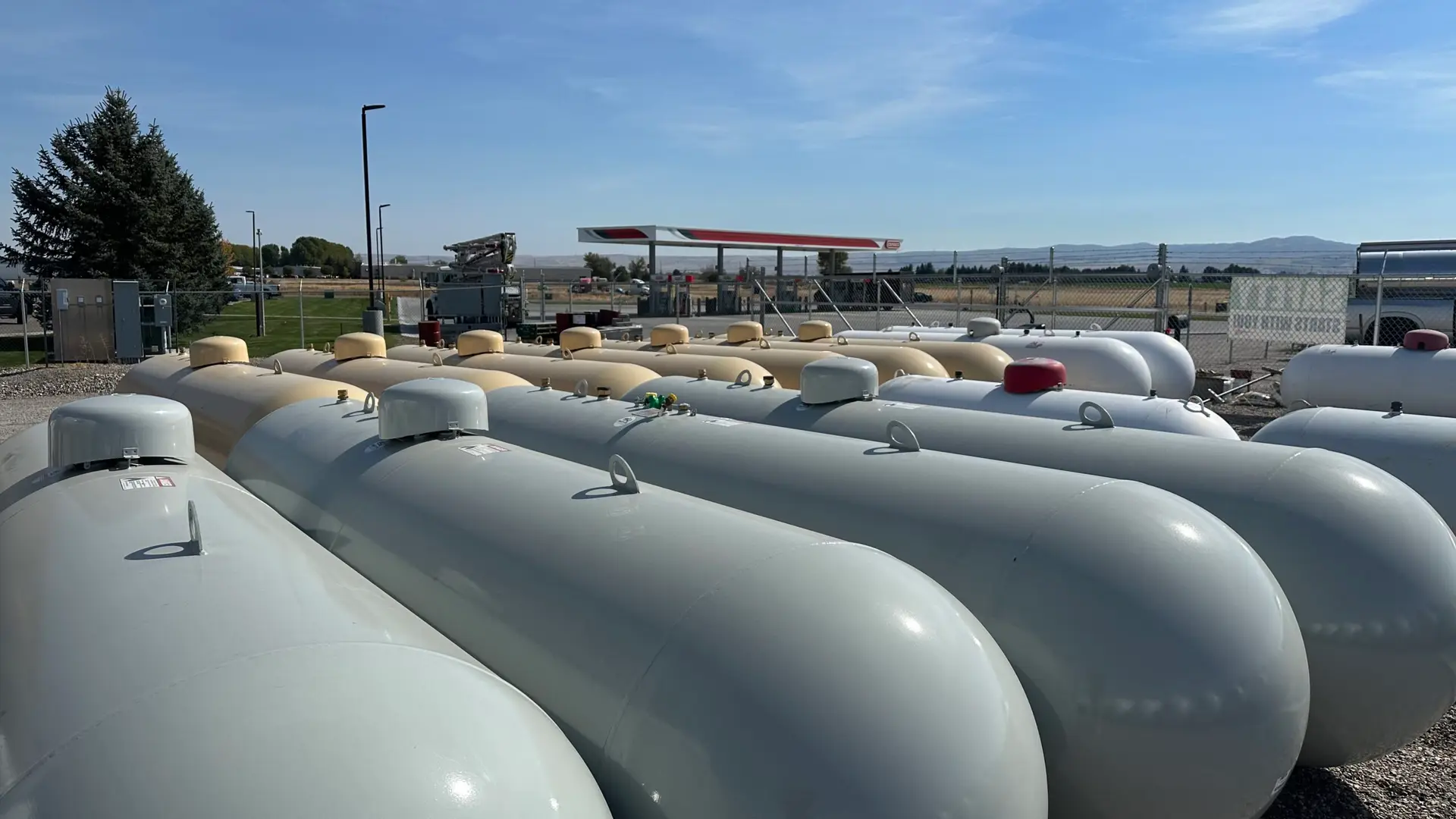
How to Protect Outdoor Propane Tanks Safely

Outdoor propane tanks face changing weather, yard equipment, vehicle traffic, and landscaping work throughout the year. Although these containers are designed for outdoor conditions, damage to their supports, valves, or piping can create serious problems. Protect outdoor propane tanks by keeping their surroundings clear, preserving access and ventilation, watching for damage, and arranging professional maintenance. Protection does not mean wrapping the tank, building a tight enclosure, or moving it whenever bad weather approaches. The right approach depends on whether you have a stationary household tank or a portable cylinder. Understanding that difference helps you prepare for storms, prevent avoidable damage, and recognize situations that require immediate help rather than a home repair.

Overview

  • Keep tanks accessible and away from ignition sources.
  • Protect equipment from vehicles, debris, snow, and ice.
  • Store portable cylinders upright outdoors.
  • Leave installation, repairs, and relocation to qualified professionals.
  • If you suspect a leak, leave and call from a safe location.
How to Protect Outdoor Propane Tanks Safely | LP Propane

What Should You Check Around an Outdoor Propane Tank?

Tank Type

A stationary propane tank supplies a home or other building through connected piping. A portable cylinder is a smaller container commonly used with grills or outdoor appliances. Their installation and storage requirements differ. Do not apply a grill-cylinder storage tip to a large residential tank without checking its suitability.

Approved Placement

Have a qualified propane professional confirm the tank’s location and required separation from buildings, openings, property boundaries, and ignition sources. Distances depend on the container and installation. Before adding a deck, shed, heat pump, or generator, ask whether the change affects the existing propane system’s clearances.

Stable Supports

A stationary tank needs the support arrangement specified for its installation. From a safe distance, watch for leaning, settlement, damaged legs, or a tank that no longer sits as it did before. Report changes promptly. Do not jack up, reposition, or add improvised supports beneath a connected tank.

Delivery Access

Keep the route to the tank free of parked vehicles, stacked materials, and overgrown plants. The driver needs room to reach the filling connection and inspect the equipment. If you install a gate or change the driveway, discuss access with your supplier before the next scheduled delivery.

Vehicle Protection

Tanks near driveways, parking areas, or equipment routes may need approved protection against impact. Ask the installer whether barriers are necessary and how they should be positioned. Decorative posts or a lightweight fence do not automatically provide suitable protection from a reversing truck, tractor, or snowplow.

Household Awareness

Show household members where the tank is and explain that valves, regulators, and connected piping are not play equipment. Keep children from climbing on the container. Store your supplier’s number where adults can find it, and make sure everyone knows the evacuation plan for a suspected gas leak.

Protect the space around your tank every season

How Can You Protect Propane Tanks From Weather?

Snow Removal

Keep snow from blocking the tank area, walking route, and equipment access. Gently remove loose accumulation from exposed components with a broom rather than striking them with a shovel. Do not push plowed snow against the tank, regulator, or piping, where its weight could cause damage.

Falling Ice

Check whether roof edges, nearby structures, or trees could drop snow or ice onto propane equipment. If the installation appears exposed, ask your supplier about appropriate protection. Do not climb onto the tank or chip ice from fittings. Frozen components that you cannot clear safely need professional attention.

Extreme Cold

Never use a torch, space heater, heating pad, or other unapproved external heat source to warm a propane tank. Cold-weather performance depends on proper system sizing and fuel supply. If appliances struggle during freezing conditions, contact your supplier rather than trying to increase tank pressure yourself.

Summer Conditions

Outdoor propane containers are designed to experience normal outdoor temperatures, including summer sun. Keep them away from additional heat sources such as fire pits, grills, and outdoor heaters. Do not move a cylinder into a garage or shed to shelter it from sunshine; enclosed storage creates a different hazard.

Flood Preparation

If your property is vulnerable to flooding, ask the installer whether the tank needs anchoring or other site protection. Floodwater can shift equipment and strain gas lines. Prepare an evacuation and shutoff plan with your supplier beforehand. Never approach a displaced tank or enter floodwater to inspect propane equipment.

Wildfire Exposure

Remove combustible debris around the tank, including dry leaves, brush, and stored materials. Wildfire guidance recommends clearing at least 10 feet of combustible material around propane equipment; local requirements may call for additional measures. If evacuation becomes necessary, leave promptly rather than staying to defend or cool the tank.

What Maintenance Helps Prevent Outdoor Tank Damage?

Rust and Corrosion

Watch for flaking metal, deep pitting, damaged coatings, or worsening corrosion around supports and fittings. Surface discoloration does not tell you how much metal remains beneath it. Ask a professional to assess questionable areas before repainting, because a fresh finish can hide damage without correcting it.

Approved Paint

Aboveground tanks commonly use light-reflecting finishes to limit heat absorption. Before changing the color, confirm the coating and color with the tank owner or supplier. Keep identification plates, labels, valves, and safety devices readable and unobstructed. Do not assume ordinary exterior paint suits every part of the container.

Valves and Regulators

A service valve controls normal fuel flow, while a regulator reduces pressure before gas reaches appliances. A pressure relief device responds to excessive pressure inside the container. These components perform different jobs. Do not adjust, plug, paint over, or attempt to repair them as part of routine yard maintenance.

Covers and Fences

A proposed cover, screen, or fence must preserve required clearances, ventilation, filling access, and maintenance access. Ask the supplier to review the design before installation. Avoid tightly wrapping the tank or building a sealed box around it, because concealment can obstruct equipment and allow leaking gas to collect.

Landscaping Work

Keep plants and stored materials from crowding the tank, and protect exposed piping from mowers and string trimmers. Before digging nearby, arrange the required utility locating and confirm whether private propane lines need a separate location. Do not raise soil or mulch around an underground tank’s access dome.

Professional Service

Follow the inspection and maintenance requirements that apply to your equipment and location. Buried steel tanks need particular attention to corrosion protection because most of the container is out of sight. Keep service records and report damage after storms, impacts, or construction work rather than waiting for the next refill.

How Should You Store Small Propane Cylinders?

Store ordinary grill cylinders upright on a stable surface outdoors, where they cannot fall, shift, or roll. Keep the valve closed when the appliance is not in use or the cylinder is disconnected, following the equipment instructions. Do not store cylinders in a basement, garage, shed, or other enclosed area, even when they seem empty. Keep spare cylinders away from a working grill or other heat source. After transporting a cylinder, remove it from the vehicle promptly; a parked car or trunk is not a storage location.

What Should You Do if You Suspect a Tank Leak?

Treat propane odor, unexplained hissing, or a propane detector alarm as a possible emergency. Leave the affected building or outdoor area immediately, avoiding flames, smoking, electrical switches, and phone use near the suspected leak. Once safely away, call your propane supplier, 911, or the fire department. Do not approach the tank to investigate or close its valve if you suspect the leak is at the tank. Stay away until responders or a qualified professional say you can return, and have the system checked before using it again.

Make Tank Protection Part of Your Property Routine

Protecting an outdoor propane tank starts with the space around it and continues through suitable maintenance and weather preparation. Review access before winter, discuss landscaping changes before digging, and report visible damage as soon as you notice it. Ask your supplier to explain the responsibilities that apply to your particular tank, especially if it is leased or buried. Keep the emergency plan clear and leave equipment repairs to qualified professionals so everyday property care supports the system’s safe operation.

BLAZING BLOGS

State Fair Giveaway

$500 Worth of Propane

Be one of the first 200 New Customers to sign-up until September 15th to get $500 worth of propane, FREE! You’ll also get 1 year free tank rental when you switch!

JOIN THE IGNITE PROGRAM

NEW CUSTOMER? Fill out the New Customer Application to join IGNITE.

Save $0.05 Per Gallon with the IGNITE Program Learn more!

This field is for validation purposes and should be left unchanged.
Name(Required)
Service Address(Required)
AAP Agreement(Required)
You will be contacted by a Customer Service Representative to obtain your credit card information.
Terms of Service(Required)

LP Propane Ignite Program – Terms and Conditions

1. Eligibility and Program Requirements
To qualify for and maintain enrollment in the LP Propane Ignite Program and receive the $0.05 per gallon fuel discount, the Customer must simultaneously enroll in and maintain active status in the following three core services:

Auto Fill Delivery: The Customer authorizes LP Propane to automatically monitor, schedule, and deliver propane to the designated tank when levels dictate, bypassing the standard Will Call scheduling requirements.

Auto Pay: The Customer must maintain a valid, authorized payment method on file (Credit Card, Debit Card, or ACH/Direct Draft). Invoices will be automatically drafted within 7 days after the delivery.

Paperless Billing: The Customer agrees to receive all invoices, statements, and program communications via email. Opting out of online billing or requesting paper statements will result in a $4.95 monthly fee and disqualification from the program.

2. Fuel Discount Terms

The $0.05 per gallon discount applies exclusively to the standard market rate of propane at the exact time of delivery.

The discount is applied automatically on invoice.

This discount cannot be combined with specific commercial contract pricing or volume discounts unless expressly authorized in writing by LP Propane.

3. Tank Monitoring and Delivery Access

LP Propane may utilize physical tank monitors or advanced usage-tracking algorithms to schedule deliveries.

Access Requirements: The Customer must ensure the propane tank is always completely accessible to delivery personnel and vehicles. The pathway must be free of obstacles, locked gates, debris, or unrestrained animals within a 100-foot radius.

Seasonal Maintenance: During winter months, the Customer is legally responsible for clearing snow, ice, and paths leading to the tank. If a delivery vehicle cannot safely access the tank, the delivery will be delayed, and any emergency filling fees incurred due to subsequent low fuel levels will be billed to the Customer.

4. Credit Status and Payment Failures

If an Auto Pay transaction is declined or fails for any reason (e.g., expired card, insufficient funds), the Customer must update their account billing details immediately. If the transaction remains unprocessed for 30 days despite attempts by LP Propane to contact the Customer, the account will be automatically unenrolled from the program.

If an account balance becomes past due, LP Propane reserves the right to suspend Auto Fill privileges, pause the $0.05 per gallon discount, and transition the account to a "Will Call / Cash on Delivery" basis until the account is brought current and after review and approval of LP Propane’s credit department.

5. Program Termination or Changes

Customer Termination: Removing any of the mandatory components (Auto Fill, Auto Pay, or Paperless Billing) constitutes voluntary termination from the program. If you would like to opt out of the Ignite program you must submit 30 day written notice

Company Modifications: LP Propane reserves the right to alter, modify, or terminate the Ignite Program framework, including discount amounts or underlying eligibility terms.

MM slash DD slash YYYY