The Basics of Liquid Propane Tank Maintenance

Liquid propane tanks can be relied on as a source of energy in homes, businesses, farms and recreational property. Propane is essential to both comfort and productivity in every aspect of human life; heating and cooking, as well as outdoor appliances and backup power. Nevertheless, similar to any other energy system, propane tanks need appropriate maintenance to be safe, efficient, and perform over time. The knowledge of the fundamental principles of the maintenance of liquid propane tanks will assist users to avoid expensive repair operations, prolong equipment life, and ensure that there is no major interruption in fuel supply. Propane systems can be serviced easily through basic routine checks and also expert inspections such that they can serve several decades.

The Basics of Liquid Propane Tank Maintenance | LP Propane

How Your Liquid Propane Tank System Works

Tank Structure and Material

Propane tanks are also normally composed of high strength level steel or aluminum which is made to resist pressure and exposure to the environment. The outer coating prevents rust and corrosion and thus visual inspections are significant to detect problems at their early stages.

Valves and Fittings

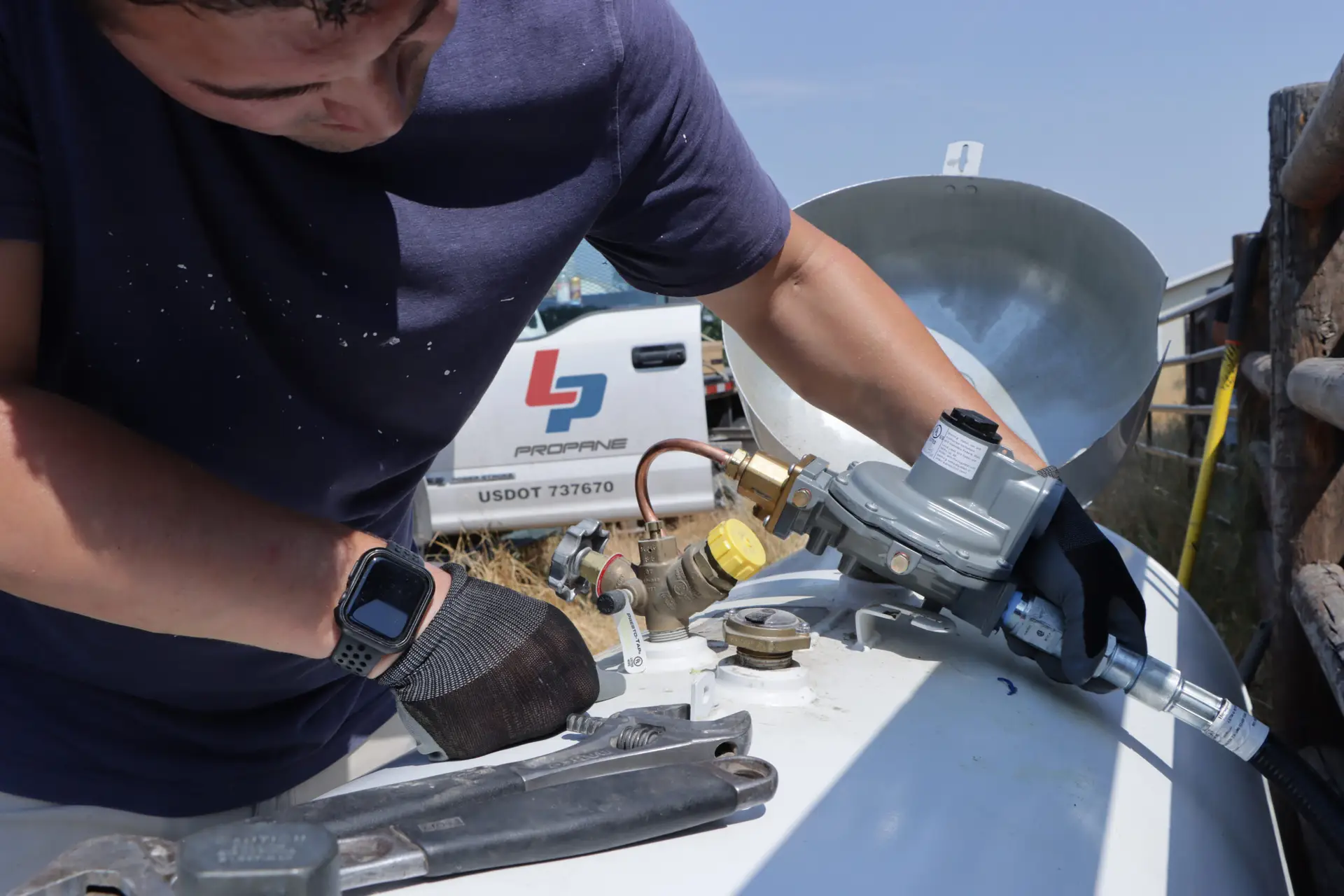
Service valves, relief valves, and fill valves are all tanks which control the flow of pressure and fuel. These parts should be kept clean and not damaged to guarantee safe operations and avoid leakages.

Regulators and Pressure Control

The regulator regulates the pressure of propane that gets into the appliances. An inappropriate functioning regulator may lead to the ineffective usage of fuel or pressure that is not safe, which is why it is important to have it checked on a regular basis.

Gauges and Monitoring Devices.

There are fuel gauges that indicate the amount of propane in the tank. Advanced tank models can also have smart monitoring sensors, which offer real-time information to homeowners or suppliers in order to automatically schedule their delivery.

Venting and Clearance Areas

Ventilation in and around the tank is of utmost importance. The tanks are not to be covered or covered by rubbish, plants or stored materials, which may trap gas or limit moving air.

Appliance Connections and Lines

Tanks are linked by propane lines to heaters, stoves and generators. Routine inspections on wear, cracks or loose fittings would maintain the continuous supply of energy and minimize safety hazards.

A little propane knowledge goes a long way in safety and savings.

Routine Maintenance Practices for Safety and Efficiency

Visual Exterior Inspections

Inspect the exterior of the tank, dents, rust spots, peeling paint and structural damage. Corrosion should be detected at an early stage to avoid corrosion weakening of the tank body over time.

Checking for Leaks

The presence of bubbles showing that there is a leak can be detected with a mild solution of soap and water on valves and fittings. The leak should be suspected and when this happens, the valve needs to be turned off and a professional call should be made.

Keeping the Tank Clean

Routine maintenance of dirt, mud, snow and debris should be undertaken. Clean tanks are easier to inspect and eliminate accumulation of moisture which causes corrosion.

Monitoring Fuel Levels

Ensuring normal levels of propane will make sure that the pressure does not create an imbalance and that the appliances will operate (in the normal way). Operating the tank with a full empty tank may inject air into the system and it may need to be purged by professionals.

Seasonal Maintenance Checks

By raising the tanks a few inches off the ground or setting the tanks on concrete pads this allows the tanks to stay dry and free of rust throughout the years.

Seasonal Checks of the maintenance.

Before winter or peak usage seasons, inspect valves, regulators, and surrounding areas to ensure everything is in working order before demand increases.

Long-Term Care and Professional Inspections

Annual Safety Inspections

Making an annual inspection will aid in checking the integrity of the tanks, the pressure, and the value of the tanks. This is a proactive action that avoids the growth of minor problems.

Regulator Testing and Replacement

The regulators become fatigued with time. Pressure output is also tested and the parts are changed whenever needed by professionals to ensure efficiency and safety of the appliances.

Requalification and Certification

Depending on the safety regulations in the area, older tanks might be subjected to requalification tests. This process makes sure that the tank has not breached structural and safety standards.

Line and Connection Testing

The technicians check underground or exterior lines of propane to identify the leaks, corrosion, or pressure anomalies that the owners of the house might not notice.

System Upgrades and Modernization

The professionals have the ability to prescribe intelligent monitoring systems, refined regulators, or enhanced fittings which are efficient and safe and less expensive in the long run.

Adherence to Safety Codes

Certified propane suppliers make sure that the installations and maintenance are conducted in accordance with the regional and national safety standards which helps to avoid liability and enhance peace of mind.

Common Propane Tank Maintenance Mistakes to Avoid

Most of the things that fail to get maintained are the result of small slips and omissions and not gross negligence. The first one is to overlook minor rust spots that would further propagate and compromise the integrity of tanks. The other common mistake is to bar entry to tanks that contain furniture, plants, or objects of storage, and inspecting it becomes challenging and dangerous. It is also dangerous when the tanks are overfilled because propane should have space to expand as the temperature varies. Lastly, trying to fix the valves or regulators by oneself without the expertise can cause extreme perils. These errors can be avoided to ensure safety and efficiency.

How Proper Maintenance Saves Money Over Time

It is not only that it is safe to have a propane tank, but also helps to save money. Well-maintained systems are cleaner and this makes them more efficient, that is, appliances do not use much fuel to provide the same performance. Preventative checkups will lower the chances of emergency service calls that are usually high and costly than usual maintenance. Long-term care also increases the lifespan of tanks, which prevents replacement costs. Also, effective use of propane will help in maintaining predictable energy bills and hence budgeting is easy by both the homeowners and the businesses.

The Role of Smart Monitoring in Modern Propane Maintenance

The use of technology has changed the way propane tanks are maintained using smart monitoring systems. The wireless sensors have become capable of offering real time fuel level information, usage history and automatic notifications whenever tanks reach fill up limits. The technology will remove guesses, avoid unexpected out of stock, and enhance delivery planning. In large properties or when more than one tank is used in a commercial user, the centralized approach is beneficial in enhancing operational efficiency and safety control. Smart systems are also used to assist the propane providers to design the most efficient routes of delivery to minimize the environmental impacts and delays in service delivery.

Consistent Care Ensures Reliable Propane Performance

Liquid propane tanks are designed to be long lasting however their performance relies on regular maintenance and professional supervision. Users can make sure that they can use energy safely, efficiently, and uninterrupted by knowing the parts of the tanks, conducting regular inspections, and arranging annual maintenance. The maintenance of propane tanks is not only a way to increase the level of safety but also is less expensive in the long run, makes the appliances more efficient, and makes the equipment last longer. Be it residential heating or commercial operations, outdoor living, a propane tank that is well maintained provides reliable energy and long-term peace of mind. When it comes to the fuel that heats the house or powers the business operations, the difference between a few little maintenance steps and benefits in the long run is immense.

BLAZING BLOGS

The Basics of Liquid Propane Tank Maintenance | LP Propane

Does Propane Lose Efficiency Over Time?

Does Propane Lose Efficiency Over Time? Propane is commonly known as a stable, clean burning, and long lasting fuel. It is used by homeowners and businesses to provide heating, cooking, water heating, generators and agriculture. The common question of many

Read More »
The Basics of Liquid Propane Tank Maintenance | LP Propane

Propane for Workshops, Garages & Hobby Spaces

Propane for Workshops, Garages & Hobby Spaces Garages, workshops, hobby areas commonly do not have the central heating system of a home in operation. These spaces cannot do without regular and dependable heat whether it is woodworking, automotive work, metal

Read More »

JOIN THE IGNITE PROGRAM

NEW CUSTOMER? Fill out the New Customer Application to join IGNITE.

Save $0.05 Per Gallon with the IGNITE Program Learn more!

This field is for validation purposes and should be left unchanged.
Name(Required)
Service Address(Required)
AAP Agreement(Required)
You will be contacted by a Customer Service Representative to obtain your credit card information.
MM slash DD slash YYYY

State Fair Giveaway

$500 Worth of Propane

Be one of the first 200 New Customers to sign-up until September 15th to get $500 worth of propane, FREE! You’ll also get 1 year free tank rental when you switch!